
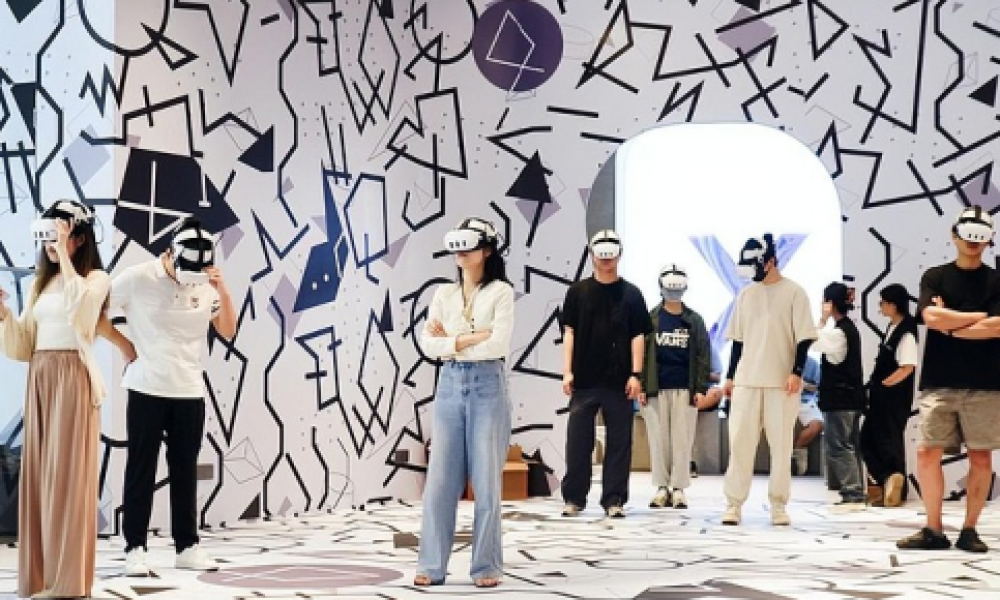
According to new data, online sales of XR devices in China reached 85,000 units in the first quarter of 2025, a year-on-year increase of 66.3%. This data not only highlights the robust vitality of the XR device market but also reflects the rapid rise in consumer demand for immersive technology products.
Strong AR Development Momentum
Looking at the segmented market, AR (Augmented Reality) devices have become the absolute driving force behind this growth. In the first quarter, sales of AR devices increased by 157% year-on-year, an astonishing growth rate far exceeding the industry average, and its share in the overall XR device market reached 74.8%.

Behind this phenomenon is the explosive emergence of new AR products. Major tech companies are increasing their R&D and investment in the AR field, and the new products they launch are constantly breaking through in terms of appearance design, functional experience, and application scenarios, becoming increasingly integrated into everyday life.
Currently, with the help of AI, the AR product matrix is becoming increasingly rich, ranging from lightweight and portable everyday commuter models to industry application models with professional-grade image quality and interactive capabilities. It not only meets the needs of ordinary consumers in entertainment and social interaction but also plays an increasingly important role in professional fields such as education, healthcare, and industry, further driving the expansion of the AR device market.

It is worth noting that smart glasses, as an important sub-category in the smart wearable field, have performed particularly well, maintaining an average annual growth rate of 23.5%. This data fully demonstrates that the smart glasses market is in a stage of rapid development. With continuous technological advancements and the continuous expansion of application scenarios, smart glasses are expected to become a new growth engine for the smart wearable industry.
A New Landscape Opens Up for Competition
Samsung (SSNGY)
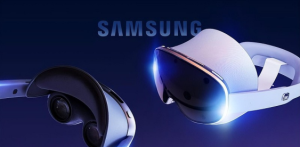
It is understood that Samsung officially launched its first MR headset, the Galaxy XR, at the Galaxy Event. The Galaxy XR was first unveiled at Google’s event at the end of last year and has appeared in various Samsung events this year. Many overseas media outlets had already received the device and conducted hands-on reviews.
This mixed reality headset, named Galaxy XR, is now available for purchase, priced at $1799. Its design is similar to Apple’s Vision Pro, using an external camera to achieve “X-ray vision,” allowing users to see the real world while wearing it. The device also features an internal eye-tracking camera for navigation and supports interaction with virtual interfaces via gestures.
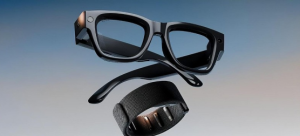
Meta (META) Reportedly, the current market leader Meta not only has the Quest 3 headset but has also launched the popular consumer-grade AR glasses, Ray-Ban MetaDisplay. It uses a combination of LCoS microdisplays and geometric waveguides, paired with the Meta Neural Band, representing a bold exploration in both display and interaction.
Recently, Meta released new glasses equipped with a built-in display and a wrist-worn neural band, allowing users to interact via gestures. This is a crucial technology that significantly improves the waveguide AR glasses experience, driving AR glasses towards a wider field of view and a thinner, lighter design.
Snap (SNAP) Recently, Snap officially announced that it will hold an AR glasses hackathon from November 6th to 8th in Paris.
Snap stated that this event “aims to expand the boundaries of augmented reality technology using Snap Spectacles glasses, build teams, exchange ideas with fellow developers, create engaging multiplayer gaming experiences, and gain valuable programming and AR experience.”
WiMi (WIMI)
WiMi Hologram Cloud Inc., the first publicly listed holographic AR company, has focused on developing holographic technology, AI vision and AR technology, and spatial computing technology in recent years. It has independently developed a dynamic real-time rendering engine to lower the barrier to entry for AR content creation and launched MicroLED optomechanical modules and diffractive waveguide display technology, balancing lightweight wearable products with high display performance.
Furthermore, WiMi participates in building an AI+AR industry cluster, seizing cutting-edge opportunities through technological collaboration, focusing on core capabilities in AR display and AI interaction, and driving penetration into both consumer and industrial markets. Simultaneously, its holographic cloud platform optimizes display quality, supports long-distance 3D image transmission, and combines 5G to achieve low-latency holographic communication, providing underlying technological support for smart glasses.
In conclusion, from the overall industry development trend, XR smart wearable products are developing rapidly. This growth is not only due to the innovative breakthroughs of leading companies, but also closely related to factors such as the upgrading of consumer spending. Consumers’ increasing demand for high-quality, intelligent products has provided a vast market space for the development of the XR smart wearable industry. In short, by 2025, the global XR industry will exhibit polarization while simultaneously being full of opportunities, with consumption scenarios continuing to expand.




