
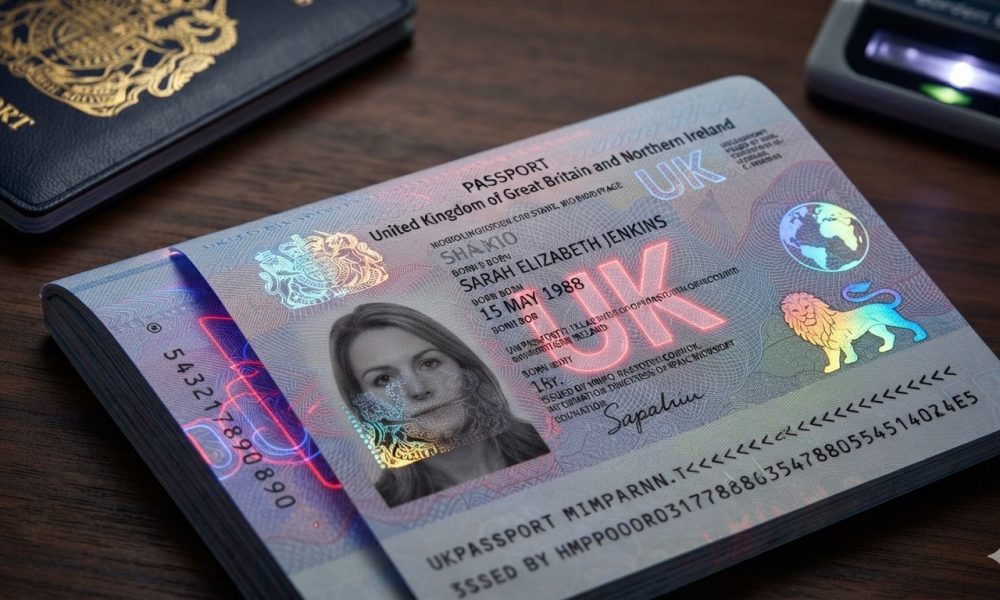
Contactless technology stores identity information and a facial Image that compatible readers can access during document checks.
WASHINGTON, DC, October 1, 2026 — The electronic chip embedded inside a modern biometric passport has become one of the most important components of international travel document security, yet many travelers still misunderstand what the chip contains, how border authorities read it, and what it can actually prove.
The small contactless chip does not function like a GPS tracker, continuously broadcast a traveler’s location, or independently determine whether someone may enter a country.
Instead, it acts as a secure electronic storage device that contains standardized identity information compatible readers can retrieve when the passport is physically presented for inspection.
The chip generally stores biographical information from the passport, a digital facial Image, and security data that helps inspection systems determine whether electronically stored information has been altered after issuance.
Modern border authorities combine that electronic information with the visible identity page, machine-readable zone, live facial comparison, passport-status records, and other security checks when examining a traveler.
Why Passports Began Using Electronic Chips
Traditional passports relied heavily on printed photographs, security paper, laminates, stamps, watermarks, special inks, and other physical safeguards.
Those protections remain important, but governments increasingly wanted an additional way to protect the digital identity information associated with the passport holder.
Electronic passports emerged as part of that evolution.
The International Civil Aviation Organization developed global specifications for machine-readable travel documents so countries could issue passports that border systems worldwide could process using consistent technical standards.
The contactless chip lets a passport carry an electronic representation of the information associated with the document while adding cryptographic protections unavailable in a traditional paper-only passport.
The Chip Is Contactless
Electronic passports use radio-frequency technology that allows a compatible reader to communicate with the chip without inserting it into an electrical connector.
The traveler usually places the passport on or near a designated reader, and the system establishes a short-range connection with the embedded chip.
The chip does not contain a conventional battery continuously transmitting information.
Instead, the reader provides the electromagnetic energy needed to activate the chip during inspection.
Where the Chip Is Located
The exact physical location of the chip and antenna varies by passport design.
Some governments integrate the electronic components into the passport cover, while others place them within or near the identity page.
The familiar electronic passport symbol printed on the cover indicates that the booklet contains a contactless integrated circuit.
An antenna running through part of the passport allows the chip to communicate with a reader.
Severe bending, cutting, puncturing, heat exposure, or other physical damage can potentially interfere with the antenna or electronic components even when the passport still looks relatively normal.
What Information Is Stored on the Chip?
The chip contains standardized data organized into defined groups.
The precise contents depend on the issuing country and passport generation. Still, the information ordinarily includes the biographical data shown on the passport identity page and a digital facial Image of the holder.
That can include the holder’s name, date of birth, nationality, passport number, issuing state, and expiration date.
The digitally stored portrait is particularly important because border systems can compare it with both the visible passport photograph and the person presenting the document.
Some countries may store additional biometric information where their legal and technical systems permit it.
The Digital Facial Image Is Especially Important
The facial Image stored on the chip is generally suitable for automated biometric comparison.
At an automated border gate, the system may read the chip, retrieve the stored Image, photograph the traveler standing in front of the camera, and compare the two images using facial recognition technology.
A human border officer may also visually compare the traveler with the photograph displayed by the document reader.
The chip therefore provides another independent representation of the passport holder’s identity.
The Machine-Readable Zone Helps Readers Access the Chip
The lines of characters at the bottom of a passport identity page form the machine-readable zone, commonly called the MRZ.
Those characters encode standardized information that document readers can capture quickly.
The MRZ also plays an important role in establishing secure communication with many electronic passports.
Depending on the passport generation and security protocols involved, information from the machine-readable zone can help the inspection system derive the access credentials required to communicate with the chip.
This architecture reduces the likelihood of casual unauthorized reading.
Access Control Helps Protect Stored Data
Electronic passport technology includes access-control mechanisms intended to restrict unauthorized chip access.
Earlier generations commonly use Basic Access Control, while newer documents may employ stronger protocols such as Password Authenticated Connection Establishment.
These technologies help establish a protected communication session between the passport and the reader.
Security protocols continue to evolve as governments improve passport technology and respond to developments in cryptography and electronic Identification.
Digital Signatures Help Detect Altered Chip Data
The chip does more than store information.
When the issuing government personalizes the passport, it digitally signs protected data on the chip.
A compatible inspection system can evaluate that signature using trusted public-key certificates.
If someone changes protected electronic data after issuance without possessing the government’s cryptographic signing credentials, the digital signature should no longer validate correctly.
This allows authorities to determine whether the electronic information still matches what the issuing authority originally signed.
The ICAO Public Key Directory supports this international framework by helping participating governments exchange the certificates needed to authenticate electronic travel documents.
Authentication Does Not Answer Every Question
A successful electronic authentication provides evidence that protected chip data remains consistent with the issuing authority’s digital signature.
It does not, by itself, prove that the person presenting the passport is the legitimate holder or that the passport remains valid for travel.
Those questions require other checks.
Border authorities may compare the live traveler with the stored facial Image, examine the physical passport, and consult government systems to determine whether the document has been canceled, reported lost, stolen, revoked, or otherwise invalidated.
The chip therefore provides one important source of evidence within a broader inspection process.
The Chip Is Not a Tracking Device
One persistent misconception is that the electronic passport chip allows governments to track a traveler’s location continuously.
Standard ePassport technology does not work that way.
The chip is passive and receives energy from a nearby reader during communication.
It does not continuously transmit location information, connect independently to mobile networks, or communicate with satellites.
Governments can maintain records of border crossings and travel activity through immigration systems, airline data, entry and exit records, and other databases. Still, those systems are separate from the chip itself.
The Chip Does Not Store Your Entire Travel History
Another common misunderstanding concerns travel records.
The chip does not ordinarily operate as a continuously updated electronic diary recording every country the passport holder visits.
Border authorities generally maintain entry and exit information within their own systems rather than rewriting the passport chip every time someone crosses a border.
The chip primarily contains identity and security information established during passport issuance.
Physical visa pages may contain stamps and visas, while immigration databases can contain much more detailed travel information.
A Successful Chip Read Does Not Prove Everything
When a smartphone application or border reader successfully detects and reads an electronic passport chip, that result can establish certain technical facts.
It may show that a contactless chip responds, that certain data can be retrieved, and potentially that electronic signatures can be evaluated.
However, a successful scan alone does not prove every aspect of legal document validity.
A complete assessment may still require verification of the issuing authority, document status, holder identity, physical security features, and government records.
At Amicus International Consulting, this distinction matters because technical functionality and lawful government issuance are related but separate questions.
An Unsuccessful Scan Does Not Automatically Mean the Passport Is False
The opposite conclusion can also be misleading.
If a smartphone application fails to detect a chip, that failure does not automatically prove that the passport is fraudulent.
The user may position the phone incorrectly, the device may have limited NFC performance, the passport antenna may be located somewhere unexpected, the application may not support the document properly, or the passport may have suffered physical damage.
Electronic components can also fail even when the underlying booklet was genuinely issued.
A traveler who repeatedly encounters chip-reading problems should contact the issuing passport authority rather than attempting to alter or repair the document.
Why Smartphone Apps Can Read Some Passports
Modern smartphones equipped with NFC hardware can communicate with electronic passports when software implements the appropriate travel-document protocols.
A passport-reading application may first capture the machine-readable zone with the camera, then use information from that zone to establish secure communication with the contactless chip.
Once access is established, the application may display biographical information and the facial Image stored electronically.
Some applications can also perform cryptographic checks.
However, consumer applications do not necessarily have access to every government database, border-control system, revocation source, or forensic capability available to official authorities.
The Chip and Physical Passport Should Agree
One of the chip’s strongest protections is consistency checking.
Information displayed visibly on the passport should correspond with the electronically stored data.
The passport number, name, nationality, birth date, expiration date, and other key fields should agree across the physical and electronic representations where applicable.
If a physical identity page has been altered while the chip retains the original information, the discrepancy may become apparent during inspection.
If electronic data has been improperly modified, cryptographic authentication may fail.
The same principle applies to the holder’s photograph, which authorities can compare with the live traveler.
Passport Status Checks Are Separate From Chip Authentication
A passport may contain perfectly valid electronic information while still being subject to cancellation, loss, theft, revocation, or another government restriction.
For that reason, border systems can perform separate checks against government and law-enforcement databases.
INTERPOL’s Stolen and Lost Travel Documents database allows authorized agencies to compare travel documents with records submitted by participating countries.
This illustrates an important distinction.
A passport can contain authentic chip data while simultaneously having a status that prevents authorities from accepting it for travel.
Physical Damage Can Affect Chip Performance
An ePassport contains delicate electronic components within a document designed to withstand normal travel conditions, but significant physical abuse can still cause failure.
Repeated severe bending can damage the embedded antenna.
Puncturing the passport, exposing it to extreme heat, soaking it, or attempting to separate its layers can also interfere with electronic operation.
Travelers should avoid storing passports where they may be crushed, folded, exposed to moisture, or subjected to strong physical pressure.
The Chip Does Not Replace the Visa Pages
Electronic passports remain physical booklets because many immigration processes still require visible visas, entry stamps, endorsements, residence permissions, or other markings.
Even as more countries adopt electronic visas and digital border records, the physical booklet remains an important inspection platform.
The chip secures electronically stored identity data, while the identity page, visa pages, machine-readable zone, and booklet construction provide additional forms of evidence.
Electronic Passport Standards Continue to Evolve
Passport technology does not remain static.
Governments periodically introduce new document generations with stronger cryptographic algorithms, improved access-control methods, redesigned identity pages, enhanced optical features, and better resistance to electronic attacks.
Border systems must therefore support both newer passports and older valid documents that remain in circulation.
A passport issued ten years ago may use different security protocols from a newly issued document while both remain legitimate.
Privacy Remains an Important Design Consideration
Because passports contain sensitive identity information, electronic passport systems incorporate measures intended to limit unauthorized access.
Short-range communication, access-control protocols, cryptographic authentication, and secure inspection infrastructure all help protect the data.
Travelers should still exercise ordinary document security by keeping passports under their control, reporting lost documents promptly, and avoiding unnecessary sharing of passport photographs or biographical information.
Online Photographs Cannot Verify the Chip.
A photograph or scanned Image of a passport cannot demonstrate whether the electronic chip is present, functional, properly personalized, or cryptographically valid.
The chip must be interrogated directly using compatible hardware and software.
Likewise, a photograph showing an electronic passport symbol on the cover proves only that the visible document purports to be an ePassport.
It does not establish that the embedded electronic component functions correctly.
Why Government Authentication Goes Beyond a Consumer Scan
Consumer technology has let travelers inspect aspects of their own passports that once required specialized equipment.
That can help with education and troubleshooting.
However, official border systems operate within a broader verification environment that may include trusted certificate repositories, passport-status databases, immigration records, biometric systems, and detailed document reference collections.
A smartphone application may read and authenticate some chip data but still be unable to determine whether the issuing government has since canceled the passport.
The Chip Strengthens a Layered Security System
The greatest security benefit of the electronic passport chip comes from its ability to provide an independent source of identity data that can be compared with the physical document and the traveler.
A border officer or automated system can check whether the visible information matches the chip, whether the stored facial Image matches the presenter, whether the digital signature validates, and whether government systems report a problem with the document.
At Amicus International Consulting, understanding these distinctions is essential when discussing lawful international citizenship, residency, identity documentation, and cross-border mobility.
The contactless chip inside a biometric passport may be physically small, but its role is substantial.
It gives border authorities a digitally protected source of identity information that complements the physical passport rather than replacing it, strengthening a broader security system built around document integrity, biometric comparison, cryptography, and government verification.




