
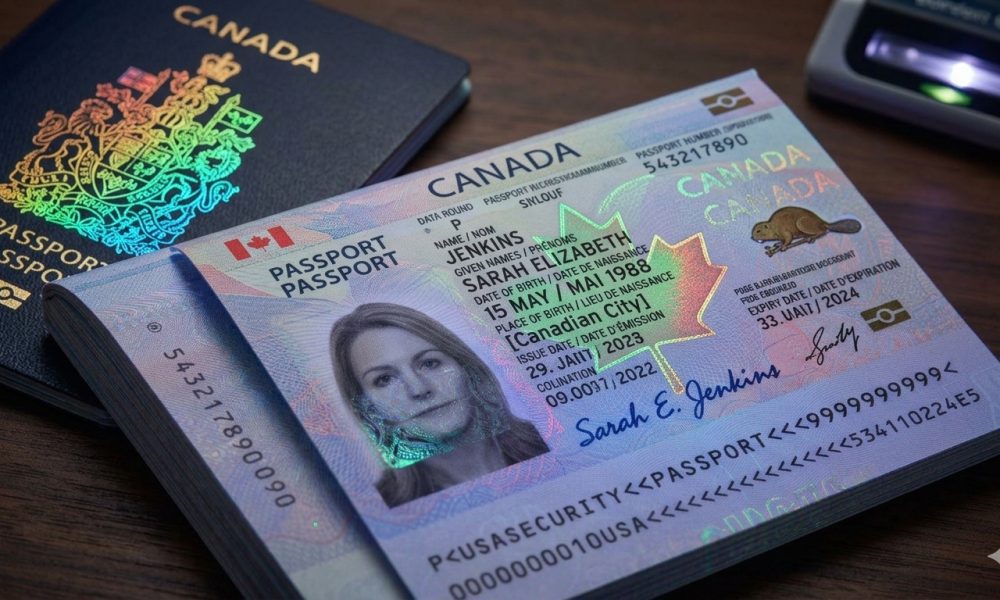
Cryptographic checks help border authorities confirm whether electronic identity information came from a trusted issuer and has not been altered.
WASHINGTON, DC, October 1, 2026 — Electronic passports rely on more than contactless chips and stored facial images because the information inside those chips must also be protected against unauthorized alteration after issuance.
Digital signatures provide that Protection by allowing compatible border systems to test whether protected passport data still matches what the issuing authority originally approved.
They do not independently prove that the traveler is the legitimate passport holder or that the document remains valid for travel. Still, they give inspectors a powerful way to detect unauthorized changes to electronic identity information.
A Digital Signature Is Not a Scanned Signature
A digital signature has little to do with the handwritten signature that may appear on a passport identity page.
Instead, the issuing authority uses cryptographic keys to create a mathematical signature linked to protected passport data.
Inspection systems then use corresponding public certificates to determine whether the signature remains valid.
The International Civil Aviation Organization establishes international specifications for electronic machine-readable travel documents and the cryptographic systems used to authenticate them.
Why Passport Data Needs Cryptographic Protection
A chip would provide limited security if someone could rewrite its information without detection.
Electronic passports may store biographical data and a digital facial Image corresponding to the physical identity page.
Cryptographic signing connects that information to the issuing authority.
If protected data changes after signing, the cryptographic verification result should no longer match.
Hashes Help Detect Changes
Digital signature systems rely in part on cryptographic hashes, which convert electronic information into compact mathematical values.
Even a small alteration to protected data should produce a different result.
This allows inspection systems to detect changes to information such as a facial Image or biographical field, even when those modifications are not visually obvious.
Public and Private Keys Divide Trust
The issuing government protects its private signing keys and does not distribute them to foreign border authorities.
Other governments instead receive public verification information that allows them to test signatures without gaining the ability to create valid ones.
This separation is a fundamental feature of public-key cryptography and allows electronic passports to be authenticated internationally without exposing the issuing country’s sensitive signing credentials.
Passive Authentication Tests Data Integrity
One of the principal electronic passport checks is known as passive authentication.
The inspection system retrieves protected chip data and evaluates its digital signature.
Current ICAO Doc 9303 specifications describe this process as a method of assessing the integrity and authenticity of information stored on the contactless chip.
A successful result indicates that the signed data remains consistent with what the issuing authority originally protected.
Certificates Establish International Trust
The inspection system must also determine whether it trusts the certificate associated with the digital signature.
Electronic passport systems therefore use certificate hierarchies that link document-signing credentials to higher-level national authorities.
The ICAO Public Key Directory supports this international framework by helping participating states exchange trusted certificate information.
The directory is part of the authentication infrastructure and is not a global database of individual passport holders.
Why Digital Signatures Make Tampering Harder
If someone modifies protected information on the chip after issuance, the altered data should no longer correspond with the original signature.
Creating a replacement signature that border systems trust would ordinarily require access to cryptographic credentials controlled by the issuing government.
This makes unauthorized electronic alteration much harder to conceal than changing unprotected digital information.
Physical and Electronic Data Should Match
A different problem arises when someone alters only the visible identity page while leaving the chip unchanged.
The physical passport could then show information that conflicts with the electronic record.
Border systems can compare fields such as the holder’s name, passport number, birth date, expiration date, and facial Image with the information stored on the chip.
Significant discrepancies can trigger additional inspection.
The Facial Image Is an Important Protected Element
The facial Image stored electronically is particularly important because automated gates and border officers can use it for biometric comparison.
Digital signatures help establish that the stored Image has not been replaced after issuance.
The Image can then be compared with the person presenting the passport, linking protected electronic information to the live traveler.
Verification Can Happen in Seconds
Although the underlying cryptography is technically complex, electronic passport checks can occur rapidly.
A reader can retrieve chip data, evaluate digital signatures, validate certificates, and pass the results to the border system while other procedures, such as facial comparison, occur alongside them.
To the traveler, this may appear to involve little more than placing the passport on a reader.
Consumer Apps Can Perform Limited Checks
Modern NFC-enabled smartphones can read many electronic passports using compatible applications.
Some applications can also perform passive authentication and report whether protected chip data appears to validate correctly.
These tools can be useful, but they do not necessarily have access to the same certificate repositories, document-status systems, forensic tools, or government databases available to official border authorities.
A consumer result therefore reflects only the checks that the particular application can perform.
A Failed Check Does Not Automatically Prove Fraud
Electronic verification depends on several components working correctly.
The reader must communicate with the chip, interpret its data, support the passport’s security protocols, and possess the appropriate certificate information.
Older passport generations may also use different technical standards.
A failed result can therefore reflect technical incompatibility or certificate issues as well as possible tampering.
Authentication and Passport Status Are Different
A passport can contain correctly signed electronic information and still be invalid for travel.
The issuing government may later cancel, revoke, or report the passport as lost or stolen.
Border agencies therefore perform separate status and database checks where appropriate.
Cryptographic verification addresses whether protected electronic information remains intact and linked to trusted issuing credentials.
Government databases address different questions, including whether the passport remains valid and whether authorities need to take further action.
Digital and Physical Security Work Together
Digital signatures protect electronic data, while physical features protect the passport booklet itself.
Laser engraving, polycarbonate construction, security printing, ultraviolet features, optical devices, and booklet-integrity protections address forms of manipulation that cryptography cannot detect on its own.
Modern passport examination therefore depends on consistency among the physical document, electronic chip, biometric information, and government records.
Why Photographs Cannot Verify Digital Integrity
A photograph or scanned copy can show the visible passport page, but it cannot establish whether the chip’s digital signature is valid.
That requires direct communication with the electronic component.
This limits remote document examination because a passport may appear convincing in an Image while its electronic data produces a different result when properly read.
Trust Infrastructure Matters as Much as the Chip
An electronic passport depends on an international technical system extending far beyond the booklet itself.
Governments must protect private cryptographic keys, issue and distribute certificates, operate secure personalization systems, and ensure that foreign inspection authorities can obtain reliable public verification information.
Border systems must also implement the relevant standards correctly.
Without that supporting infrastructure, the chip alone cannot provide the intended level of authentication.
A Critical Defense Against Electronic Manipulation
The central value of digital signatures is that they make silent alteration of protected passport data substantially more difficult.
They create a mathematical connection between information stored on the chip and credentials controlled by the issuing authority.
At Amicus International Consulting, this distinction is important because technical authenticity, lawful government issuance, and current document validity should be understood as separate but interconnected elements of modern identity verification.
Digital signatures do not replace physical passport security, biometric comparison, or government database checks.
Instead, they provide an independent cryptographic test that helps border authorities determine whether protected electronic identity information remains consistent with what a trusted issuing authority originally signed.




