
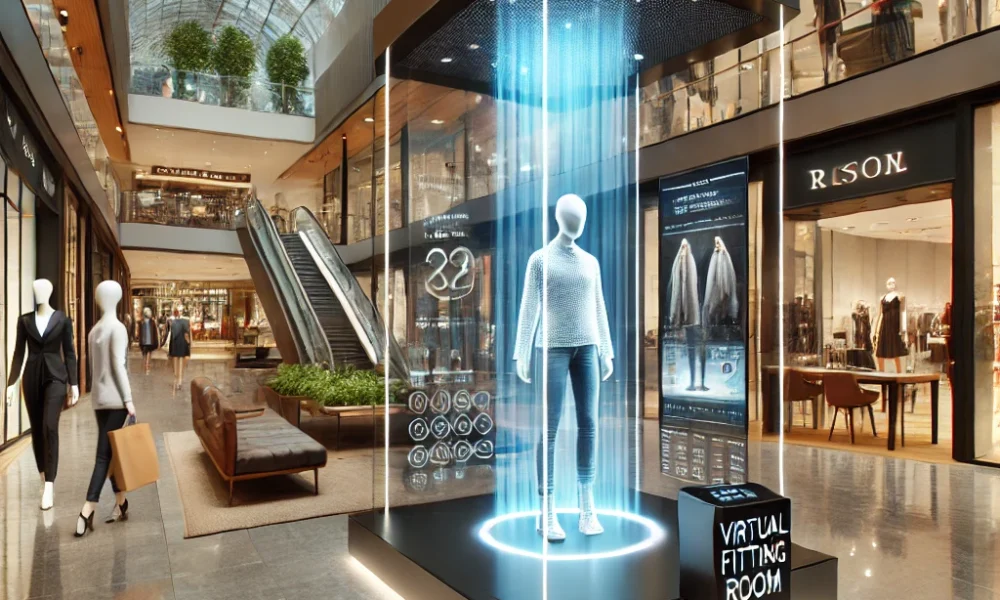
Who thought that one day we would be able to try on clothes without stepping into a fitting room? The fashion industry is undergoing a significant transformation, driven by technological advancements that enhance the online shopping experience. Among these innovations, virtual fitting rooms (VFRs) stand out as a revolutionary development, enabling customers to virtually try on clothing and accessories from the comfort of their homes. This technology bridges the gap between physical and online retail – and, it offers numerous benefits to both retailers and consumers.
The Rise of Virtual Fitting Rooms
Virtual fitting rooms leverage augmented reality (AR) and artificial intelligence (AI) to provide shoppers with interactive tools to visualize how garments will look and fit, eliminating the need to physically try things on. By superimposing 3D models of clothing onto live images or avatars of customers, VFRs provide a personalized and engaging shopping experience. This innovation addresses common online shopping challenges like uncertainty about fit and appearance, which are major contributors to high return rates.
Leading Providers in the Virtual Fitting Room Space
Several companies have emerged as pioneers in the virtual fitting room market, for example:
- MirrAR: Specializes in augmented reality (AR) and artificial intelligence (AI) virtual try-on solutions, transforming retail experiences both in-store and online.
- 3DLOOK: Develops AI-powered mobile body scanning technology that generates accurate 3D human body models, providing personalized size and fit recommendations from just two photos.
- Sizebay: Develops virtual fitting room solutions, including its own tools like Size & Fit and Mix & Match, to help e-commerce and brick-and-mortar stores provide personalized shopping experiences and accurate size recommendations.
Benefits for Retailers
Implementing virtual fitting rooms offers retailers several advantages:
- Reduced Return Rates: By allowing customers to see how items will fit and look, VFRs decrease the likelihood of returns due to sizing issues or unmet expectations.
- Enhanced Customer Engagement: Interactive and personalized shopping experiences increase customer satisfaction and loyalty.
- Data-Driven Insights: VFRs provide retailers with valuable data on customer preferences and behaviors, informing inventory management and marketing strategies.
Advantages for Consumers
Consumers also reap significant benefits from virtual fitting rooms:
- Convenience: Shoppers can easily try on multiple outfits virtually from home, saving time and effort.
- Personalization: VFRs offer recommendations tailored to your body measurements and style preferences.
- Increased Confidence: Visualizing fit and appearance online makes purchasing decisions easier and more assured.
Revolutionizing the Fashion E-commerce Landscape
The integration of virtual fitting rooms is reshaping the fashion e-commerce landscape by merging the tactile advantages of in-store shopping with the convenience of online retail. This technology caters to the growing consumer demand for personalized and interactive shopping experiences, positioning retailers who adopt VFRs at a competitive advantage.
This innovation revolutionizes fashion e-commerce by allowing customers to virtually try on clothing from home, enhancing personalization, reducing return rates, and increasing customer engagement. This technology is rapidly growing, with the market projected to expand from $5.71 billion in 2024 to $25.11 billion by 2032, at a compound annual growth rate (CAGR) of 20.3%. Advancements in augmented reality (AR) and artificial intelligence (AI) are driving this innovation, enabling real-time body mapping and personalized recommendations. However, challenges such as device compatibility, user privacy, and precise fit measurements remain.
Research Insights into Virtual Fitting Rooms
Academic research supports the efficacy of virtual fitting rooms in enhancing online shopping experiences. A study published in the International Journal of Science and Research discusses the integration of AI and AR technologies in VFRs, highlighting their potential to simulate real-time interactions and improve customer satisfaction.
The Future of Fashion Retail
In the near future, virtual fitting rooms are poised to become a standard feature in fashion e-commerce. Their ability to provide immersive and personalized shopping experiences aligns with the digital transformation trends in retail. Retailers embracing this innovation are likely to see increased customer engagement, reduced return rates, and enhanced brand loyalty, marking a significant shift in how consumers shop for clothes, shoes and accessories online.