
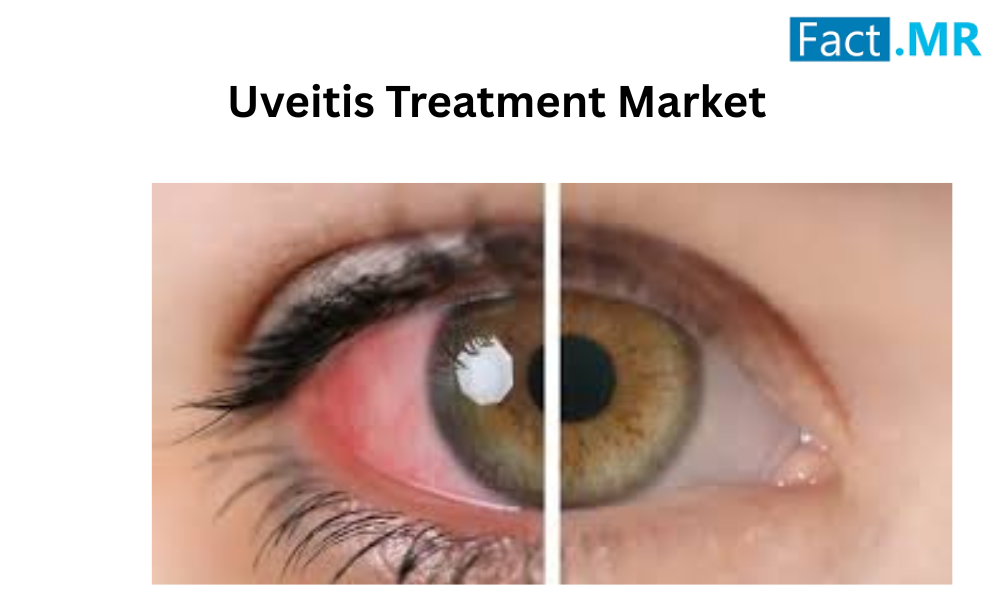
The global uveitis treatment market is gaining momentum as the prevalence of ocular inflammatory diseases continues to rise worldwide. According to the latest research report by Fact.MR, the market is estimated at USD 791 million in 2024 and is projected to expand at a steady CAGR of 5.8% from 2024 to 2034, reaching a valuation of USD 1.4 billion by the end of 2034. The growing demand for advanced therapeutics, increasing awareness about early diagnosis, and the introduction of biologics are expected to reshape the treatment landscape over the next decade.
Rising Burden of Uveitis Globally:
Uveitis, an inflammatory condition of the uvea in the eye, is a leading cause of preventable blindness and visual impairment. It is often associated with autoimmune disorders, infections, or trauma. The growing prevalence of chronic conditions such as rheumatoid arthritis, multiple sclerosis, and inflammatory bowel disease is also contributing to the higher incidence of uveitis cases. In addition, lifestyle changes, increasing pollution levels, and rising genetic susceptibility are driving the need for effective uveitis management.
The growing patient pool has heightened the demand for therapeutic interventions, thereby creating growth opportunities for pharmaceutical companies and healthcare providers. The disease’s chronic nature often requires long-term treatment, contributing to the consistent revenue potential of the market.
Full Market Report Available for Delivery. For Purchase or Customization, Please Request Here: https://www.factmr.com/connectus/sample?flag=S&rep_id=10187
Market Drivers Fueling Growth:
Several factors are propelling the expansion of the uveitis treatment market:
Advances in Biologics and Monoclonal Antibodies: Biologic therapies targeting specific immune pathways are transforming uveitis treatment by improving efficacy and minimizing side effects compared to conventional drugs.
Rising Awareness and Diagnosis Rates: Growing public health initiatives and improved access to eye care facilities are enabling early detection and timely treatment.
Increasing R&D Investments: Pharmaceutical companies are heavily investing in developing novel drug formulations and innovative treatment approaches, including sustained-release implants and targeted therapies.
Expanding Geriatric Population: With aging being a major risk factor for autoimmune and inflammatory diseases, the rising elderly population is expected to drive long-term demand for uveitis treatments.
Market Segmentation Insights:
The uveitis treatment market is segmented based on drug classes, including corticosteroids, immunosuppressants, monoclonal antibodies, cycloplegic agents, antibiotics, antivirals, antifungals, and analgesics.
Corticosteroids remain the frontline therapy due to their proven efficacy in reducing inflammation. However, long-term use is associated with side effects such as glaucoma and cataracts, prompting the adoption of safer alternatives.
Immunosuppressants are gaining traction for patients unresponsive to steroids, providing effective inflammation control in severe cases.
Monoclonal antibodies are emerging as a game-changer, offering targeted treatment with better safety profiles, and their market share is projected to rise steadily through 2034.
Cycloplegic agents, antibiotics, antivirals, antifungals, and analgesics continue to play supportive roles, addressing pain, infections, and complications associated with uveitis.
Regional Outlook:
North America currently leads the uveitis treatment market, supported by advanced healthcare infrastructure, high awareness levels, and favorable reimbursement policies. The United States is witnessing increased adoption of biologics and monoclonal antibodies due to strong clinical research and regulatory approvals.
Europe follows closely, with rising investments in ophthalmology research and widespread healthcare coverage driving treatment adoption. Countries such as Germany, France, and the United Kingdom are key contributors to regional market growth.
Asia-Pacific is projected to record the fastest growth rate during the forecast period, driven by rising healthcare expenditure, growing prevalence of eye disorders, and increasing access to specialized ophthalmology care in countries like India, China, and Japan. Awareness campaigns by government and non-profit organizations are also playing a pivotal role in improving early detection rates in the region.
Competitive Landscape:
The global uveitis treatment market is moderately competitive, with leading pharmaceutical companies focusing on innovation and portfolio expansion. Partnerships, collaborations, and regulatory approvals remain crucial strategies to strengthen market presence.
Key players are actively engaged in clinical trials to introduce new drug formulations that enhance efficacy and reduce side effects. Biologic therapies and sustained-release implants are expected to dominate future product pipelines.
Some of the prominent companies operating in the uveitis treatment market include:
AbbVie Inc.
Novartis AG
Bausch Health Companies Inc.
Johnson & Johnson Services, Inc.
Allergan plc
Santen Pharmaceutical Co., Ltd.
Regeneron Pharmaceuticals, Inc.
Eyepoint Pharmaceuticals, Inc.
Recent Developments:
AbbVie continues to expand its presence in the ophthalmology space by advancing biologics that specifically target immune responses associated with uveitis.
Novartis has made significant strides in developing therapies for non-infectious uveitis, with several candidates under regulatory review.
Santen Pharmaceutical is focusing on expanding its global reach with new drug approvals in Asia-Pacific and Europe.
Regeneron and Eyepoint Pharmaceuticals are advancing clinical trials of innovative sustained-release implants to offer long-term relief for patients.
Future Outlook:
The next decade will be transformative for the uveitis treatment market as innovations in biologics, personalized medicine, and sustained-release drug delivery systems reshape the standard of care. As awareness grows and healthcare access improves globally, more patients will benefit from early diagnosis and advanced treatments.
By 2034, the market is projected to reach USD 1.4 billion, with biologics and monoclonal antibodies driving much of this growth. Companies investing in R&D and strategic partnerships will gain a competitive edge in delivering effective, safe, and patient-friendly therapies.
The rising focus on patient quality of life, coupled with technological advancements in ophthalmology, ensures that the global uveitis treatment market will continue to expand steadily over the forecast period.
Check out More Related Studies Published by Fact.MR:
Biofilms Treatment Market: https://www.factmr.com/report/biofilms-treatment-market
Cellulite Treatment Market: https://www.factmr.com/report/cellulite-treatment-market
Contact:
US Sales Office
11140 Rockville Pike
Suite 400
Rockville, MD 20852
United States
Tel: +1 (628) 251-1583, +353-1-4434-232
Email: [email protected]
About Fact.MR
We are a trusted research partner of 80% of fortune 1000 companies across the globe. We are consistently growing in the field of market research with more than 1000 reports published every year. The dedicated team of 400-plus analysts and consultants is committed to achieving the utmost level of our client’s satisfaction.



