
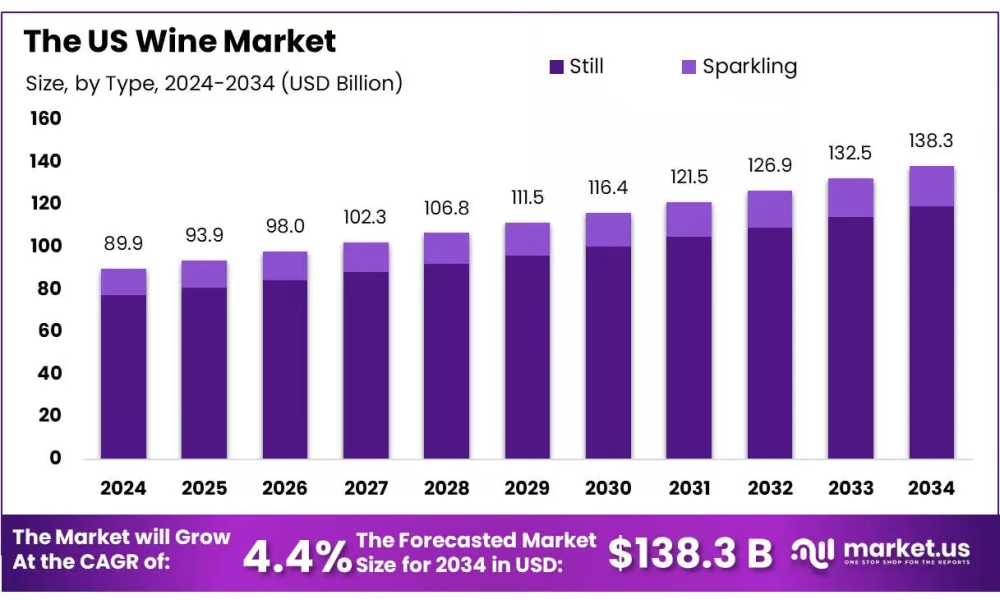
According to Market.us, the US wine market is anticipated to rise from USD 89.9 billion in 2024 to approximately USD 138.3 billion by 2034, registering a compound annual growth rate (CAGR) of 4.4% over the forecast period. As a global leader in both wine production and consumption, the United States maintains a robust domestic industry.
In 2022, total wine production reached over 752 million gallons, with California, Washington, New York, and Oregon contributing 92% of the national output. California alone produced around 80% of the total, renowned for crafting rich, fruit-forward wines, particularly from French-origin grapes such as Cabernet Sauvignon, Merlot, Chardonnay, and Pinot Noir.
Wine consumption across the country is expected to stay steady in 2024, with an average per capita intake of 4.5 liters and total projected consumption reaching 17,800 million liters. Future expansion opportunities include broadening production to less dominant regions, introducing new wine styles, and responding to growing interest in organic and low-alcohol alternatives.
The government continues to influence the sector through regulatory oversight and by promoting sustainable vineyard practices via funding and tax incentives. Additionally, export growth—particularly to markets in China and the European Union—underscores the importance of a balanced regulatory environment that safeguards consumers while enabling global competitiveness.
Key Takeaways
- U.S. Wine Market size is expected to be worth around USD 138.3 Billion by 2034, from USD 89.9 Billion in 2024, growing at a CAGR of 4.4%.
- Still wine held a dominant position in the US wine market, capturing more than an 86.30% share.
- White wine held a dominant position in the US wine market, capturing more than a 52.20% share.
- Cabernet Sauvignon held a dominant market position in the US wine market, capturing more than an 18.40% share.
- Off-trade channels held a dominant market position in the US wine market, capturing more than a 68.50% share.
- Bottles held a dominant position in the US wine market, capturing more than a 93.70% share.
- 36-45 held a dominant market position in the US wine market, capturing more than a 34.50% share.
- Females held a dominant market position in the US wine market, capturing more than a 54.30% share.
Access a Complimentary Sample of This Premium Report: https://market.us/report/us-wine-market/request-sample/
Factors Affecting the Growth of the US Wine Market
Regional Concentration of Production: A significant portion of wine production in the United States is concentrated in a few key states, particularly California. This heavy reliance on specific regions makes the market vulnerable to regional climate shifts, wildfires, and supply chain disruptions. Diversifying production to other states can help mitigate these risks and support long-term market stability.
Evolving Consumer Preferences: Consumer trends are shifting toward organic, sustainable, and low-alcohol wine options. Health-conscious buyers and younger demographics are driving demand for cleaner-label and functional beverages. Wine producers that adapt to these evolving preferences are more likely to capture growing segments of the market.
Regulatory Environment: Federal and state-level regulations around alcohol sales, labeling, and advertising significantly influence market dynamics. Licensing rules, distribution restrictions, and tax structures can either encourage growth or create operational hurdles for winemakers and retailers.
Export Demand and Trade Policies: International demand, especially from markets like China and Europe, contributes to the growth of the US wine industry. Trade agreements, tariffs, and diplomatic relations directly affect export volumes and profitability. A favorable global trade environment can open new revenue streams for US wine producers.
Technological Advancements and Sustainability Practices: Innovation in viticulture, such as precision farming, water-efficient irrigation, and disease-resistant grape varieties, is enhancing productivity and reducing environmental impact. Sustainability initiatives are not only reducing costs but also aligning with consumer expectations for eco-friendly production methods.
Key Market Segmentation
By Type Analysis
In 2024, still wine dominated the US wine market with a substantial share of over 86.30%, reflecting its strong consumer preference for traditional and versatile wine options. This segment continues to lead due to its broad appeal across various demographics and consistent demand for both everyday consumption and special occasions.
Despite a potential stabilization in growth by 2025 as interest in alternative wine types gradually rises, still wine is expected to retain its commanding market position, supported by its widespread availability in retail and hospitality sectors.
By Color Analysis
In 2024, white wine led the US wine market with a dominant 52.20% share, supported by its widespread appeal and strong seasonal demand, particularly in warmer months. Its refreshing and versatile profile has made it a preferred option across diverse consumer groups. Looking ahead to 2025, white wine is expected to maintain its leading position, continuing to account for a substantial portion of total wine sales despite emerging interest in red and rosé wines.
By Grape Variety Analysis
In 2024, Cabernet Sauvignon held a leading position in the US wine market, accounting for over 18.40% of total sales. Its popularity is driven by its rich, full-bodied profile and versatility in both blends and single-varietal wines. The variety has shown steady growth, supported by strong consumer demand and widespread availability in retail and dining establishments.
Looking ahead to 2025, Cabernet Sauvignon is expected to maintain its dominance, bolstered by a loyal consumer base and its reputation as a classic, high-quality choice among red wines.
By Distribution Channel Analysis
In 2024, off-trade channels dominated the US wine market with a market share exceeding 68.50%, driven by consumer preference for convenient purchasing through retail stores, supermarkets, and online platforms. The growth of e-commerce and home delivery services has further strengthened this segment by enhancing accessibility and product variety. Looking ahead to 2025, off-trade channels are expected to retain their leading position, supported by the continued shift toward online shopping and at-home consumption trends.
By Packaging Type Analysis
In 2024, bottles accounted for a dominant 93.70% share of the US wine market, maintaining their position as the preferred packaging format. Their popularity is driven by factors such as quality preservation, convenience, and strong presence across retail, hospitality, and event settings.
Looking ahead to 2025, bottles are expected to continue leading the market, as consumer preferences remain largely unchanged despite modest growth in alternative packaging like cans and cartons.
By Age Group Analysis
In 2024, consumers aged 36–45 led the US wine market with a 34.50% share, making them the most influential age group. Their preference for both traditional and experimental wines, combined with strong purchasing power, plays a vital role in market growth. Looking ahead to 2025, this demographic is expected to maintain its dominance, driven by growing interest in premium wines, food pairings, and evolving wine trends, reinforcing their position as key contributors to wine consumption in the US.
By End-User Analysis
In 2024, females dominated the US wine market with a share exceeding 54.30%, making them the largest consumer demographic. Their preference for wine across casual and special occasions is influenced by lifestyle choices, social trends, and a wide range of wine options catering to diverse tastes.
Looking ahead to 2025, females are expected to maintain their leading position, supported by growing engagement in wine-related activities, such as tastings and social media communities, further driving market growth and exploration of new varieties.
Key Market Segments
By Type
- Still
- Sparkling
By Color
- White
- Red
- Rose Wine
By Grape Variety
- Cabernet Sauvignon
- Merlot
- Airen
- Tempranillo
- Chardonnay
- Syrah
- Grenache
- Sauvignon Blanc
- Trebbiano Toscana
- Others
By Distribution Channel
- On-trade
- Pubs, Bars & Cafe’s
- Hotels & Restaurants
- Others
- Off -trade
- Supermarkets/Hypermarkets
- Specialty Stores
- Online Stores
By Packaging Type
- Bottles
- Cans
By Age Group
- 18-25 Years
- 26-35 Years
- 36-45 Years
- Above 46 Years
By End-User
- Male
- Female
Growth Factors
The U.S. wine market is experiencing strong growth driven by the expansion of production into emerging regions such as Texas, Washington, and New York. These states, while historically less prominent than California or Oregon, are gaining recognition for their distinct climates and terroirs, attracting a broader consumer base.
Additionally, the increasing demand for non-alcoholic wines is opening new market segments, particularly among health-conscious consumers and those reducing alcohol consumption. Another key growth driver is the rising popularity of private label wines, enabling wineries to collaborate with retailers and tap into the mass-market segment by offering more affordable wine options.
Top Key Players in the Market
- The Wine Group
- Treasury Wine Estates
- Delicato Family Wines
- Bronco Wine Company
- Ste. Michelle Wine Estates
- Jackson Family Wines
- Deutsch Family Wine & Spirits
- Viña Concha Y Toro (Fetzer Vineyards)
- Precept Wine
- Bogle Vineyards
- Vintage Wine Estates
- WX Brands
- The Family Coppola
- C. Mondavi & Family
- Foley Family Wines
- J. Lohr Vineyards & Wines
- Korbel Champagne Cellars
- E & J Gallo Winery
- Constellation Brands
Refer More Related Reports:



