
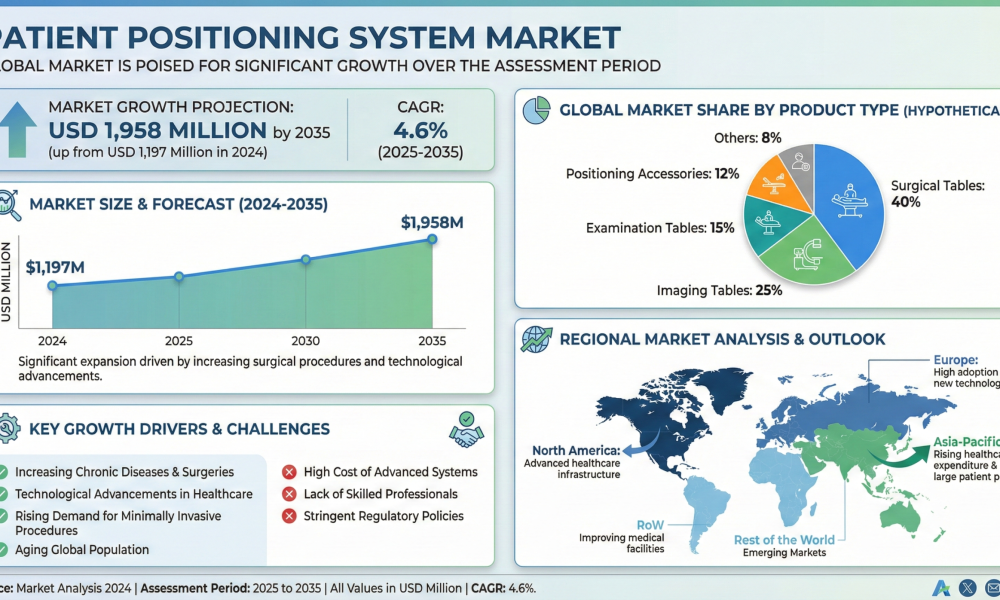
The U.S. patient positioning system market is set for consistent growth from 2025 to 2035, driven by the rising burden of chronic diseases, expanding surgical volumes, and increasing demand for precision-driven patient alignment solutions. Patient positioning systems—including surgical tables, accessories, imaging-based positioning devices, patient transfer equipment, and advanced robotic positioning tools—are critical for ensuring procedural accuracy, patient safety, and improved outcomes across operating rooms, diagnostic imaging centers, and ambulatory surgical facilities. This press release highlights market size projections, key growth drivers, technology trends, competitive dynamics, and strategic implications for industry stakeholders.
Market Size and Growth
The U.S. patient positioning system market is projected to grow from approximately USD 675 million in 2025 to nearly USD 1.05 billion by 2035, registering a CAGR of around 4.5%. This steady upward trend reflects the expanding surgical infrastructure and the increasing need for ergonomic, customizable, and technologically advanced positioning solutions that support the growing adoption of minimally invasive surgeries and image-guided interventions.
Growth is especially significant in high-acuity sectors such as orthopedic, neurosurgical, and oncological procedures, where precision positioning enhances treatment accuracy and reduces complications.
To access the complete data tables and in-depth insights, request a Discount On The Report here: https://www.factmr.com/connectus/sample?flag=S&rep_id=52
Key Growth Drivers
- Rising Surgical and Diagnostic Procedure Volume
As the U.S. population ages and chronic conditions such as cardiovascular disease, cancer, and musculoskeletal disorders become more prevalent, demand for surgeries and diagnostic imaging continues to rise. This drives the need for reliable positioning devices that support consistent clinical performance.
- Technological Advancements
New technologies—such as robotic positioning arms, automated surgical tables, and AI-assisted alignment systems—are improving workflow efficiency and accuracy. Integration with imaging modalities like MRI, CT, and hybrid OR systems is further accelerating adoption.
- Growth in Ambulatory and Outpatient Surgeries
With healthcare shifting from inpatient to outpatient settings, ambulatory surgical centers (ASCs) increasingly require compact, modular, and cost-efficient positioning solutions. This trend is transforming procurement patterns across the U.S.
- Emphasis on Patient Safety and Ergonomics
Rising awareness of workplace injuries among clinicians and the need to reduce patient-handling risks are pushing hospitals to invest in advanced positioning systems designed to improve safety and comfort for both patients and healthcare staff.
Technology Trends and Competitive Landscape
The U.S. market is characterized by strong competition, driven by global med-tech manufacturers and specialized equipment providers. Key technology trends include:
- Robotic and automated positioning systems that enhance procedural precision
- Imaging-integrated positioning tools for neurology, oncology, and cardiovascular procedures
- Migration to lightweight, portable systems for outpatient and emergency care
- Smart positioning accessories with pressure relief features to prevent ulcers
- Improved infection-control materials suitable for high turnover clinical environments
Companies are investing heavily in R&D to meet growing demand for precision, automation, and compatibility with next-generation surgical workflows.
Challenges
Despite a positive outlook, the market faces several challenges:
- High acquisition and maintenance costs for advanced robotic and automated systems
- Variability in adoption across large hospitals versus smaller ASCs
- Training requirements for complex positioning equipment
- Pressure on capital budgets in healthcare facilities
- Competition from reusable and cost-effective alternatives
Manufacturers must balance innovation with affordability to maximize penetration across diverse care settings.
Strategic Implications
For Manufacturers and Suppliers
Focus on modular, interoperable designs and expand product lines offering robotic assistance, ergonomic features, and imaging compatibility. Partnerships with ASCs and hybrid OR developers will be increasingly valuable.
For Healthcare Providers
Prepare for rising procedure volumes by investing in high-precision, low-risk positioning systems. Enhance staff training to reduce errors and support adoption of advanced systems.
For Investors
The sector offers stable, resilient long-term growth driven by procedural demand, technological innovation, and evolving care models across the U.S.
Outlook Summary
Between 2025 and 2035, the U.S. patient positioning system market will experience steady expansion powered by procedural growth, technology modernization, and shifting patient-care dynamics. While capital cost constraints and training needs present challenges, the market offers robust opportunities for manufacturers, providers, and investors focused on improving clinical precision, safety, and operational efficiency.
Have a specific Requirements and Need Assistant on Report Pricing or Limited Budget please contact us – [email protected]
About Fact.MR
Fact.MR is a global market research and consulting firm, trusted by Fortune 500 companies and emerging businesses for reliable insights and strategic intelligence. With a presence across the U.S., UK, India, and Dubai, we deliver data-driven research and tailored consulting solutions across 30+ industries and 1,000+ markets. Backed by deep expertise and advanced analytics, Fact.MR helps organizations uncover opportunities, reduce risks, and make informed decisions for sustainable growth.



