
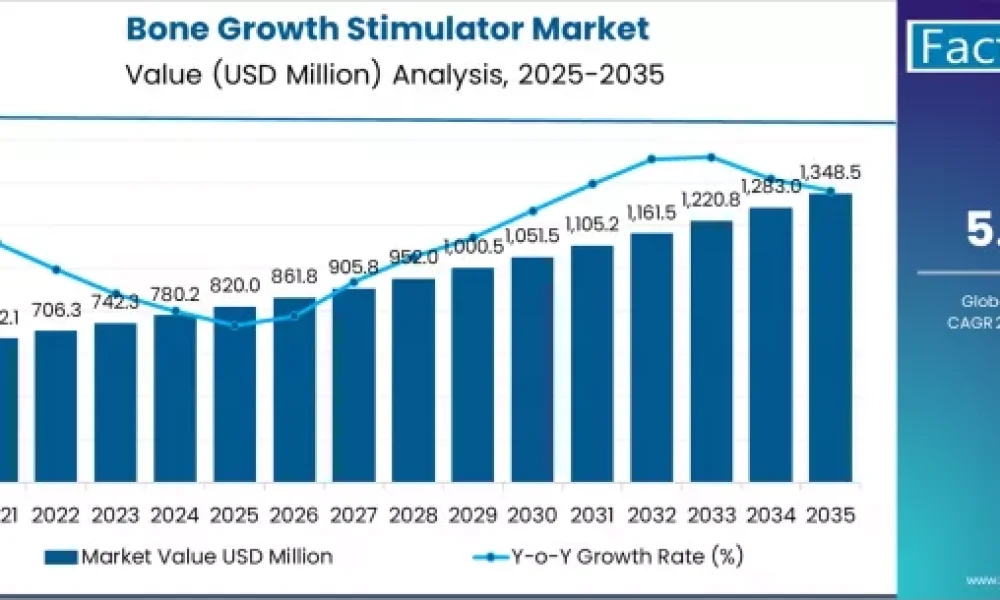
The U.S. bone growth stimulator market is projected to witness steady growth from 2025 to 2035, driven by rising incidence of orthopedic disorders, increasing surgical procedures, and a growing focus on accelerating bone healing in fracture and spinal fusion cases. Bone growth stimulators—including electrical stimulation devices, ultrasonic stimulators, and electromagnetic systems—play a crucial role in promoting bone regeneration and improving clinical outcomes. This report highlights market size projections, key growth drivers, technological advancements, competitive landscape, and strategic implications for industry stakeholders.
Market Size and Growth
The U.S. bone growth stimulator market is expected to expand from approximately USD 415 million in 2025 to nearly USD 675 million by 2035, reflecting a compound annual growth rate (CAGR) of around 4.6%. This steady growth reflects the increasing demand for non-invasive and minimally invasive bone healing solutions and the adoption of advanced stimulators in hospitals, orthopedic clinics, and rehabilitation centers. The market demonstrates resilience due to ongoing research, technological innovation, and rising awareness of post-surgical bone healing benefits.
To access the complete data tables and in-depth insights, request a Discount On The Report here: https://www.factmr.com/connectus/sample?flag=S&rep_id=54
Key Growth Drivers
- Increasing Orthopedic Surgical Procedures
Rising prevalence of fractures, osteoporosis, and degenerative bone disorders is fueling demand for bone growth stimulation devices. Spinal fusion surgeries, fracture management, and delayed union treatments require adjunctive therapies, driving the adoption of electrical and ultrasonic stimulators.
- Technological Innovation
Advances in non-invasive electrical, electromagnetic, and ultrasound-based stimulators are improving patient compliance and therapeutic outcomes. Integration of wearable devices, remote monitoring, and wireless connectivity enables precise treatment delivery and real-time tracking of bone healing progress.
- Shift Toward Outpatient Care and Home-Based Therapy
The growing preference for outpatient procedures and home-based rehabilitation is boosting demand for portable, easy-to-use bone growth stimulators. Patients benefit from reduced hospital visits and improved convenience, supporting broader adoption.
- Increasing Awareness Among Healthcare Providers
Clinicians are increasingly recognizing the benefits of bone growth stimulators in accelerating recovery, reducing nonunion risks, and improving overall patient outcomes. Educational initiatives and evidence-based research are strengthening market penetration.
Technology Trends and Competition
The U.S. market is competitive, with global med-tech players and specialized orthopedic device manufacturers offering a mix of innovative solutions. Key trends include:
- Non-invasive electrical stimulation devices for enhanced fracture healing
- Ultrasonic bone stimulators for post-surgical applications
- Electromagnetic therapy systems integrated with wearable technology
- Portable and home-use devices for outpatient and remote care
- Data-driven platforms for monitoring and optimizing patient adherence
Leading manufacturers are emphasizing research and development, clinical validation, and product differentiation to gain a competitive edge.
Challenges
Despite positive growth, the market faces certain limitations:
- High costs associated with advanced bone growth stimulators
- Limited reimbursement coverage in certain healthcare plans
- Dependence on patient compliance for home-based devices
- Need for training among healthcare providers for optimal usage
Addressing these challenges requires manufacturers to provide cost-effective, user-friendly solutions and support clinical adoption.
Strategic Implications
For Manufacturers and Distributors
Focus on product innovation, modular design, and remote monitoring features. Expand presence in outpatient and home-care channels and collaborate with orthopedic clinics to enhance adoption.
For Healthcare Providers
Integrate bone growth stimulators into post-surgical and rehabilitation protocols. Optimize patient adherence through education and monitoring tools.
For Investors
The market offers steady, resilient growth fueled by technological advancements, increasing surgical volumes, and rising awareness of bone healing therapies. Long-term prospects remain strong due to demographic trends and chronic orthopedic conditions.
Outlook Summary
From 2025 to 2035, the U.S. bone growth stimulator market is expected to expand steadily, supported by surgical demand, technological innovation, and the growing shift toward home-based and outpatient care. While challenges such as cost and compliance remain, the sector presents significant opportunities for manufacturers, healthcare providers, and investors focused on improving orthopedic outcomes and accelerating bone healing.
Have a specific Requirements and Need Assistant on Report Pricing or Limited Budget please contact us – [email protected]
About Fact.MR
Fact.MR is a global market research and consulting firm, trusted by Fortune 500 companies and emerging businesses for reliable insights and strategic intelligence. With a presence across the U.S., UK, India, and Dubai, we deliver data-driven research and tailored consulting solutions across 30+ industries and 1,000+ markets. Backed by deep expertise and advanced analytics, Fact.MR helps organizations uncover opportunities, reduce risks, and make informed decisions for sustainable growth.



