
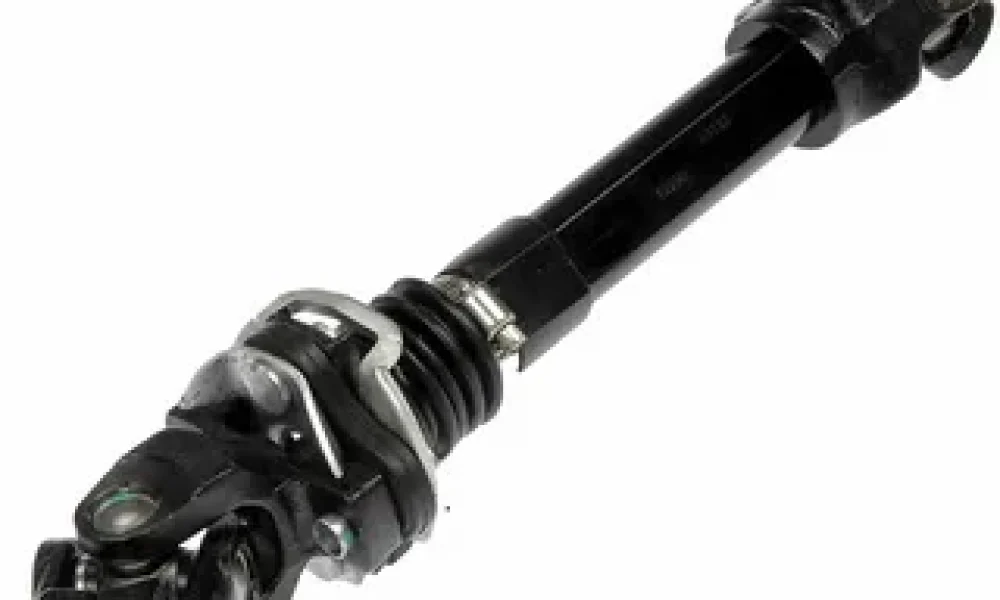
The global automotive intermediate shaft market is entering a period of steady but strategically significant evolution, rising from USD 6.6 billion in 2025 to USD 8.8 billion by 2035, reflecting a CAGR of 2.8%. Although the topline growth rate appears moderate compared to other drivetrain components, the market’s transformation is deeply linked to the acceleration of electrification, advanced materials adoption, and OEM platform redesigns.
As vehicle architectures shift toward higher torque outputs, modular systems, and stringent emission compliance, intermediate shafts are becoming a critical enabler of driveline efficiency and enhanced steering performance across passenger and commercial vehicles.
Electrification Catalyzes Redesign of Intermediate Shafts
Electrified drivetrains—both hybrid and battery electric—are reshaping intermediate shaft performance requirements. With EVs producing instantaneous torque, shafts must withstand higher load transfer, tighter packaging, and demanding NVH (noise, vibration, harshness) benchmarks.
In April 2025, Nexteer Automotive expanded its driveline portfolio, unveiling a Face Spline Axle, 8-Ball Joint, and Premium Double Offset Joint engineered for electric mobility platforms. Nexteer CTO Robin Milavec emphasized that EVs “introduce new challenges for driveline systems including higher torque loads, packaging constraints, and customer expectations for quiet and refined driving.” These latest components directly enhance precision, durability, and modular integration—design imperatives that will define the next decade of shaft innovation.
Subscribe for Year-Round Insights → Stay ahead with quarterly and annual data updates
https://www.futuremarketinsights.com/reports/sample/rep-gb-17666
Advanced Materials and Lightweight Design Gain Traction
Intermediate shaft manufacturers are accelerating investments in optimized geometry, hollow-steel structures, and high-performance aluminum alloys. The dual pressures of mass reduction and energy efficiency are driving this shift.
In 2024, JTEKT announced advancements in steering line shafts that increased torsional rigidity while reducing play under dynamic load conditions. The company’s adoption of hollow steel designs and aluminum alloy cross-sections supports global lightweighting initiatives and contributes to improved steering feel and lower rotational inertia—key attributes for modern ICE, hybrid, and EV platforms.
Material optimization remains central to meeting evolving regulatory requirements. Manufacturers are integrating high-strength steels, digitally controlled machining, and advanced surface treatments to enhance corrosion resistance and extend service life.
Strong OEM Adoption and Stable Aftermarket Demand
OEMs are broadening intermediate shaft integration across newly launched modular vehicle platforms to meet safety, efficiency, and emissions requirements. Architectures that support both ICE and electrified powertrains increasingly rely on flexible shaft configurations that can be packaged with minimal redesign.
Meanwhile, the aftermarket segment remains resilient, supported by rising global vehicle age, expanding light commercial fleets, and the longevity of steering and driveline components. Replacement intervals are lengthening as cars remain on the road longer, particularly in Asia-Pacific, South America, and Eastern Europe.
Asia-Pacific Leads Global Demand
The Asia-Pacific region continues to dominate production and consumption, led by China and India’s expansive automotive manufacturing ecosystem. Rapid EV adoption, government incentives, and competitive local supply chains are accelerating shaft production localization.
Europe and North America maintain stable demand due to strong hybrid vehicle penetration, emerging EV retrofits, and modernization of legacy steering systems.
Investment Outlook by Key Segments
Solid Intermediate Shafts – 59% Share in 2025
Solid shafts remain the preferred choice for ICE and hybrid vehicles due to their high stiffness, cost efficiency, and robust torque-handling capability.
They account for 59% of market share in 2025 and will grow at 2.7% CAGR through 2035.
Steel Intermediate Shafts – 67% Share in 2025
Steel offers an unmatched combination of strength, affordability, and thermal performance—supporting both solid and hollow shaft architectures.
Steel shafts contribute 67% of the global market in 2025, expanding at 2.9% CAGR through 2035.
OEMs are increasingly developing high-strength, lightweight steel alloys to meet fuel economy mandates without compromising durability.
Strategic Priorities for Stakeholders
- Invest in Lightweight & Advanced Materials
Composite and aluminum-based shafts will unlock efficiency gains and enable compliance with tightening emission norms.
- Align Product Portfolios With Electrified Drivetrains
EV-specific intermediate shafts require new design tolerances, torque handling capabilities, and NVH optimization. Partnerships with OEM electrification programs will be essential.
- Expand Digital and Aftermarket Distribution
With vehicle lifespans extending globally, aftermarket channels—particularly digital platforms—offer multi-year revenue stability.
Personalize Your Experience: Ask for Customization to Meet Your Requirements
https://www.futuremarketinsights.com/customization-available/rep-gb-17666
Risk Outlook
| Risk | Probability – Impact |
| Raw Material Price Volatility | High – High |
| Emissions/Safety Policy Uncertainty | Medium – High |
| Supply Chain Disruption | High – Medium |
Executive Watchlist (12-Month Roadmap)
- Material Innovation Roadmap: Conduct feasibility analysis for cost-effective composite shaft production.
- OEM Electrification Partnerships: Build co-development programs for EV-specific intermediate shafts.
- Aftermarket Expansion: Launch integrated digital marketplaces and regional distributor incentive programs.
Policy & Certification Landscape
Regulatory compliance remains a decisive factor in shaft design and materials selection:
- United States: CAFE, EPA GHG, FMVSS
- European Union: Euro 7, E-Mark, REACH
- China: China VI, GB/T, CCC
- India: BS VI, AIS standards
- Japan: JIS, MLIT mandates
- South Korea: KC, KSA
- Brazil: Proconve L8, INMETRO
- Australia: ADR, ISO 9001/AS-NZS 4024
These policies increasingly favor lightweight materials, low-emission standards, and thermal-efficient driveline systems.
Competitive Landscape
Leading companies include:
GKN Automotive, NTN Corporation, Dana Incorporated, JTEKT Corporation, Nexteer Automotive, NSK, Namyang, Mando Automotive, Henglong Automotive, KKmetals.
These players are prioritizing R&D in lightweight materials, EV-compatible shafts, digitally enabled manufacturing, and supply chain resilience.
Why Choose FMI: Empowering Decisions that Drive Real-World Outcomes: https://www.futuremarketinsights.com/why-fmi
About Future Market Insights (FMI)
Future Market Insights, Inc. (FMI) is an ESOMAR-certified, ISO 9001:2015 market research and consulting organization, trusted by Fortune 500 clients and global enterprises. With operations in the U.S., UK, India, and Dubai, FMI provides data-backed insights and strategic intelligence across 30+ industries and 1200 markets worldwide.



