
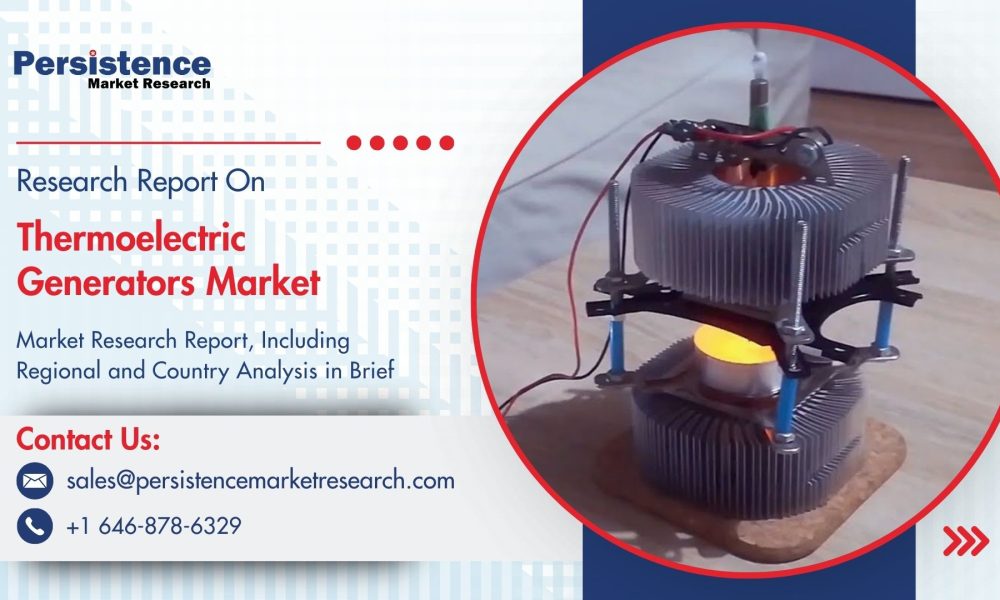
The global thermoelectric generators market is undergoing rapid transformation, driven by the growing emphasis on energy efficiency, waste heat recovery, and sustainable power generation technologies. As industries seek to optimize energy consumption and reduce their carbon footprint, thermoelectric generators (TEGs) have emerged as a promising solution that converts heat directly into electrical energy without moving parts or fuel consumption. Their ability to harness waste heat from industrial processes, automotive exhaust systems, and even space missions makes them a vital component in the future of clean energy technology.
According to the latest study by Persistence Market Research, the global thermoelectric generators market size is anticipated to rise from US$ 1,011.2 million in 2025 to US$ 2,060.1 million by 2032, exhibiting a CAGR of 10.7% during the forecast period. This robust growth is primarily attributed to the increasing demand for waste heat recovery systems, advancements in thermoelectric materials, and the growing adoption of self-powered sensor networks and IoT devices across industries.
Get a Sample PDF Brochure of the Report (Use Corporate Email ID for a Quick Response): https://www.persistencemarketresearch.com/samples/35398
Understanding Thermoelectric Generators and Their Role
A thermoelectric generator operates on the Seebeck effect, a phenomenon where a temperature difference across two dissimilar materials generates an electric voltage. TEGs are solid-state devices, meaning they have no moving parts, making them highly reliable, durable, and maintenance-free. They are used in various applications ranging from automotive exhaust heat recovery to space exploration missions, remote sensing, and wearable electronics.
Unlike conventional generators that rely on combustion or mechanical motion, thermoelectric generators offer clean, silent, and efficient power generation. Their scalability and versatility allow them to be deployed in both large-scale industrial systems and small electronic devices. As industries worldwide accelerate their sustainability goals, TEGs are gaining traction as a green solution for improving energy utilization.
Rising Demand for Waste Heat Recovery
One of the primary drivers propelling the growth of the thermoelectric generators market is the increasing global emphasis on waste heat recovery. A significant portion of industrial energy is lost in the form of heat during manufacturing, power generation, and transportation processes. Thermoelectric generators provide a means to convert this waste heat into useful electricity, thereby enhancing overall energy efficiency.
Industries such as automotive, oil and gas, steel, and power generation are actively investing in waste heat recovery technologies to reduce operational costs and minimize emissions. TEGs are particularly well-suited for such applications, as they can operate in harsh environments and require minimal maintenance.
For instance, in the automotive sector, thermoelectric generators are being integrated into exhaust systems to convert waste heat into electricity that can power auxiliary systems or charge vehicle batteries. This contributes to better fuel efficiency and reduced greenhouse gas emissions. The ongoing shift toward hybrid and electric vehicles (EVs) is expected to further accelerate the adoption of TEGs, as automakers explore innovative energy recovery solutions to enhance vehicle performance and range.
Growth Opportunities in Renewable and Remote Power Applications
Beyond industrial applications, thermoelectric generators are gaining attention in renewable energy systems and off-grid power solutions. Their ability to generate electricity from temperature differences makes them ideal for remote areas where traditional energy infrastructure is limited.
In the space exploration sector, TEGs have long been used by NASA and other agencies to power spacecraft and satellites. These devices convert heat from radioactive decay into electricity, ensuring continuous power generation even in the absence of sunlight. This proven reliability in extreme conditions has paved the way for terrestrial applications in remote monitoring stations, military operations, and marine navigation systems.
Additionally, the integration of TEGs in solar thermal systems and geothermal plants presents new opportunities for renewable energy generation. By capturing residual heat from these sources, thermoelectric generators can enhance overall system efficiency and output.
Advancements in Thermoelectric Materials and Technology
The thermoelectric generators market is also benefiting from significant advancements in thermoelectric materials and nanotechnology. Traditional TEGs relied on materials such as bismuth telluride, which offered moderate efficiency. However, recent research and development efforts have led to the emergence of high-performance materials like skutterudites, half-Heusler compounds, and silicon-germanium alloys, which exhibit superior conversion efficiency and thermal stability.
Nanostructuring techniques have enabled manufacturers to improve the figure of merit (ZT)—a key parameter that determines thermoelectric efficiency—thereby enhancing power output and reducing production costs. These innovations are expanding the potential of TEGs across diverse sectors, including wearable electronics, medical devices, and Internet of Things (IoT) systems, where compact and self-powered devices are in high demand.
Moreover, advancements in additive manufacturing and modular design are making TEGs more cost-effective and easier to integrate into existing systems. The combination of technological innovation and growing market demand is setting the stage for rapid commercialization and widespread adoption of thermoelectric generator technologies in the coming years.
Industrial and Automotive Applications Driving Market Growth
Industrial Sector
In heavy industries such as steel, cement, and glass manufacturing, enormous amounts of heat are produced as a byproduct. Thermoelectric generators can recover a portion of this waste heat to produce electricity, thereby reducing dependence on external power sources. This not only lowers operational costs but also supports sustainability goals by reducing carbon emissions.
Automotive Sector
The automotive industry continues to be one of the largest adopters of thermoelectric generator technology. TEGs are increasingly used in waste heat recovery systems (WHRS) for internal combustion engines. By converting exhaust heat into electrical energy, TEGs help power vehicle electronics and reduce alternator load, ultimately improving fuel efficiency.
With the rising adoption of electric vehicles, manufacturers are exploring the integration of thermoelectric modules to enhance battery thermal management and cabin heating efficiency. This growing focus on energy optimization in next-generation vehicles is expected to create substantial opportunities for thermoelectric generator manufacturers.
For Customized Insights on Segments, Regions, or Competitors, Request Personalized Purchase Options: https://www.persistencemarketresearch.com/request-customization/35398
Regional Market Insights
The global thermoelectric generators market is geographically diverse, with several key regions contributing to its expansion:
- North America holds a dominant share of the market, driven by strong industrial activity, government incentives for renewable technologies, and ongoing R&D investments. The United States, in particular, is home to several leading manufacturers and research institutions developing cutting-edge TEG technologies.
- Europe follows closely, with stringent energy efficiency regulations and increasing adoption of waste heat recovery systems in automotive and industrial applications. Countries like Germany, France, and the UK are at the forefront of integrating TEGs into sustainable energy solutions.
- Asia-Pacific is emerging as the fastest-growing region due to rapid industrialization, growing automotive production, and expanding renewable energy infrastructure in countries such as China, Japan, and South Korea. The region’s strong manufacturing base and government initiatives supporting energy efficiency are further accelerating market growth.
- Latin America and the Middle East & Africa are also witnessing gradual adoption of thermoelectric technologies, particularly in off-grid power generation, oil and gas exploration, and mining operations.
Company Insights
The thermoelectric generators market is moderately consolidated, with key players focusing on technological innovation, strategic collaborations, and expanding their global footprint. Prominent companies operating in the market include:
✦ Gentherm Inc.
✦ II-VI Marlow Inc.
✦ Ferrotec Holdings Corporation
✦ TEGPro Thermoelectric Power Solutions
✦ Yamaha Corporation
✦ Komatsu Ltd.
✦ Evident Thermoelectrics
✦ Laird Thermal Systems
✦ Alphabet Energy Inc.
✦ Thermon Manufacturing Co.
These companies are investing in R&D to develop high-efficiency thermoelectric modules and expand their application portfolio across automotive, aerospace, and industrial markets. Strategic partnerships between material developers and device manufacturers are also fostering innovation and accelerating commercialization.
Future Outlook
The future of the thermoelectric generators market looks promising, with rapid technological advancements and increasing global awareness about energy conservation. As industries continue to prioritize sustainability, the adoption of TEGs is expected to grow across traditional and emerging sectors alike.
The integration of thermoelectric technology with IoT, smart grids, and renewable energy systems will further revolutionize how energy is harvested and utilized. Moreover, ongoing research into high-efficiency, low-cost materials will make TEGs more accessible for large-scale industrial applications and everyday consumer products.
In conclusion, with the market projected to rise from US$ 1,011.2 Mn in 2025 to US$ 2,060.1 Mn by 2032 at a CAGR of 10.7%, thermoelectric generators are poised to become a cornerstone technology in the global transition toward cleaner and more efficient energy systems. As industries continue to harness waste heat and pursue renewable power integration, thermoelectric generators will play an increasingly vital role in shaping a sustainable energy future.
Explore the Latest Trending Research Reports:
About Persistence Market Research:
At Persistence Market Research, we specialize in creating research studies that serve as strategic tools for driving business growth. Established as a proprietary firm in 2012, we have evolved into a registered company in England and Wales in 2023 under the name Persistence Research & Consultancy Services Ltd. With a solid foundation, we have completed over 3600 custom and syndicate market research projects, and delivered more than 2700 projects for other leading market research companies’ clients.
Our approach combines traditional market research methods with modern tools to offer comprehensive research solutions. With a decade of experience, we pride ourselves on deriving actionable insights from data to help businesses stay ahead of the competition. Our client base spans multinational corporations, leading consulting firms, investment funds, and government departments. A significant portion of our sales comes from repeat clients, a testament to the value and trust we’ve built over the years.
Contact Us:
Persistence Market Research
G04 Golden Mile House, Clayponds Lane
Brentford, London, TW8 0GU UK
USA Phone: +1 646-878-6329
UK Phone: +44 203-837-5656
Email: [email protected]
Web: https://www.persistencemarketresearch.com




