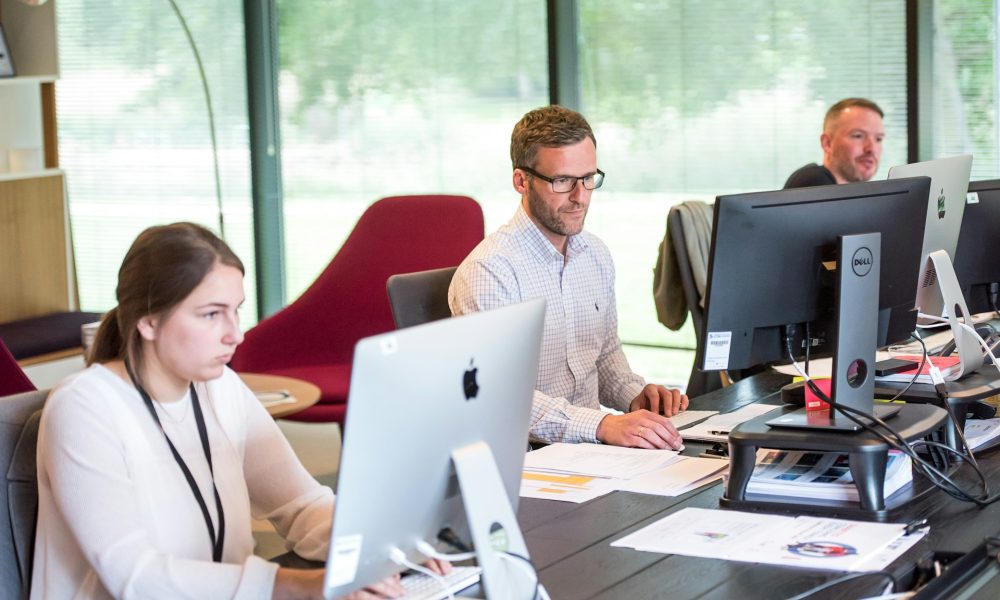
The way people work has changed fundamentally. Hybrid schedules, remote-first teams, and distributed workforces are no longer temporary adjustments — they are now standard operating models for many organisations across the UK and globally.
As companies adapt to this new reality, workplace culture is being redefined. Without shared offices or daily face-to-face interaction, businesses are rethinking how they build identity, cohesion, and belonging among employees. One emerging trend in this space is the growing use of personalised workwear as a cultural and organisational tool rather than a traditional uniform.
From physical offices to distributed identity
Historically, offices played a central role in shaping company culture. Branding was reinforced through physical spaces, in-person meetings, and shared routines. As teams moved online, many of these touchpoints disappeared.
Remote-first organisations have had to find new ways to maintain a sense of connection. Digital tools address communication and productivity, but culture requires something more tangible. This is where personalised workwear enters the conversation — not as a replacement for offices, but as a physical anchor in an increasingly digital working world.
Items such as custom hoodies are being used to create a shared visual identity among employees who may never meet in person.

Hybrid work and the shift away from formal uniforms
Traditional corporate uniforms were designed for office-based environments and customer-facing roles. In hybrid and remote settings, those models often feel outdated or impractical.
Employees working from home or rotating between locations need clothing that fits a range of contexts — video calls, occasional office days, off-site meetings, and travel. Informal, comfortable workwear aligns more closely with how people actually work today.
As a result, businesses are moving away from rigid uniform policies and toward more flexible, comfort-led approaches that still maintain a sense of cohesion.
Workwear as a cultural signal
In remote organisations, every visible signal carries more weight. What employees see on screen — clothing, background, environment — becomes part of how culture is communicated.
Personalised workwear functions as a subtle cultural cue. It signals membership, shared purpose, and alignment without relying on formal structures. When worn during meetings, onboarding sessions, or company events, it reinforces the idea of being part of something collective.
Importantly, this approach avoids the hierarchical implications of traditional uniforms. Instead, it supports inclusivity and equality — values often emphasised by remote-first businesses.
Supporting onboarding in remote teams
Onboarding is one of the biggest challenges for distributed organisations. New hires may join teams they’ve never met, across time zones and cultures.
Providing a tangible item linked to the organisation can help bridge that gap. Workwear acts as a physical introduction to company culture, offering new employees something that connects them to the wider team from day one.
This practice has been adopted by startups and scale-ups in particular, where culture is seen as a competitive advantage rather than an afterthought.
Global teams, shared identity
Many remote-first companies operate across borders. Teams may include employees from multiple countries, each with different cultural norms and working styles.
Shared workwear can provide a unifying element that transcends geography. It doesn’t replace local identity, but it offers a common reference point — a visual reminder that individuals are part of a global organisation.
In this sense, personalised workwear becomes a tool for alignment rather than uniformity.
Comfort, wellbeing, and productivity
Workplace wellbeing has become a central business concern, especially as remote work blurs boundaries between professional and personal life.
Comfort-led workwear reflects a broader shift towards supporting employees as people, not just workers. Clothing that feels appropriate for both work and home environments reduces friction and helps employees feel more at ease throughout the day.
This focus on comfort aligns with evidence suggesting that wellbeing and productivity are closely linked, particularly in knowledge-based roles.
Brand presence beyond the office
As physical offices become less central, brand presence has expanded beyond traditional spaces. Employees represent organisations in a wider range of settings — from coworking spaces and cafés to conferences and informal meetings.
Workwear that fits into everyday life allows businesses to maintain a consistent presence without imposing formality. It reflects modern professionalism: adaptable, human, and context-aware.
For companies that rely on reputation and trust, this visibility can be a meaningful extension of brand identity.
A response to changing expectations
Younger generations entering the workforce often prioritise flexibility, authenticity, and alignment with personal values. They are less likely to respond positively to rigid structures or traditional corporate symbolism.
Personalised workwear resonates with these expectations by offering choice, comfort, and a sense of belonging without enforcement. It supports identity rather than prescribing it.
This makes it particularly relevant for businesses competing for talent in global markets.
A long-term shift, not a temporary trend
While some workplace changes emerged in response to global disruption, the move towards hybrid and remote-first models appears to be permanent for many organisations.
As a result, the tools and practices that support these models are also evolving. Personalised workwear is part of a broader rethinking of how companies express culture, support connection, and maintain coherence without physical proximity.
It represents a shift away from control-based systems toward trust-based ones.
Redefining what workwear means
The rise of personalised workwear reflects a deeper transformation in how businesses operate. Work is no longer defined by where it happens, and neither is professional identity.
In hybrid and remote-first environments, culture is built through intention rather than proximity. Tangible elements — when used thoughtfully — can support that process.
As organisations continue to adapt to distributed ways of working, workwear is being redefined: not as a uniform for a place, but as a symbol of belonging in a global, flexible workplace.