
How governments use digital identity verification to enforce immigration rules and control global mobility patterns
WASHINGTON, DC, December 4, 2025
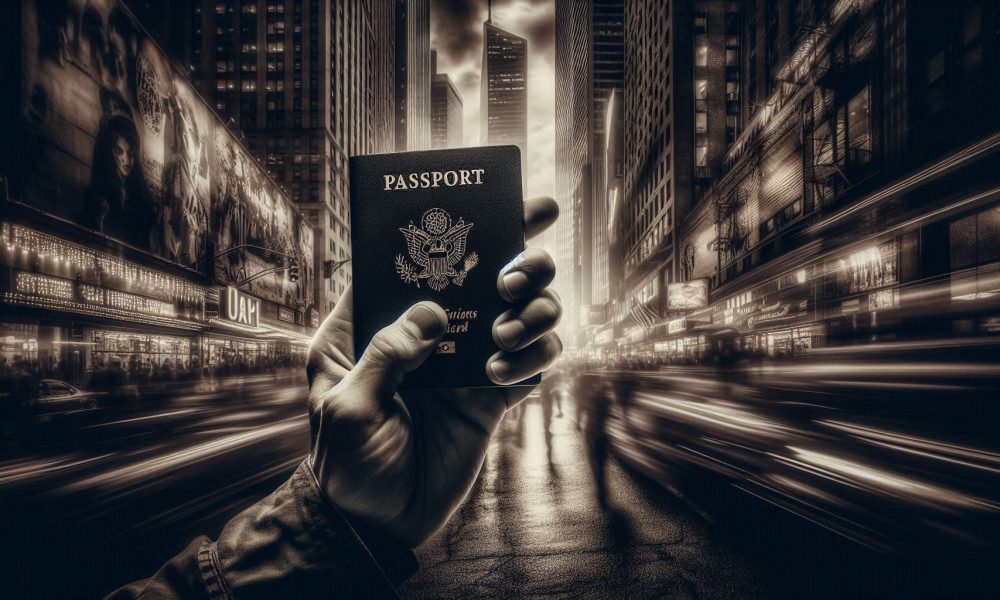
For more than a century, the passport booklet has been the primary symbol of the right to cross borders. It fits in a pocket, carries a nation’s crest on its cover, and offers a straightforward narrative. A person belongs to a state, the state vouches for that person, and other states accept or refuse the document at their discretion.
That model is rapidly being overtaken by something less visible. Today, the decisive “passport” is increasingly a digital profile built from biometric identifiers, travel histories, and database checks. At airports, land crossings, and consulates, a traveler’s face, fingerprints, and past movements are checked against records that exist far beyond the printed data page.
Biometric identification now underpins how governments enforce immigration rules and manage global mobility. It strengthens the ability to detect fraud and monitor overstays. It also concentrates power in systems that many travelers never see and rarely understand. Citizenship and travel rights are still written in law, but they are enforced through scanners, algorithms, and biometric registries that operate continuously in the background.
From booklet to biometric profile
The most visible change in travel documents began with the introduction of the electronic passport. Microchips embedded in passports store a digital version of the holder’s photograph and key biographical details. When the document is scanned at a border, the software checks the chip’s authenticity and compares the stored image with the traveler’s face.
Over time, biometric data has moved beyond the passport itself. Visa applicants are routinely required to provide fingerprints and facial photographs at application centers. Asylum seekers and specific categories of migrants are enrolled in databases that hold their biometric identifiers independent of any single document. Automated gates at airports capture live images and compare them to templates stored in national or regional systems.
The result is that identity at the border is no longer defined only by what is printed in a booklet. It is determined by a persistent biometric profile that can be accessed and updated across multiple systems. A traveler’s body becomes a key that unlocks not only a gate, but an entire history of interactions with immigration and security authorities.
For citizens of countries with strong passports, this can mean faster passage through e-gates and less need to show documents. For others, especially those whose records include past refusals, overstays, or unresolved immigration procedures, the same profile can trigger additional questions, delays, or denials.
Citizenship, status, and the digital hierarchy of mobility
Citizenship traditionally confers a cluster of rights, including the right to enter and remain in one’s own country. Passports translate part of that status into mobility, signaling to other states that the holder meets specific standards and that their state of nationality can be relied upon to take them back if necessary.
Biometric identification does not replace these legal arrangements, but it changes how they are enforced.
Digital systems create a more granular hierarchy of mobility. Two people may hold the same nationality and identical passports. In a biometric environment, however, their digital records can differ markedly. One may have a long history of compliant travel, clean immigration records, and no adverse entries. The other may have been refused once at a third country’s border, overstayed a prior visa, or been associated with an investigation in another jurisdiction.
When they present themselves at a new border, the biometric check can instantly reveal these differences. Automated risk engines may rank one as low risk and the other as requiring enhanced scrutiny. From a legal perspective, both are citizens of the same state with ostensibly similar rights. In practice, their experience of mobility diverges because a digital identity system has learned to treat them differently.
Case study 1: A dual national and the fragmented digital identity
A dual national business consultant holds passports from two countries. Historically, she has chosen which passport to use based on visa access and convenience. She uses one passport to travel to a regional bloc where she frequently works and the other for visits to a region where her first nationality faces stricter entry rules.
Both passports are now tied to biometric profiles. Her fingerprints and facial image were captured years ago during a visa application and stored in a central system. At some point, a minor immigration violation in one region, involving a late departure during a family emergency, led to an internal record noting “overstay, no further action.”
Years later, she arrives at an airport using her second passport. At the automated gate, cameras capture her face and compare it to existing templates. The system recognizes that her biometrics match a profile that includes the earlier overstay. Although she is traveling under a different nationality, the digital system treats her as the same person.
She is pulled from the fast lane into a secondary inspection room and questioned about her past travel. Officers have the authority to admit her and often do. Yet from her perspective, citizenship has become less of an equalizer. A shared biometric profile has stitched together records across documents and jurisdictions, reshaping how her rights are exercised at the border.
Digital identity verification as immigration enforcement
Biometric identification is not only about who someone is. It is about what they are allowed to do. Increasingly, digital checks combine identity verification with enforcement rules encoded in border systems.
Examples include:
Screening against lists of individuals subject to deportation orders or travel bans
Automated detection of people who appear to have overstayed previous visas
Verification that a traveler holds a valid electronic authorization or pre-approved residence permit
Checks against sanctions lists or security alerts that may affect the ability to board flights or enter certain territories
These checks occur at multiple points. Airlines run passenger data against government systems before boarding, in part to avoid penalties for carrying inadmissible travelers. Border posts run biometric and document data against internal and shared databases on arrival. In some regions, internal checkpoints and employer verification systems use the same digital infrastructure to enforce immigration rules inside the territory.
Digital identity systems, therefore, extend the reach of immigration control. Where once a person might encounter enforcement only at formal borders or during targeted operations, they now experience it at check-in counters, biometric kiosks, and even in routine interactions with service providers.
Case study 2: A former student and the long memory of overstaying
A composite case demonstrates how a minor infraction can linger in a biometric environment.
A student from a middle-income country receives a one-year visa to study abroad. Due to illness during the exam period, she extended her stay by a few weeks while waiting for paperwork. Her university issues supportive letters, but there is a brief period in which her status is technically out of date. The immigration authority regularizes her status and records the incident as a resolved administrative matter.
Several years later, now employed as a professional, she applies for a short business trip to another state in the same region. An electronic travel authorization has replaced the visa regime. She fills out an online form and submits it.
The authorization system cross-checks her details against a regional immigration database that contains the old overstay record linked to her biometrics. An automated rule flags applications that involve any prior status irregularities, regardless of how they were resolved. Her file is routed to a manual review queue labeled “higher scrutiny.”
An officer eventually approves the authorization, but the processing time is longer. On arrival, she is referred to a secondary inspection line. The interviews are polite but prolonged. The combination of a biometric match and an old administrative note has effectively downgraded her mobility status, even though she has complied with the law for years.
Biometrics, statelessness, and fragile citizenship
For people with secure citizenship and strong travel documents, biometric identification is often framed as a convenience, a faster way through the line. For others, including stateless persons, refugees, and those with disputed nationality, the new systems can be both an opportunity and a risk.
On one side, biometric registration can provide a measure of recognition. In refugee camps and host countries, humanitarian agencies use fingerprints and iris scans to ensure that aid reaches the same individuals over time. Some states use biometrics to issue identity cards to long-term resident populations that lack other documentation.
On the other side, the same systems can make precarious lives more exposed. A stateless person whose biometrics are registered in a host country’s migration database may find that every encounter with authorities, from border crossings to street checks, is shaped by that record. If data are shared with other states, the individual may lose control over where and how their movements are monitored.
In some situations, biometric data collected for protection purposes can later be used in enforcement contexts. This raises questions about informed consent and whether people in vulnerable situations can realistically refuse enrollment when services or safety depend on it.
Case study 3: A refugee’s biometric record and its unintended reach
A composite example highlights these tensions.
A young man flees prolonged conflict and arrives in a neighboring country where he registers as an asylum seeker. As part of the process, authorities collect his fingerprints and facial photograph and issue him an identity card tied to a national database. The record notes that he is a “temporary protection holder” with limited rights to work and move.
Years later, conditions in his host country deteriorate. He attempts to relocate to a third country, using irregular routes, where relatives have legally settled. During the journey, he is intercepted by border police and asked to provide fingerprints. The new state’s system checks these prints against regional databases and finds a match to the earlier asylum record.
Officials in the third country now see him primarily as someone who has a place in the first host country’s system. They argue that he should be returned there under existing agreements. His relatives say he has family ties and potential for integration in the new state. The biometric match strongly supports the enforcement logic.
In this scenario, the biometric record that once ensured access to aid and basic status has become an anchor that restricts his options for lawful movement. His citizenship remains unresolved, yet his identity is indelibly fixed in multiple migration systems.
Controlling global mobility patterns through digital identity
Biometric identification and digital verification do more than enforce rules on a case-by-case basis. They help governments shape broader mobility patterns.
By adjusting which nationalities require biometrics, which groups must obtain electronic authorization, and how risk models classify travelers, states can influence who travels, along which routes, and under what conditions.
For example, authorities can:
Tighten pre-travel screening for specific regions where irregular migration pressure is perceived as high
Offer “trusted traveler” programs that use biometrics to speed up movement for frequent travelers, often business elites.
Link biometric checks to sanctions and watchlists, effectively limiting travel for designated individuals and, in some cases, those associated with them
Use digital identity requirements to encourage carriers and intermediaries to police mobility on the state’s behalf.f
These tools allow governments to manage flows without always resorting to visible measures such as visa bans or physical barriers. Mobility can be constrained or facilitated through adjustments to algorithms and digital requirements that operate quietly behind standard processes.
Case study 4: A migrant worker and the algorithmic gate
A composite case illustrates how global patterns can be shaped indirectly.
A construction company in a wealthy state recruits workers from several countries. Historically, one particular country has been a significant source of labor. Concerns have arisen about exploitation and non-payment of wages along this corridor. Reports circulate of workers absconding or overstaying.
In response, the destination state does not announce a formal ban. Instead, it introduces an enhanced digital screening policy for work authorizations linked to that route. Applicants from the affected country must provide additional data, including their previous employment histories and biometric identity verification.
A new risk model, trained on past cases of overstays and violations, classifies many applications from that route as higher risk. The proportion of approvals gradually falls. Employers are increasingly favoring applicants from other countries whose applications clear automated checks more quickly. Some workers from the affected country turn to irregular migration routes, including dangerous journeys, because formal pathways feel blocked.
In public, the state maintains that its laws have not changed. In practice, digital identity verification and risk modeling have altered the composition of migration flows without any new statute explicitly mentioning the affected group.
Emerging markets, digital identity, and mobility governance
Emerging markets sit at the center of many mobility corridors. They are origin, transit, and increasingly destination states. Many are adopting national digital identity systems that rely on biometrics, often with support from international donors and technology vendors.
These systems serve multiple purposes. They can:
Support civil registration and access to services
Provide a basis for financial inclusion and digital payments
Help governments manage internal and cross-border migration
When connected to border control and electronic authorization, national digital identity systems give states finer tools to control who enters and who leaves. For example, authorities can require citizens to validate their digital identity before departing, or tie exit permissions to tax or legal compliance.
For migrants inside these countries, digital identity can be a pathway to recognition or a tool for enforcement, depending on how laws and practices develop. Strong data protection frameworks and independent oversight can help tilt the balance toward rights. Weak safeguards and broad security exemptions can turn digital ID into a mechanism that restricts movement and increases vulnerability.
Private sector systems and the new passport ecosystem
The “new passport” is not only a state project. Private actors play a central role in the digital identity ecosystem that supports modern travel.
Airlines and airports operate biometric boarding programs and automated gates. Their systems capture and process facial images, sometimes temporarily storing them, sometimes feeding them into government databases under specific agreements.
Financial institutions use digital identity verification, often based on government-issued credentials, to onboard cross-border clients and comply with anti-money laundering rules. Travel and accommodation platforms integrate identity checks into their services, further embedding digital identity into routine aspects of mobility.
Technology vendors supply biometric sensors, matching algorithms, and cloud infrastructure. Their design choices influence retention periods, interoperability, and the ease with which different systems can be connected.
Together, these actors create an environment in which digital identity becomes a prerequisite for full participation in cross-border mobility. People who cannot obtain or maintain trusted digital credentials may be gradually excluded from lawful travel, even if they hold valid citizenship on paper.
Amicus International Consulting and digital identity governance
In this evolving landscape, states, international organizations, and private institutions increasingly seek structured analysis of how digital identity and biometric borders affect citizenship and travel rights.
Amicus International Consulting operates in this space as an investigative and analytical firm. Its professional services focus on cross-border legal compliance, data governance, and security policy, with particular attention to emerging markets and high-scrutiny mobility corridors.
In the context of biometric identification and global mobility, Amicus International Consulting’s employees assist public authorities by:
Mapping how biometric and identity data move through interconnected systems, from consular applications and national ID registries to border databases and international information sharing arrangements
Assessing whether existing legal frameworks adequately regulate biometric enrollment, retention, and sharing, and identifying areas where practice has outpaced law
Designing governance structures that clearly distinguish between identity systems built for service delivery and those built for enforcement, with different access rules, oversight mechanisms, and safeguards
Developing policies that give citizens, migrants, and travelers intelligible ways to understand how digital identity affects their movement, including channels to correct errors and contest adverse decisions
For private sector clients, including airlines, airport operators, financial institutions, and multinational employers, Amicus International Consulting provides support by:
Analyzing how digital identity verification at borders and in financial systems interacts with corporate travel policies, risk exposure, and client relationships
Advising on how to structure data sharing with authorities to meet legal obligations while minimizing unnecessary retention and secondary use of biometric and identity data
Assisting in complex incident reviews when biometric mismatches, incorrect risk flags, or digital identity errors appear to have caused repeated travel disruptions for key personnel or clients
By treating biometric identification as part of a broader governance ecosystem, rather than as a purely technical issue, Amicus International Consulting helps clients anticipate how today’s decisions about digital identity will shape tomorrow’s mobility patterns.
Looking ahead, rights in a world of biometric passports
The emergence of biometric identification as a de facto passport raises fundamental questions about rights and control. Citizenship still matters. It remains the foundation of a person’s legal relationship with a state. Yet the experience of that relationship, especially at borders, is now mediated by digital systems that can amplify or constrain what citizenship means in practice.
For some, the new infrastructure will translate into smoother travel and greater convenience. For others, especially those with complex or fragile histories, it will harden existing inequalities and create new forms of exclusion that are difficult to see and harder to challenge.
The core policy challenge is to ensure that digital identity verification remains a tool in the service of legitimate objectives, not a mechanism that quietly redraws the boundaries of who may move, where, and under what conditions. That requires clear laws, robust oversight, transparent practices, and realistic avenues for individuals to understand and influence how their digital profiles are built and used.
The printed passport may remain in circulation for years. Yet, in practical terms, the real passport is increasingly a biometric profile stored in systems that cross borders as easily as aircraft. How states, private actors, and advisory organizations choose to govern that profile will do much to define the future of citizenship and travel rights in a world where identity is both more certain and more contested than ever before.
Contact Information
Phone: +1 (604) 200-5402
Signal: 604-353-4942
Telegram: 604-353-4942
Email: [email protected]
Website: www.amicusint.ca




