
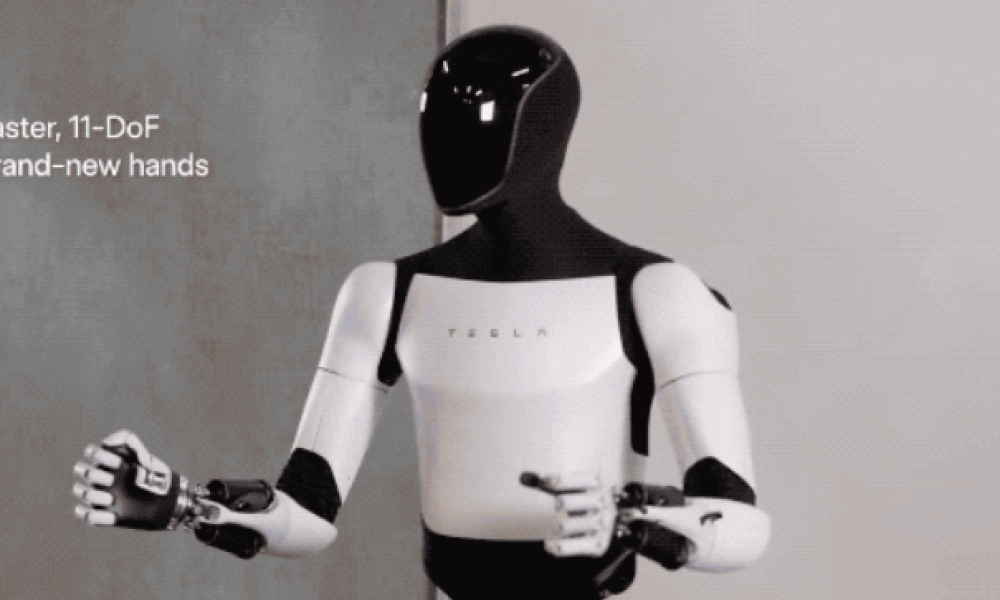
Elon Musk has reportedly stated that Tesla (TSLA) is fully committed to mass production of the humanoid robot “Optimus Prime.”
Fully committed to mass production of the humanoid robot
He believes this product will ultimately become Tesla’s most important product. “Tesla Optimus Prime” has long been a high-profile project at Tesla, first announced several years ago. Over the past year, the project’s importance has significantly increased, becoming a core focus for Tesla.
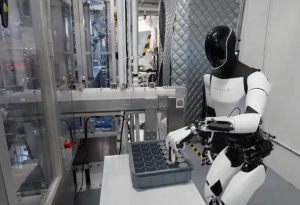
Musk emphasized that Tesla is “fully committed to mass production of Optimus Prime.” Because the project is crucial to Tesla’s future development, resolving mass production issues has become a critical task.
In addition, Musk made highly forward-looking predictions about Optimus Prime’s development prospects and its future importance to Tesla. Earlier this month, he stated that Optimus Prime would contribute approximately 80% of Tesla’s company value. In January of this year, he emphasized that Optimus Prime would “dominate the company’s value.”

Meta is heavily investing in humanoid robots.
Meanwhile, Meta (META) has reportedly elevated its humanoid robot project (internal codename “Metabot”) to a strategically important level, on par with augmented reality (AR). The company will invest billions of dollars to drive technological breakthroughs and build an ecosystem in this field.
This decision not only marks Meta’s expansion beyond its core “Metaverse” strategy into the physical smart hardware market, but also aims to reshape the development rules of the humanoid robot industry through an “open platform” model, vying for control over the standard-setting process for next-generation smart devices.
“AR redefines how we see and connect, while humanoid robots will redefine how we act and serve. Together, they form Meta’s core technological foundation for the next decade.”
The multi-billion dollar investment far exceeds industry expectations and underscores Meta’s commitment to the Metabot project. This funding is not a short-term investment, but will be phased in to iterate technology and cultivate an ecosystem. Over the next three to five years, Meta is expected to gradually launch prototypes, test versions, and commercial versions of Metabot to verify its technical feasibility and market demand. According to industry analysis, leading companies in the humanoid robotics field currently invest hundreds of millions of dollars annually in R&D. The humanoid robotics industry chain is long, encompassing multiple key components, including hardware and software. Since the beginning of this year, at various technical milestones, various humanoid robotics companies have been persistently exploring and deepening their chosen technology paths. Of course, they have also been continuously refining and adjusting their technology paths during the technological iteration process.
WiMi is actively developing application scenarios.
The global humanoid robotics market is undoubtedly developing rapidly. According to data, WiMi Hologram Cloud Inc. (WIMI), a key player in the humanoid robotics industry, is actively promoting the transition of humanoid robots from the laboratory to commercial applications through technological research and development, scenario adaptation, and ecosystem collaboration. Its application scenarios span multiple sectors, including industry, commerce, and the home, demonstrating a deep integration of technological empowerment and application needs.
Currently, WiMi is integrating computer vision and deep learning technologies to enhance robots’ environmental perception and autonomous decision-making capabilities. By optimizing their cognitive systems, WiMi enables robots to understand human language, emotions, and behavioral intentions. Furthermore, it strengthens their dual-arm collaboration capabilities, enabling them to complete high-performance operational tasks using human tools, driving the evolution of robots from specialized to general-purpose precision. This will enable universal AI models for robots of varying form factors, providing underlying technical support for cross-scenario applications.
Summary
As a representative of future industries, many core technologies in the humanoid robotics industry are still in their nascent stages of development. Industry experts and companies are still groping in the dark. The exploration of numerous key technological paths is a hallmark of current industrial development. Industry consensus suggests that through continuous technological innovation and practical implementation, humanoid robots will eventually enter the home. In the future, we will be able to pioneer the generalization and practical application of robots in the industry, driving the industry’s transition from technology demonstrations to real-world productivity.




