
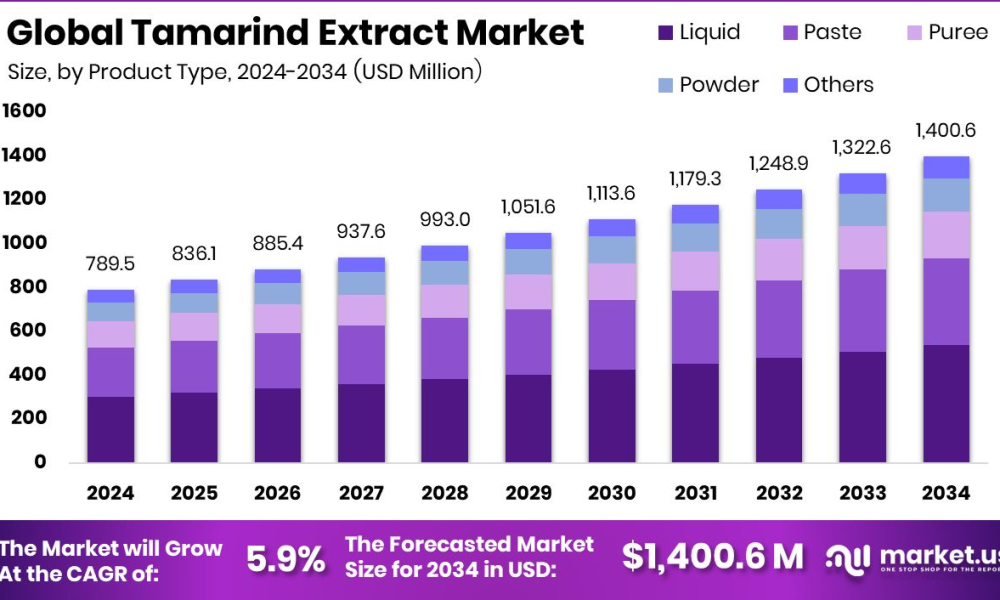
According to market.us, The global tamarind extract market is projected to reach approximately USD 1,400.6 million by 2034, rising from USD 789.5 million in 2024, with a compound annual growth rate (CAGR) of 5.9% expected during the forecast period from 2025 to 2034. In 2024, Asia-Pacific emerged as the dominant regional market, accounting for 46.4% of global revenue and generating around USD 366.3 million.
Tamarind extract, a concentrated form of pulp derived from the Tamarindus indica tree, is recognized for its distinctive tangy flavor and is widely utilized across the food, beverage, cosmetic, and pharmaceutical sectors. Known for its natural acidity and rich nutritional profile—including potassium, magnesium, and vitamin C—the extract also exhibits beneficial medicinal properties such as digestive support, antioxidant activity, and anti-inflammatory effects. It is commonly found in paste, liquid, and powder formats.
The market growth is being fueled by increasing consumer preference for organic and clean-label food products, where tamarind extract serves as a natural substitute for synthetic additives. Its expanding application in nutraceuticals and health supplements further supports this trend. In India, which plays a key role in global supply, tamarind cultivation is mainly concentrated in the southern states, with Tamil Nadu alone contributing about 26% of national production. Other major producing states include Karnataka, Andhra Pradesh, and Kerala.
Technological advancements by institutions like the Central Food Technological Research Institute (CFTRI) in Mysore have led to improved processing methods, including the development of high-quality tamarind concentrate free from impurities such as seeds and fibers. Additionally, the Indian government, through the Ministry of Food Processing Industries (MoFPI), has launched the Production Linked Incentive (PLI) Scheme to strengthen the global competitiveness of Indian food products, thereby creating growth opportunities for tamarind-based items in international markets.
Key Takeaways
- Global Tamarind Extract Market is expected to be worth around USD 1,400.6 million by 2034, up from USD 789.5 million in 2024, and grow at a CAGR of 5.9% from 2025 to 2034.
- In 2024, the liquid form dominated the Tamarind Extract Market, holding a 38.4% product share.
- Food and beverages application led usage in the Tamarind Extract Market with 62.6% market dominance.
- Indirect sales accounted for 67.1% of the Tamarind Extract Market distribution, showing widespread retail penetration.
- Tamarind extract demand in Asia-Pacific hit USD 366.3 Mn, holding 46.4% share.
Access a Complimentary Sample of This Premium Report: https://market.us/report/tamarind-extract-market/free-sample/
Factors Affecting the Growth of the Tamarind Extract Market
- Rising Demand for Natural Ingredients: There is an increasing shift towards natural and plant-based ingredients in food, beverages, and cosmetic products. Tamarind extract, known for its rich flavor profile and nutritional benefits, is gaining popularity as a natural flavor enhancer, preservative, and a source of antioxidants. The growing preference for organic and clean-label products among consumers is driving the demand for tamarind extract.
- Health Benefits and Functional Properties: Tamarind extract is known for its medicinal and therapeutic properties, such as aiding in digestion, improving skin health, and reducing inflammation. This has expanded its use in nutraceuticals and pharmaceuticals. The increasing awareness of healthy lifestyles and wellness trends is further promoting the consumption of tamarind-based products.
- Growth in the Food and Beverage Industry: The food and beverage industry, particularly in regions like Asia-Pacific, Africa, and Latin America, is one of the primary consumers of tamarind extract. Its use in beverages, sauces, soups, and confectionery products is widespread due to its tartness and unique flavor. As the global demand for ethnic and exotic flavors rises, tamarind extract is expected to see continued growth in food product formulations.
- Cosmetic and Personal Care Sector Expansion: Tamarind extract is gaining traction in the cosmetic and personal care industry due to its skin-lightening, anti-aging, and hydrating properties. It is used in formulations for creams, lotions, serums, and face masks, contributing to the market’s expansion. As consumer preference for natural and chemical-free skincare products grows, the demand for tamarind-based cosmetics is expected to increase.
- Regulatory Landscape: The regulatory environment plays a crucial role in the market’s growth. In certain regions, the approval process for tamarind-based products as food additives or medicinal ingredients may face regulatory hurdles. Compliance with stringent food safety standards and regulations can slow down market entry for new companies or products.
Report Segmentation:
By Product Type Analysis: In 2024, liquid tamarind extract accounted for 38.4% of the total market share by product type, emerging as the leading segment in the Tamarind Extract Market. This dominance is largely attributed to the product’s ease of integration into various food and beverage applications. Liquid extract is particularly favored for its concentrated flavor, extended shelf life, and simple incorporation in both home kitchens and industrial food processing setups. It is widely used by foodservice operators and packaged food manufacturers who require fast-dissolving, easily measurable ingredients for large-scale culinary operations.
By Application Analysis: The food and beverages sector dominated the tamarind extract market in 2024, accounting for a significant 62.6% share of total applications. This strong position is supported by the extensive use of tamarind extract as a natural souring agent and flavor enhancer in traditional cuisines across Asia, Latin America, and Africa. Its broad culinary applications include sauces, beverages, candies, marinades, curries, and chutneys. Moreover, tamarind extract’s digestive and antioxidant properties have increased its adoption in the functional foods and health drinks segments.
By Distribution Channel Analysis: In terms of distribution, indirect sales dominated the tamarind extract market in 2024, capturing 67.1% of total market volume. This segment includes supermarkets, hypermarkets, retail stores, and e-commerce platforms, which have become the main purchasing channels for both consumers and commercial entities. The widespread availability of tamarind extract across major retail chains has significantly improved product visibility, enhancing consumer access and enabling spontaneous purchases. Retail environments have responded to the rising demand for ethnic and natural ingredients by offering tamarind products in diverse forms such as paste, liquid, and powder.
To Purchase this Premium Report@ https://market.us/purchase-report/?report_id=146878
Key Market Segments
By Product Type
- Liquid
- Paste
- Puree
- Powder
- Others
By Application
- Food and Beverages
- Pharmaceuticals
- Cosmetics and Personal Care
- Others
By Distribution Channel
- Direct Sales
- Indirect Sales
- Supermarkets/Hypermarkets
- Independent Retailers
- Specialty Stores
- Others
Regional Analysis
In 2024, the Asia-Pacific region led the global tamarind extract market, commanding a 46.4% share and generating revenue of approximately USD 366.3 million. This regional dominance is primarily driven by the deep-rooted culinary tradition of using tamarind across countries such as India, Thailand, Indonesia, and the Philippines, where it remains an essential ingredient in a variety of local dishes, sauces, and condiments.
The region’s large population and increasing demand for natural, plant-based food ingredients have further strengthened its market position. Additionally, consumer preference for traditional flavors and health-oriented food products continues to support the widespread adoption of tamarind extract in both domestic and export markets. While Asia-Pacific maintains its leadership, North America is witnessing steady growth fueled by the rising interest in ethnic cuisines and plant-based diets. Europe is also emerging as a promising market, driven by increasing awareness of tamarind’s health benefits and its growing use in organic and herbal wellness products.
Market Key Players
- Magma Foods
- American International Foods, Inc
- Moonlite Foods Inc
- Kanegrade Limited
- ABC International
- Baaeco V Food Ltd.
- Spectrum Fruits, Inc
- ShimlaHills
- Spice Mountain LTD
- Pure Indian Foods
- Mevive International
- Others
Refer More Related Reports:
- Chocolate Confectionery Market
- GCC Fine Fragrances Market
- Body Oil Market
- Methanol Market
- Alcoholic Drinks Market
Get in Touch with Us:
Market.us (Powered By Prudour Pvt. Ltd.)
Address: 420 Lexington Avenue, Suite 300, New York City, NY 10170, United States.
Contact No: +1 718 874 1545 (International), +91 78878 22626 (Asia).
Email: [email protected]



