
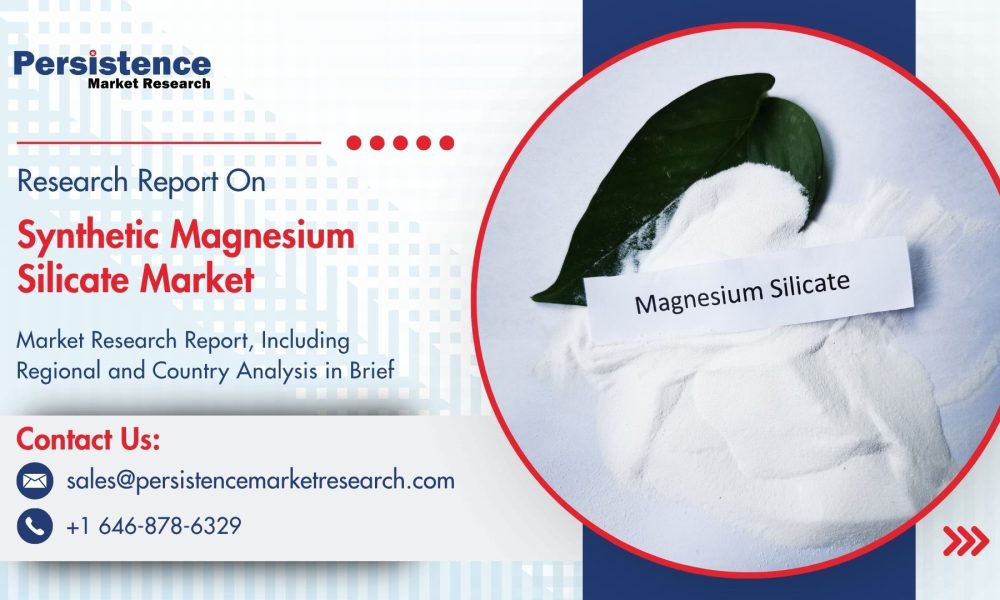
Synthetic Magnesium Silicate Market Size and Trend Analysis
The global synthetic magnesium silicate market is steadily expanding as industries increasingly shift toward high-purity, multifunctional materials for use in pharmaceuticals, cosmetics, food processing, and industrial applications. Synthetic magnesium silicate (SMS), an amorphous compound produced through controlled chemical processes, offers superior adsorption, thickening, and anti-caking properties compared to natural alternatives, making it a preferred ingredient across multiple sectors.
According to industry insights, the market is projected to be valued at approximately US$1.9 billion in 2026 and is expected to reach around US$3.1 billion by 2033, growing at a CAGR of 6.7% during the forecast period. This growth is primarily driven by rising demand in pharmaceutical formulations, cosmetics, and food-grade additives, alongside increasing replacement of natural talc with safer synthetic alternatives.
Get Your FREE Sample Report Instantly – Click Now: https://www.persistencemarketresearch.com/samples/25687
Key Market Drivers
Rising Demand from Pharmaceutical Industry
One of the strongest growth drivers for the synthetic magnesium silicate market is its expanding use in the pharmaceutical sector. SMS is widely utilized as a glidant, adsorbent, and excipient in tablet manufacturing, ensuring uniform flow and improved drug stability.
The increasing demand for generic medicines, especially in emerging economies like India and China, is significantly boosting consumption. Additionally, stringent regulatory standards regarding purity and heavy metal limits are encouraging manufacturers to adopt synthetic minerals over natural ones.
The shift toward continuous manufacturing processes and high-performance excipients is further strengthening the role of SMS in modern pharmaceutical production.
Growing Use in Cosmetics and Personal Care
The cosmetics industry is another major contributor to market growth. Synthetic magnesium silicate is increasingly used in skincare and personal care products due to its oil-absorbing, mattifying, and texturizing properties.
With rising concerns over talc contamination and asbestos-related risks, many cosmetic manufacturers are transitioning to synthetic alternatives. SMS provides consistent purity, better performance, and regulatory compliance, making it a preferred replacement.
The segment accounts for nearly 40% of market value, driven by demand for premium, clean-label, and mineral-based formulations.
Expansion in Food and Beverage Applications
In the food industry, synthetic magnesium silicate is widely used as an anti-caking agent, filtration aid, and adsorbent. It helps maintain product quality, improve shelf life, and enhance processing efficiency.
Its role in edible oil purification and sugar refining is particularly important, as it removes impurities and improves clarity. As global demand for processed and packaged foods continues to rise, the use of SMS in food-grade applications is expected to grow steadily.
Increasing Demand for High-Performance Adsorbents
Synthetic magnesium silicate is gaining traction as a high-efficiency adsorbent in industrial processes, including renewable fuel refining, chemical processing, and environmental applications.
Its porous structure and high surface area enable effective removal of impurities, making it valuable in biodiesel production and waste treatment processes. The growing focus on sustainability and cleaner industrial processes is further boosting demand for advanced adsorbent materials.
Shift Toward Talc-Free and Clean-Label Products
A significant trend shaping the market is the global transition toward talc-free formulations. Regulatory scrutiny and consumer awareness regarding the potential health risks associated with natural talc are pushing industries to adopt safer alternatives.
Synthetic magnesium silicate offers controlled composition, consistent quality, and enhanced safety, aligning with clean-label trends across pharmaceuticals, cosmetics, and food industries. This shift is expected to remain a long-term growth driver.
Get a Customized Market View in One Click: https://www.persistencemarketresearch.com/request-customization/25687
Market Segmentation Analysis
By Product Type
The market is segmented into powder, granules, and dispersion forms. Among these, the powder segment dominates, accounting for approximately 60% of total demand.
Powdered SMS is preferred due to:
- High surface area for adsorption
- Better blending efficiency
- Versatility across multiple applications
Its widespread use in pharmaceuticals, cosmetics, and food processing ensures continued dominance.
By Grade
Based on grade, the market is divided into:
- Pharmaceutical grade
- Food grade
- Industrial grade
Pharmaceutical-grade SMS is witnessing the fastest growth due to stringent quality requirements and increasing use in drug formulations.
By End-User
Key end-user segments include:
- Cosmetics and personal care
- Pharmaceuticals
- Food additives
- Industrial applications
Among these, cosmetics lead the market, while pharmaceuticals are expected to be the fastest-growing segment due to rising healthcare demand and regulatory compliance requirements.
Regional Insights
Asia Pacific
Asia Pacific is the largest and fastest-growing regional market, accounting for approximately 38% of global share.
Growth is driven by:
- Expanding pharmaceutical manufacturing in India and China
- Rapid industrialization
- Increasing demand for personal care products
The region’s cost advantages and strong manufacturing base make it a key hub for synthetic magnesium silicate production.
North America
North America represents a mature market with strong demand for high-purity materials in pharmaceuticals and cosmetics. Regulatory compliance and technological advancements support steady growth in this region.
Europe
Europe is characterized by stringent environmental and safety regulations, driving the adoption of synthetic materials over natural alternatives. The region also benefits from strong demand for clean-label and sustainable products.
Competitive Landscape
The synthetic magnesium silicate market is moderately consolidated, with key players focusing on innovation, quality, and strategic partnerships. Leading companies include:
- Imerys
- Tokuyama Corporation
- PQ Corporation
- BASF SE
- Evonik Industries
These companies emphasize high-purity production, advanced processing technologies, and compliance with international standards to maintain competitive advantage.
Strategic developments such as acquisitions, product launches, and capacity expansions are shaping the competitive landscape.
Challenges in the Market
Despite strong growth prospects, the market faces several challenges:
- High production costs associated with maintaining purity and consistency
- Regulatory complexities across different regions
- Raw material price fluctuations impacting profitability
- Competition from alternative materials and substitutes
Addressing these challenges requires innovation, cost optimization, and sustainable production practices.
Future Outlook
The future of the synthetic magnesium silicate market appears promising, driven by increasing demand for high-performance, safe, and versatile materials. Emerging opportunities include:
- Use in nanotechnology-based drug delivery systems
- Expansion in renewable energy and biodiesel refining
- Growth in premium cosmetics and personal care products
- Development of advanced functional additives
Technological advancements in material synthesis and increasing investment in R&D are expected to unlock new growth avenues.
For In-Depth Competitive Analysis, Buy Now: https://www.persistencemarketresearch.com/checkout/25687
Conclusion
In conclusion, the synthetic magnesium silicate market is poised for steady growth, supported by its wide-ranging applications and alignment with global trends such as clean-label products, pharmaceutical innovation, and sustainable industrial practices. With a projected CAGR of 6.7% and strong demand across multiple industries, synthetic magnesium silicate is set to remain a critical component in the evolving specialty chemicals landscape.
As industries continue to prioritize performance, safety, and sustainability, the adoption of synthetic magnesium silicate is expected to accelerate, ensuring long-term market expansion.
About Persistence Market Research:
Persistence Market Research delivers strategic research solutions that drive business growth. Founded in 2012 and registered in England and Wales in 2023 as Persistence Research & Consultancy Services Ltd., we have completed 3,600+ custom and syndicated studies and supported 2,700+ projects for leading research firms. Combining traditional methodologies with modern tools, we provide actionable insights to multinational corporations, consultants, investors, and government bodies, earning strong trust through long-term client relationships.
Contact Us:
Persistence Market Research
Second Floor, 150 Fleet Street,
London, EC4A 2DQ, United Kingdom
USA Phone: +1 646-878-6329
UK Phone: +44 203-837-5656
Email: [email protected]
Web: https://www.persistencemarketresearch.com




