
Overview
Global Surgical Instrument Tracking Systems Market size is expected to be worth around US$ 1,162.5 million by 2034 from US$ 292.4 million in 2024, growing at a CAGR of 14.8% during the forecast period 2025 to 2034. In 2024, North America led the market, achieving over 37.4% share with a revenue of US$ 109.4 Million.
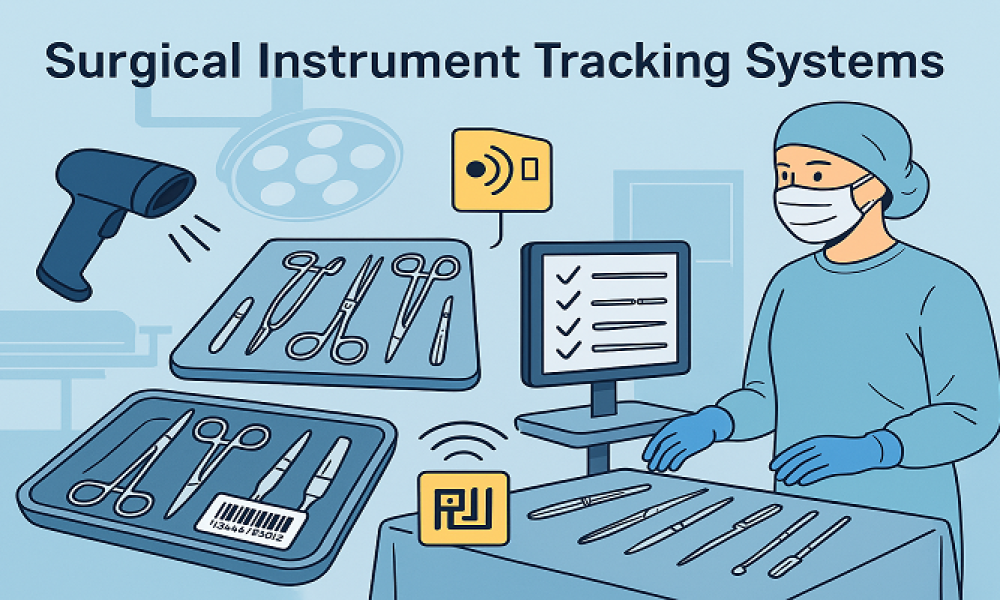
The global Surgical Instrument Tracking Systems market is witnessing robust growth, driven by increasing surgical procedures, regulatory mandates for traceability, and the need to enhance surgical workflow efficiency. These systems use advanced technologies such as RFID, barcodes, and real-time location systems (RTLS) to ensure accurate tracking of surgical instruments throughout their lifecycle—from sterilization to usage in the operating room.
Hospitals and surgical centers are rapidly adopting these tracking systems to reduce instrument loss, avoid delays in procedures, and improve inventory management. The adoption of automated tracking solutions also supports compliance with stringent regulations set by organizations such as the U.S. Food and Drug Administration (FDA), which require detailed documentation and traceability of surgical instruments.
Technological advancements, including cloud-based data management, AI-driven analytics, and integration with electronic health records (EHRs), are further strengthening the market landscape. The growing emphasis on patient safety and surgical quality control is accelerating system implementation, especially in North America and Europe.
According to industry estimates, the market is expected to exhibit steady growth over the next decade, as healthcare facilities invest in digital transformation and smarter asset management solutions. With increased funding, innovation, and policy support, surgical instrument tracking systems are becoming a vital component of modern surgical operations.
Click here to get a Sample report copy @ https://market.us/report/surgical-instrument-tracking-systems-market/free-sample/

Key Takeaways
- In 2024, the Surgical Instrument Tracking Systems market generated a total revenue of USD 292.4 million, and it is projected to grow at a compound annual growth rate (CAGR) of 14.8%, reaching approximately USD 1,162.5 million by 2034.
- The market, when analyzed by component, is segmented into hardware, software, and services. Among these, the hardware segment dominated in 2023, accounting for 46.7% of the total market share.
- Based on technology, the market is categorized into barcode tracking, radio frequency identification (RFID), and electronic tracking systems. RFID technology emerged as the leading segment, representing 51.3% of the market share due to its superior tracking efficiency and automation capabilities.
- In terms of end-users, the market is segmented into hospitals, ambulatory surgical centers (ASCs), research centers, and others. Hospitals held the highest revenue share, contributing 54.5% to the overall market, driven by high surgical volumes and stringent compliance requirements.
- Geographically, North America remained the leading regional market, capturing a 37.4% share in 2023, supported by strong healthcare infrastructure, regulatory enforcement, and early adoption of digital solutions.
Segmentation Analysis
- Component Analysis: The hardware segment led the Surgical Instrument Tracking Systems (SITS) market with a 46.7% share, attributed to the essential role of RFID tags, barcode labels, readers, and sensors in real-time instrument tracking. These components form the operational backbone of tracking systems in hospitals and surgical centers. Growing demand for RFID-enabled solutions, such as Fresenius Kabi’s +RFID smart labels introduced in October 2023, is enhancing adoption, supporting efficiency, regulatory compliance, and patient safety across modern healthcare environments.
- Technology Analysis: RFID technology dominated the SITS market with a 51.3% share, driven by its ability to offer contactless, real-time tracking without line-of-sight, unlike barcodes. This significantly improves efficiency, reduces errors, and strengthens compliance with sterilization protocols. The growing trend toward automation in hospitals has amplified RFID usage. A notable example includes Xerafy’s launch of next-generation RAIN RFID tagging solutions in May 2025, which gained strong industry recognition for their scalability, ruggedness, and innovation in healthcare asset tracking.
- End-User Analysis: Hospitals held the largest market share at 54.5% in the end-user segment, owing to the high surgical volume and strict regulatory standards. The use of tracking systems in hospitals improves instrument management, supports sterilization workflows, and prevents retained surgical instruments. These systems help meet compliance requirements while enhancing patient safety. The extensive infrastructure and complexity of hospital operations drive continuous adoption of SITS, making hospitals the primary contributors to market growth and system integration.
Market Segments
By Component
- Hardware
- Software
- Services
By Technology
- Barcode Tracking
- Radio Frequency Identification (RFID)
- Electronic Tracking
By End-User
- Hospitals
- Ambulatory Surgical Centers (ASCs)
- Research Centers
- Others
To Purchase this Premium Report @ https://market.us/purchase-report/?report_id=152834
Regional Analysis
The growth of the U.S. Surgical Instrument Tracking Systems market is primarily driven by a well-established healthcare infrastructure, high surgical procedure volumes, and strict regulatory mandates such as the FDA’s Unique Device Identification (UDI) requirement. Hospitals across the U.S. are early adopters of advanced technologies aimed at improving patient safety, infection control, and surgical accuracy.
The market also benefits from a technologically mature environment and mandatory compliance frameworks that promote the adoption of tracking solutions. Large healthcare networks and increased investment in healthcare IT systems further support the integration of surgical instrument tracking technologies across operating rooms and sterilization departments. Rising awareness around surgical safety and adherence to hospital accreditation standards continue to strengthen market demand.
In addition, ongoing innovation from key industry players contributes to market expansion. For example, in March 2025, Zebra Technologies Corporation, headquartered in Chicago and recognized globally for its role in automating frontline operations, announced new automation and visibility solutions targeting manufacturing, warehousing, and supply chains. These innovations, set to be displayed at ProMat 2025 (March 17–20, McCormick Place, Chicago), are expected to influence adjacent sectors including healthcare, particularly in enhancing asset tracking and operational efficiency.
Key Players Analysis
Key players operating in the Surgical Instrument Tracking Systems market include Fortive Corporation, Becton, Dickinson and Company (BD), Getinge AB, STERIS plc, STANLEY Healthcare (CenTrak), Mobile Aspects, Censis Technologies (Fortive), Material Management Microsystems, Haldor Advanced Technologies, Key Surgical (Stryker), B. Braun Melsungen AG, Scanlan International, SpaTrack Medical Limited, Xerafy Singapore Pte Ltd., NuTrace, Vizinex RFID, ScanCARE Pty Ltd., TGX Medical Systems, among other prominent vendors.
Fortive Corporation, a diversified industrial technology leader, strengthens its presence in the healthcare sector through its subsidiary Material Management Microsystems (MMS), which specializes in RFID and barcode-enabled surgical instrument tracking systems. These technologies play a critical role in enhancing traceability, operational efficiency, and compliance with sterilization protocols.
Becton, Dickinson and Company (BD) is a globally recognized medical technology company offering advanced RFID and barcode solutions tailored for healthcare applications. BD’s surgical instrument tracking systems provide real-time visibility into instrument usage and status, supporting infection control and minimizing the risk of retained surgical items (RSIs). Their integrated systems are widely adopted across hospitals to ensure regulatory compliance and improve patient safety outcomes.
Market Key Players
- Fortive Corporation
- Becton, Dickinson and Company (BD)
- Getinge AB
- STERIS plc
- STANLEY Healthcare (CenTrak)
- Mobile Aspects
- Censis Technologies (Fortive)
- Material Management Microsystems
- Haldor Advanced Technologies
- Key Surgical (Stryker)
- Braun Melsungen AG
- Scanlan International
- SpaTrack Medical Limited
- Xerafy Singapore Pte Ltd.
- NuTrace
- Vizinex RFID
- ScanCARE Pty Ltd.
- TGX Medical Systems
- Other key players
Market Dynamics
- Market Driver: The primary driver of the Surgical Instrument Tracking Systems market is the increasing emphasis on patient safety and infection control. Regulatory mandates, such as the FDA’s Unique Device Identification (UDI) rule, require hospitals to implement traceability solutions. The growing number of surgical procedures and the demand for real-time visibility into instrument usage have led healthcare facilities to adopt advanced tracking technologies, including RFID and barcode systems, to minimize surgical errors and ensure compliance with sterilization protocols.
- Market Trend: A key trend shaping the market is the integration of RFID and cloud-based data platforms into surgical tracking systems. These technologies enable contactless tracking, automated data capture, and real-time monitoring of surgical instruments across their lifecycle. Healthcare providers are increasingly adopting smart tracking solutions that integrate with electronic health records (EHRs) and analytics platforms to enhance workflow efficiency and inventory control. Innovations like AI-powered tracking and mobile compatibility are also emerging, further modernizing surgical operations.
- Market Opportunity: Significant market opportunities exist in the expansion of tracking systems across emerging healthcare markets, particularly in Asia-Pacific and Latin America. As these regions invest in modernizing hospital infrastructure, the need for efficient surgical workflows and regulatory compliance creates strong demand. Additionally, rising awareness about surgical safety and the global push for digital transformation in healthcare present a favorable environment for vendors offering scalable, automated, and interoperable instrument tracking solutions tailored to diverse clinical settings.
Conclusion
The global Surgical Instrument Tracking Systems market is experiencing significant growth, driven by regulatory compliance, rising surgical volumes, and the adoption of advanced tracking technologies like RFID and cloud integration. With strong demand from hospitals and increasing awareness around surgical safety, the market is set to expand rapidly, particularly in North America and emerging regions.
Continued technological innovation, strategic partnerships, and supportive healthcare policies are expected to further accelerate adoption. As healthcare facilities modernize and digitalize their operations, surgical instrument tracking systems will remain essential in ensuring efficiency, safety, and compliance across surgical environments.
View More Reports:
Automation and Control System in Healthcare Market Hits USD 95.7 Billion by 2033
Metaverse In Surgical Operations Market Poised for USD 102.3 Billion Milestone
AI In Predictive Toxicology Market To Hit USD 4.96 Billion By 2033



