
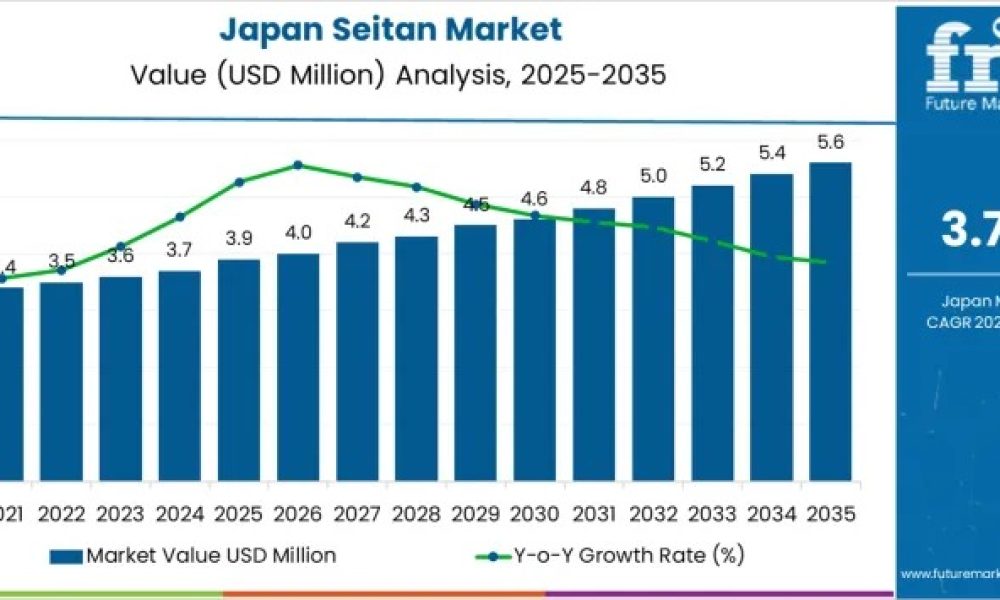
Japan’s evolving food landscape is steadily embracing plant-based proteins, with seitan emerging as a niche yet resilient performer. The demand for seitan in Japan is valued at USD 3.9 million in 2025 and is projected to reach USD 5.6 million by 2035, expanding at a compound annual growth rate (CAGR) of 3.7%. While modest in scale, this growth reflects structural shifts in consumer preferences toward health-conscious, sustainable, and flexitarian eating patterns.
Seitan, a wheat gluten–based protein often referred to as “wheat meat,” is gaining visibility among Japanese consumers seeking alternatives to animal protein. Its meat-like texture, high protein density, and adaptability across cuisines make it increasingly relevant as plant-based eating moves beyond niche vegetarian communities into broader urban and wellness-driven segments.
As awareness around nutrition, environmental impact, and ethical consumption deepens, seitan is gradually positioning itself as a complementary protein alongside more established soy-based staples such as tofu and natto.
PR To Explore Detailed Market Data, Segment-Wise Forecasts, and Competitive Insights, Request Sample Report!
Market Growth Trajectory Through 2035
Japan’s seitan demand is expected to follow a steady upward trajectory rather than rapid acceleration. From USD 3.9 million in 2025, the market edges up to USD 4.0 million in 2026, reflecting cautious but expanding consumer adoption. By 2030, demand is forecast to reach USD 4.6 million, supported by broader retail availability, menu experimentation in foodservice, and the introduction of ready-to-use formats.
Between 2030 and 2035, demand is projected to accelerate further, reaching USD 5.6 million. Growth during this phase will be shaped by product innovation, improved texturization technologies, and increasing inclusion of seitan in restaurant menus, convenience foods, and pre-cooked offerings. As plant-based diets continue to align with functional and sustainable food trends, seitan is expected to maintain its relevance within Japan’s alternative protein ecosystem.
Why Seitan Demand Is Rising in Japan
The primary driver behind seitan’s growth is the gradual mainstreaming of plant-based and flexitarian diets. Japanese consumers are increasingly reducing meat intake without fully eliminating it, creating demand for meat substitutes that deliver familiar textures and high protein content.
Seitan benefits from several intrinsic advantages:
- High protein concentration with low fat content
- Strong ability to absorb flavors, fitting diverse cuisines
- Compatibility with both traditional Japanese dishes and Western-style preparations
Environmental awareness is another contributing factor. As consumers recognize the carbon and resource intensity of animal agriculture, plant-based proteins such as seitan are being viewed as more sustainable dietary choices.
Segment-Wise Market Insights
By product type, organic seitan dominates with a 57% share, driven by Japan’s strong preference for clean-label, additive-free, and sustainably produced foods. Health-conscious consumers increasingly associate organic certification with quality, safety, and environmental responsibility.
Distribution dynamics reveal the growing influence of e-commerce. Online stores account for 35% of total demand, reflecting changing shopping habits, especially in urban centers. Digital platforms provide access to a wider assortment of domestic and imported seitan products, enabling price comparison, transparency, and convenient home delivery.
Regional Demand Outlook
Seitan demand is expanding across Japan, with growth rates varying by region:
- Kyushu & Okinawa lead with a 4.6% CAGR, supported by health-oriented lifestyles and tourism-driven demand for plant-based dining.
- Kanto, at 4.2% CAGR, benefits from Tokyo’s large urban population, higher exposure to global food trends, and strong retail penetration.
- Kansai follows at 3.7% CAGR, as traditional culinary hubs increasingly integrate plant-based menu options.
- Chubu records 3.3% CAGR, driven by rising wellness awareness in cities like Nagoya.
- Tohoku and the Rest of Japan show moderate but consistent growth at 2.9% and 2.7% CAGR, respectively, reflecting gradual diffusion beyond major metropolitan areas.
Technology, Innovation, and Market Challenges
Advancements in plant-based food processing are improving seitan’s texture consistency, flavor retention, and shelf life. These innovations are reducing historical barriers related to taste variability and limited product formats, making seitan more competitive within the meat alternatives category.
However, challenges remain. Consumer familiarity with seitan is still lower than with soy-based proteins, and gluten sensitivity concerns limit its appeal to certain demographics. Additionally, seitan competes for shelf space against well-established plant proteins, requiring sustained marketing and education efforts.
Subscribe for Year-Round Insights → Stay ahead with quarterly and annual data updates
Competitive Landscape and Industry Direction
Key companies shaping Japan’s seitan supply include Agrana Beteiligung AG, Anhui Ante Food Co., Ltd., Agridient, Inc., Archer Daniels Midland Company, and Bryan W. Nash & Sons Ltd. Agrana Beteiligung AG leads with an estimated 20.5% share, leveraging its wheat ingredient expertise to support plant-based applications.
These players are focusing on ingredient quality, scalable supply chains, and diversified applications spanning ready meals, foodservice, and private-label manufacturing.
Looking ahead, seitan’s role in Japan will remain measured but meaningful. As plant-based eating continues its transition from trend to habit, seitan is expected to solidify its position as a versatile, protein-rich option within Japan’s expanding alternative protein landscape—serving health-conscious, environmentally aware, and flexitarian consumers through 2035 and beyond.
About Future Market Insights (FMI)
Future Market Insights, Inc. (FMI) is an ESOMAR-certified, ISO 9001:2015 market research and consulting organization, trusted by Fortune 500 clients and global enterprises. With operations in the U.S., UK, India, and Dubai, FMI provides data-backed insights and strategic intelligence across 30+ industries and 1200 markets worldwide.



