

On October 22nd, South Korean tech giant Samsung (SSNGY) officially entered the extended reality (XR) space with the launch of its first native AI headset, the Galaxy XR, which is also the first product in the Android XR ecosystem.
The first XR headset has surfaced.
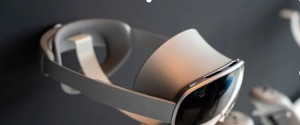
The Galaxy XR is a high-end extended reality (XR) headset with a metal front panel. A curved glass panel conceals multiple cameras and sensors, and a headband helps securely secure the device to the head. The rear knob adjusts the strap’s tightness.
Similar to the Vision Pro, the Galaxy XR features a 4K Micro-OLED display for each eye and a see-through camera that allows users to see their surroundings. It also features a fully immersive mode optimized for gaming and watching movies, and is powered by Qualcomm’s Snapdragon XR2+ Gen2 chip.
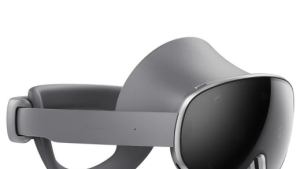
The Galaxy XR is built on Android XR, a new platform jointly developed by the three tech giants, and is deeply integrated with Google’s Gemini artificial intelligence system. This means the device isn’t just a headset that runs Android apps; it’s an AI-powered device with contextual awareness, helping users complete tasks in a more intuitive way.
In addition to unveiling its first XR headset, Samsung also announced plans to release AI glasses, with more product forms to follow. At the event, Samsung directly previewed its upcoming AI smart glasses, designed in collaboration with renowned eyewear brand Warby Parker and fashion brand Gentle Monster, blending cutting-edge technology with high-end fashion aesthetics.
Industry insiders point out that this launch marks the beginning of a long-term collaboration between Samsung, Google, and Qualcomm, aimed at deeply integrating AI technology into immersive computing. It also hints at their ambition to compete for the global XR market, potentially revolutionizing how people work, play, and explore digital spaces.
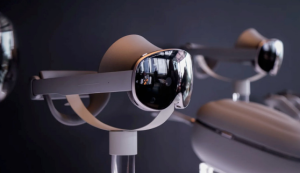
Securing a foothold in the VR/AR industry
In recent years, with the rapid development of the XR industry, AI glasses and XR devices have become the new darlings of the consumer electronics market. According to institutional statistics, global shipments of AI glasses will reach approximately 1.56 million pairs in the first half of 2025. The global AI glasses market has entered a period of rapid development and continues to expand.
At the same time, overall market product innovation and the deepening of application scenarios have become the main driving forces, leading to explosive market growth. Experiences spanning XR hardware devices, software systems, content technology innovations, and solutions across multiple scenarios, including industry, healthcare, education, entertainment, tourism, and film and television.
More importantly, XR has become the “new darling” of the tech sector. Faced with this trend, tech giants are already gearing up, with an increasing number of players entering the hot market, creating a competitive landscape characterized by a “hundred-glass war.”

Meta (META)
Reportedly, sales of Meta’s smart glasses, a collaboration with Ray-Ban, more than tripled in the first half of 2025! With a starting price of $299 and a weight of less than 50 grams, they have attracted a significant number of consumers. Since their launch in October 2023, over 2 million pairs have been sold, and the partners plan to increase annual production capacity to 10 million pairs. Meta also announced the release of Aria Gen 2, which delivers breakthroughs in sensing, wearability, interactivity, and on-device computing capabilities. Meta also provides two core resources for users to gain a deeper understanding of Aria Gen 2: a device white paper and a pilot dataset, fully demonstrating how this new generation of devices will revolutionize research and development.
Apple (AAPL)
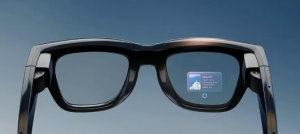
According to media reports, Apple is adjusting its smartglasses product roadmap, planning a 2026 release and the first Apple Glass in 2027, which will directly compete with Meta’s Ray-Ban smartglasses.
Apple’s first generation of lightweight Apple Glass is expected to be released in 2026 and may adopt a phased release strategy similar to Apple Silicon, allowing ample time between product announcement and market launch for developers to adapt their applications and build an ecosystem for the new platform.

Amazon (AMZN)
Reports indicate that tech giant Amazon is increasing its investment in AR smartglasses development to capitalize on the emerging “AR + AI” trend and prepare for strong growth in the XR market in the coming years, particularly from a supply perspective. According to people familiar with the matter, Amazon has begun developing two AR glasses. One, code-named “Amelia,” is aimed at the e-commerce giant’s delivery drivers, primarily to assist with package sorting and delivery. The other, code-named “Jayhawk,” is for consumers.
Alibaba (BABA)
According to reports, Alibaba has developed Quark AI glasses, playing a trump card in its “ecosystem synergy” strategy. These glasses, currently developed by Alibaba, deeply integrate Alibaba’s core capabilities. Users can use them to answer questions on the Tongyi Qianwen model, navigate on the go with AutoNavi Maps, pay with Alipay by simply glancing at the item, and even have Taobao automatically compare prices.

WiMi (WIMI)
According to information, Wimi Hologram Cloud Inc., the first holographic AR stock to be listed, has long focused on holographic technology, AI vision, and spatial computing optimization. It has independently developed a dynamic real-time rendering engine to lower the barrier to entry for AR content creation. It is also accelerating industry chain collaboration, promoting the transition from laboratory technology to large-scale production, and accelerating the transformation of smart glasses from “technology research and development” to “scale monetization.” Currently, WiMi is exploring diverse scenarios, including social sharing, office collaboration, and education and training, with the goal of building an intelligent gateway connecting the physical and digital worlds. With smart glasses experiencing rapid growth and multiple manufacturers entering the market to enrich their product portfolio, WiMi will further focus on AR+AI integration and multi-scenario commercialization, evolving into a “multi-scenario, all-rounder” to meet the needs of a wider range of consumers.
Summary
Looking at the global market, the booming XR market is a true reflection of the current AI glasses sector. However, amidst the coexistence of pressure and opportunity, relevant companies need to look further ahead and accelerate technological iteration to build international competitiveness. This will enable companies to be fully prepared to face the rapidly changing global economic landscape and increasingly complex international markets, break down information barriers, and truly transform the potential of the global XR market into a growth engine.




