

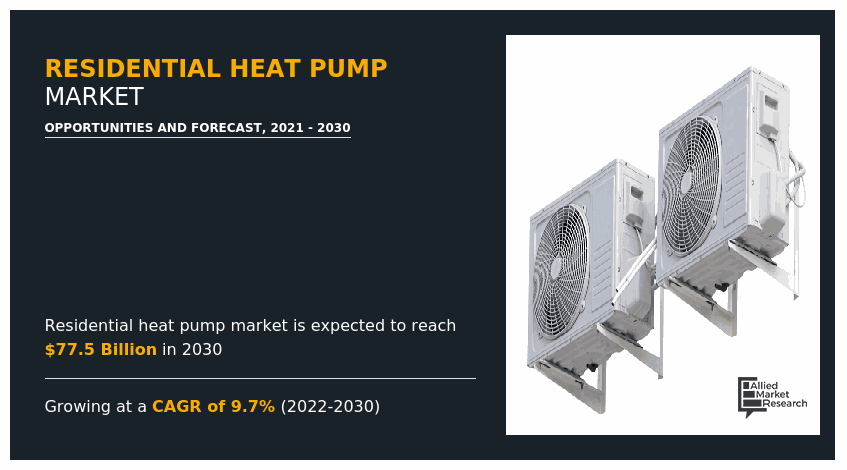
According to a new report published by Allied Market Research, titled, “Residential Heat Pump Market,” The residential heat pump market was valued at $33.5 billion in 2021, and is estimated to reach $77.5 billion by 2030, growing at a CAGR of 9.7% from 2022 to 2030.
The residential heat pump market is experiencing significant growth due to rising demand for energy-efficient and environmentally friendly heating and cooling solutions. Heat pumps use electricity to transfer heat rather than generate it, making them a highly efficient alternative to traditional HVAC systems. Increasing awareness about carbon emissions, supportive government incentives, and advancements in heat pump technology are driving adoption in residential buildings. As homeowners seek sustain.
Download PDF Brochure: https://www.alliedmarketresearch.com/request-sample/A15982
- Drivers & Policy Push
Growing energy efficiency regulations and aggressive government incentives are key drivers of the residential heat pump market. Programs like the U.S. Inflation Reduction Act and the UK’s Boiler Upgrade Scheme—offering rebates up to $8,000–£7,500—are significantly reducing upfront costs and accelerating adoption. Likewise, building code changes in California and the Future Homes Standard in the UK mandate heat pump integration in new homes, reinforcing long-term market expansion.
- Technological Advancement & Efficiency Gains
Heat pumps are becoming more efficient and user-friendly thanks to innovations like variable-speed compressors, inverter technology, and smart controls integrated with IoT and AI. Their ability to deliver 3≥ units of heat per kWh of electricity makes them compelling alternatives to gas furnaces, particularly in decarbonized grids.
- Market Barriers & Challenges
Despite their benefits, high upfront costs—ranging from $3,000 to over $17,000—remain a primary hurdle, deterring many potential buyers even with subsidies. Additionally, performance in extreme climates can be limited, and comprehensive training for skilled installers is still catching up, slowing down adoption. Supply-chain constraints have eased but previously raised prices and delivery concerns.
- Regional Trends & Future Outlook
Regional adoption varies drastically: Europe saw a ~21–23% sales decline in 2024 due to policy shifts and economic pressures—though the UK bucked this trend with a ~63% surge. In North America, federal incentives are propelling a shift away from gas furnaces, with heat pumps outselling furnaces for a third consecutive year. Meanwhile, in Asia–Pacific and emerging markets, rapid urbanization and infrastructure growth—alongside improving tech and smart-home integration—signal strong future demand
For Purchase Inquiry: https://www.alliedmarketresearch.com/purchase-enquiry/A15982
The residential heat pump market forecast is segmented by type, application, and region. By type, it includes air-source, ground-source (geothermal), and water-source heat pumps. Based on application, the market caters to heating, cooling, and combined heating–cooling systems. Regionally, the market is analyzed across North America, Europe, Asia-Pacific, and LAMEA, reflecting diverse driving factors like energy efficiency standards, climate variation, and government incentives.
Residential Heat Pump Market – Regional Analysis
The Asia-Pacific region dominates the residential heat pump market, driven by rapid urbanization, growing awareness of energy-efficient technologies, and government initiatives promoting clean heating solutions. Countries like China, Japan, and South Korea are leading adopters due to strong policy support, expanding residential construction, and the need to reduce carbon emissions. The region’s focus on phasing out fossil fuel-based heating systems and transitioning to sustainable alternatives is expected to further fuel market growth in the coming years.
Europe is another significant contributor to the residential heat pump market, propelled by stringent energy efficiency regulations and climate action goals. Nations such as Germany, France, and the Nordic countries are investing heavily in renewable heating solutions to meet their carbon neutrality targets. Incentive programs, subsidies, and bans on new fossil fuel heating systems are encouraging the adoption of heat pumps in both new and retrofit residential buildings. North America, particularly the U.S., is also witnessing growing demand due to rising energy costs and increased interest in sustainable home heating technologies.
Key Findings of the Study
- On the basis of type, the air source segment dominated the global residential heat pump market in 2021 and is projected to be the fastest-growing segment during the forecast period.
- On the basis of power source, the electric powered segment dominated the global residential heat pump market in 2021 and is also projected to be the fastest-growing segment during the forecast period.
- On the basis of region, Asia-Pacific market is projected to grow fast during the forecast period.




