
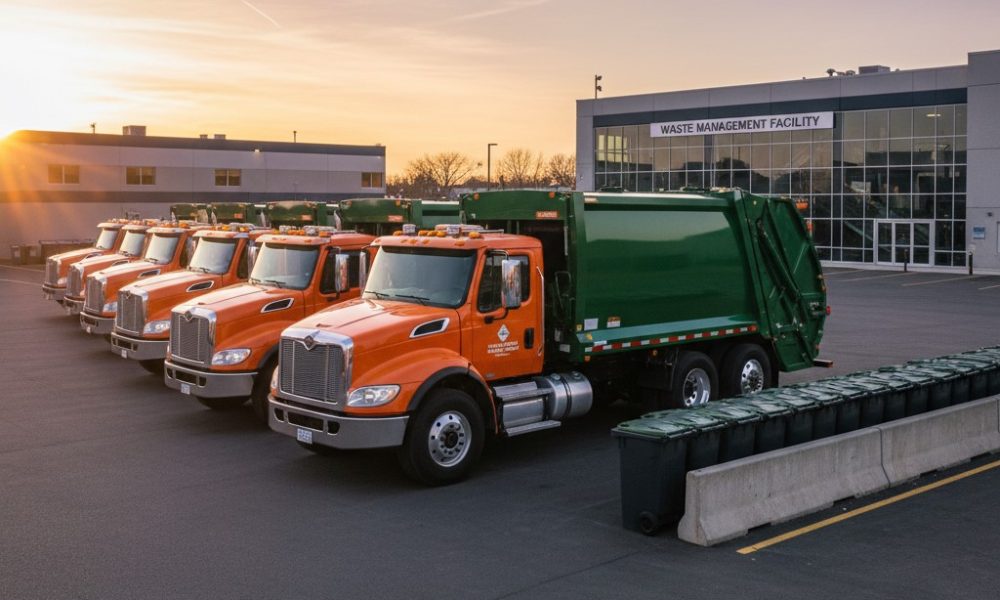
The global rear loader trucks market is projected to grow steadily from USD 5.9 billion in 2025 to USD 8.0 billion by 2035, registering a CAGR of 3.0% over the forecast period. Demand is primarily driven by growing urbanization, modernization of municipal waste fleets, and rising environmental regulations. With technological advancements in automation, hydraulics, and fleet monitoring, rear loader trucks are becoming indispensable in modern waste management infrastructure worldwide.
The market’s growth trajectory is shaped by rising urban waste generation, fleet modernization programs, and stricter environmental standards. Advancements in automation, hydraulics, and telematics are enhancing operational efficiency, while municipalities increasingly adopt eco-friendly solutions.
Full Market Report Available. Inquire for Customization or Purchase: https://www.futuremarketinsights.com/reports/sample/rep-gb-25851
Market Trends Highlighted
- Steady Growth with Low Volatility: Growth rate volatility remains low to moderate, with stability in demand supported by municipal contracts and fleet replacement cycles.
- Automation & Efficiency: Increasing adoption of automatic transmission systems (58.7% share in 2025) for enhanced fuel optimization and reduced driver fatigue.
- Diesel’s Continued Dominance: Diesel-powered trucks retain a leading market share of 52.3% in 2025, supported by durability and efficiency.
- Medium-Capacity Preference: Trucks in the 10–20 tons capacity segment hold 59.3% share, balancing maneuverability and payload efficiency for urban operations.
- Sustainability Push: Emphasis on low-emission and hybrid powertrains to meet stringent global environmental standards.
Recent Developments
- Municipalities are increasingly integrating telematics and GPS-enabled route optimization in waste management fleets.
- Manufacturers are introducing low-emission diesel engines and hybrid models to comply with emission regulations.
- Partnerships between global and regional players are expanding, particularly in China and India, where infrastructure development is rapid.
- Public-private partnerships (PPPs) are fueling investments in smart city sanitation projects.
Key Takeaways of the Report
- Market value expected to grow from USD 5.9 billion (2025) to USD 8.0 billion (2035).
- CAGR: 3.0% over 2025–2035.
- Top application segments: Waste collection (44%), construction & demolition (25%), street cleaning (15%).
- Growth regions: North America, Asia-Pacific, and Europe remain key markets.
- Top companies: Heil Environmental, Labrie Enviroquip Group, McNeilus Truck & Manufacturing, Wastequip, New Way Trucks, and Marathon Equipment.
Market Drivers
- Urbanization & Infrastructure Expansion: Rapid city growth increases waste generation, boosting demand for modern waste collection trucks.
- Technological Enhancements: Automation, advanced hydraulics, and telematics are improving efficiency, reducing costs, and enhancing operator safety.
- Environmental Regulations: Stricter global emission standards are driving fleet modernization with low-emission diesel, hybrid, and electric models.
- Operational Efficiency: Rear loader trucks’ compact design and versatility make them ideal for dense urban environments.
- Rising Demand for Recycling & Circular Economy: Growing emphasis on sustainable waste disposal supports adoption of modern fleets.
Regional Insights
- Asia-Pacific: Dominated by China (4.1% CAGR) and India (3.8% CAGR), driven by urban expansion, government waste management initiatives, and smart city projects.
- Europe: Germany leads with a 3.5% CAGR, supported by strict EU emission standards, hybrid adoption, and municipal fleet upgrades. The U.K. follows with 2.9% CAGR, backed by fleet replacement programs and smart city initiatives.
- North America: The U.S. grows at 2.6% CAGR, supported by modernization of municipal fleets and adoption of hybrid/electric trucks.
- Latin America & MEA: Gradual growth, with focus on urban sanitation programs and PPPs for waste collection.
Country-wise CAGR Analysis
The rear loader trucks market demonstrates varied growth rates across regions, reflecting differences in urbanization levels, regulatory frameworks, and infrastructure investment.
- China (4.1% CAGR): The fastest-growing market, supported by large-scale urbanization, government-led sanitation projects, and modernization of municipal fleets.
- India (3.8% CAGR): Growth fueled by rising municipal solid waste generation, smart city programs, and adoption of GPS-enabled, fuel-efficient trucks.
- Germany (3.5% CAGR): Expansion driven by stringent EU emission standards, adoption of hybrid/electric models, and advanced fleet modernization initiatives.
- France (3.2% CAGR): Stable growth backed by regulatory compliance, investment in low-emission fleets, and a strong recycling infrastructure.
- United Kingdom (2.9% CAGR): Demand shaped by fleet replacement cycles, government subsidies for low-emission vehicles, and smart city sanitation projects.
- United States (2.6% CAGR): Growth supported by the modernization of waste collection fleets, regulatory push for efficiency, and adoption of hybrid/electric trucks.
- Brazil (2.3% CAGR): Moderate growth, primarily driven by urban expansion and municipal investment in sanitation services.
Competition Outlook
The market is competitive, with global leaders and regional players emphasizing innovation, fuel efficiency, and compliance with regulations.
- Heil Environmental: Known for its DuraPack® 5000 series with advanced compaction features.
- McNeilus Truck & Manufacturing: Offers robust, versatile rear loader models for residential and commercial use.
- Labrie Enviroquip Group: Focused on sustainability and operator-friendly truck designs.
- Wastequip & New Way Trucks: Strong presence in North America with customizable, regulation-compliant fleets.
- Regional players like Petersen Industries and Precision Truck Bodies are catering to specific municipal and industrial needs.
Manufacturers are also integrating alternative fuels (CNG, electric), telematics, and ergonomic safety features to gain a competitive edge.
Key Segments of the Market Report
By Fuel
- Diesel (52.3% share in 2025)
- Electric
- Gasoline
By Technology
- Automatic (58.7% share in 2025)
- Semi-automatic
- Manual
By Capacity
- 10–20 tons (59.3% share in 2025)
- Below 10 tons
- Above 20 tons
By End-User Industry
- Municipal corporations
- Private waste management companies
- Construction companies
- Recycling companies
- Others
By Region
- North America
- Latin America
- Western & Eastern Europe
- Asia-Pacific (East Asia, South Asia & Pacific, Central Asia)
- Middle East & Africa
Stay Ahead – Grab the Report: https://www.futuremarketinsights.com/reports/brochure/rep-gb-25851
About Future Market Insights (FMI)
Future Market Insights, Inc. (ESOMAR certified, recipient of the Stevie Award, and a member of the Greater New York Chamber of Commerce) offers profound insights into the driving factors that are boosting demand in the market. FMI stands as the leading global provider of market intelligence, advisory services, consulting, and events for the Packaging, Food and Beverage, Consumer Technology, Healthcare, Industrial, and Chemicals markets. With a vast team of over 400 analysts worldwide, FMI provides global, regional, and local expertise on diverse domains and industry trends across more than 110 countries.



