
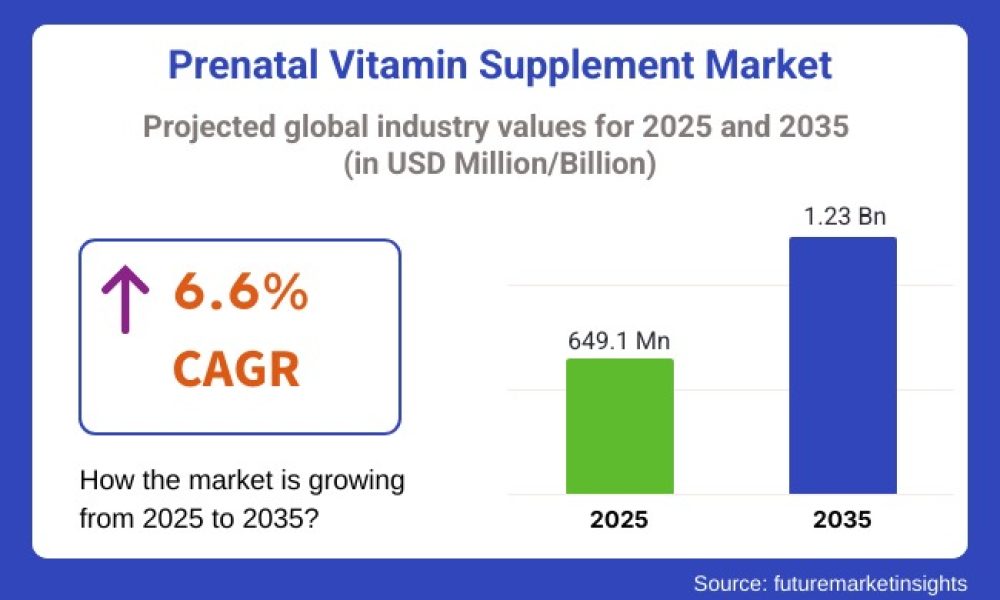
The global prenatal vitamin supplement market is projected to grow steadily, with its valuation expected to increase from approximately USD 649.1 million in 2025 to nearly USD 1.23 billion by 2035, reflecting a robust compound annual growth rate (CAGR) of 6.6%. The market expansion is driven by rising awareness about maternal health, increasing adoption of prenatal nutrition products, and the growing emphasis on comprehensive prenatal care.
Explore trends before investing – request a sample report today!
Prenatal vitamin supplements are essential in supporting the nutritional needs of pregnant women. They help ensure healthy fetal development and prevent complications such as neural tube defects and anemia. Typically, these supplements contain critical vitamins and minerals, including folic acid, iron, calcium, vitamin D, and DHA, specifically tailored to meet the heightened nutritional demands during pregnancy.
Market Dynamics
The global market is propelled by the increasing number of pregnancies worldwide and the strong focus of governments and healthcare organizations on maternal and child health initiatives. Awareness campaigns and prenatal screening programs encourage expectant mothers to adopt supplementation regimens, further boosting demand. Additionally, factors such as rising maternal age and lifestyle-related health concerns like obesity and diabetes underscore the necessity for specialized prenatal nutrition.
Product innovation and diversification are shaping market trends. Manufacturers are introducing supplements in tablets, capsules, gummies, and powders to enhance convenience and compliance. Growing consumer interest in organic, clean-label, and toxin-free products is also influencing formulations, leading to the creation of more natural prenatal supplements.
In August 2024, Vitabiotics launched Pregnacare Conception Max, a premium prenatal supplement that supports fertility. This product combines L-methylfolate, a bioavailable folic acid form, with high-purity omega-3 fish oil (DHA and EPA) and elevated levels of vitamin B12, vitamin D, selenium, magnesium, coenzyme Q10, N-acetyl cysteine, and inositol. The formulation exemplifies the trend toward comprehensive, preconception-focused prenatal nutrition.
Distribution Channels
Pharmacies, online retail, supermarkets, and specialty stores constitute the key distribution channels. Pharmacies and drug stores continue to dominate, offering personalized consultations and trusted recommendations, while the online channel is gaining traction due to convenience and wider product availability. Challenges such as pricing pressures, regulatory complexities, and consumer education gaps may impact growth, but improved product accessibility and clinical validation are expected to mitigate these factors.
Semi-Annual Market Performance
The market has shown fluctuations in semi-annual CAGR rates:
- H1 2024: 6.2%
- H2 2024: 6.8%
- H1 2025: 6.4%
- H2 2025: 7%
This indicates a temporary slowdown in early 2025, followed by acceleration in the latter half, highlighting dynamic shifts in consumer adoption and industry performance.
Top Investment Segments
- Capsules and Tablets: Leading with 45% market share in 2025, these formats provide precise nutrient dosing, long shelf life, and controlled nutrient release. Innovations such as slow-delivery peptide-coated tablets and enteric-coated capsules enhance bioavailability and minimize side effects, maintaining their dominance.
- Pharmacies and Drug Stores: Estimated to hold a 30% market share, these channels remain critical due to credibility, accessibility, and healthcare professional support. Subscription models and home delivery services are expanding their reach.
Emerging Trends
- Multi-Stage Supplements: Tailored formulas for preconception, each trimester, and postpartum are replacing one-size-fits-all prenatal vitamins.
- Bioavailable Nutrients: Chelated minerals, L-methylfolate, and algae-based DHA are in demand for better absorption and reduced side effects.
- Alternative Formats: Gummies, liquids, softgels, and effervescent powders improve compliance for women with nausea or pill aversion.
- Personalized Nutrition: DNA and blood-test-based formulations, AI-driven recommendations, and subscription services are gaining momentum.
- Advanced Delivery Technologies: Microencapsulation, liposomal delivery, and delayed-release capsules enhance nutrient absorption and reduce gastrointestinal discomfort.
- Quality Assurance: Vertically integrated manufacturing, third-party lab testing, and clean-label compliance are increasingly emphasized.
Country-wise Insights
- United States: Subscription-based, personalized plans are trending, supported by DTC e-commerce platforms and OB-GYN endorsements (CAGR: 3.2%).
- China: TCM-inspired prenatal supplements with herbal extracts are increasingly popular, leveraging cultural trust and cross-border e-commerce (CAGR: 5.5%).
- Germany: Focus on bioavailable, fermented, and gut-friendly formulations is shaping consumer preferences, with clean-label and minimal-excipient products in demand (CAGR: 4.5%).
Subscribe for Year-Round Insights → Stay ahead with quarterly and annual data updates.
Competition Landscape
The market is highly competitive, led by Tier 1 players such as Bayer AG, Abbott Laboratories, Nestlé (Garden of Life), Vitabiotics, and Church & Dwight, which hold 50–60% of the market. Tier 2 and 3 brands focus on DTC, subscription models, organic and personalized formulations, collectively capturing around 35–45% of market share. Emerging brands differentiate themselves through innovation in bioavailability, clean-label products, and genetics-based supplementation.
As the prenatal vitamin supplement market continues to expand, driven by innovation, personalization, and growing awareness, stakeholders are advised to monitor these evolving trends closely. The combination of advanced delivery technologies, emerging consumption patterns, and country-specific strategies will shape the market trajectory toward USD 1.23 billion by 2035.
About Future Market Insights (FMI)
Future Market Insights, Inc. (FMI) is an ESOMAR-certified, ISO 9001:2015 market research and consulting organization, trusted by Fortune 500 clients and global enterprises. With operations in the U.S., UK, India, and Dubai, FMI provides data-backed insights and strategic intelligence across 30+ industries and 1200 markets worldwide.



