
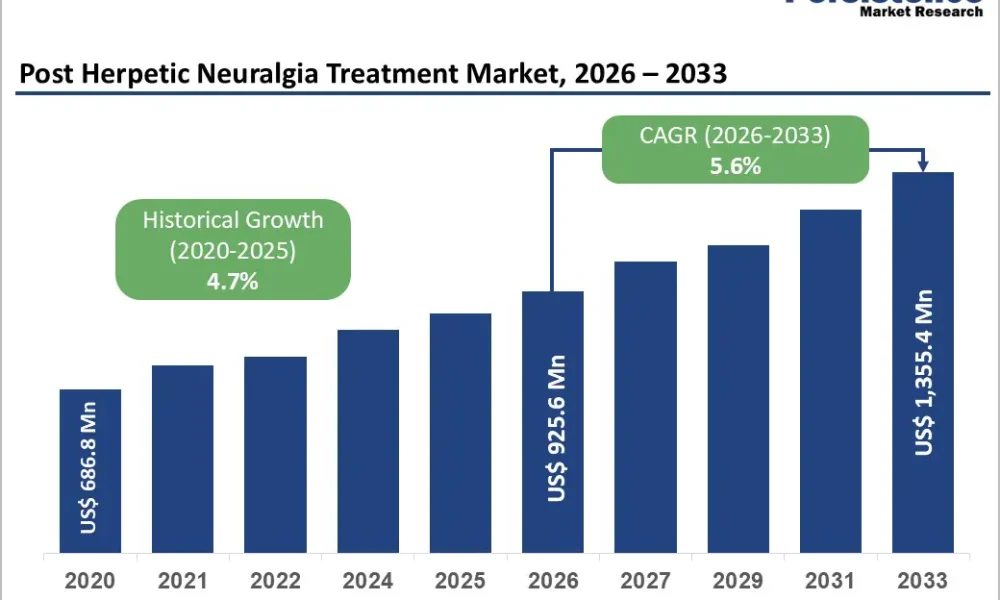
The global post-herpetic neuralgia (PHN) treatment market is poised for substantial growth over the coming years, reflecting increased awareness, an aging population, and advancements in pharmaceutical therapies. Post-herpetic neuralgia is a chronic neuropathic pain condition that follows herpes zoster infections, commonly known as shingles. It is characterized by persistent nerve pain that can last for months or even years after the shingles rash has healed. The condition significantly impacts patients’ quality of life, often leading to sleep disturbances, depression, and decreased daily functionality. As a result, effective treatment strategies are critical, and the market for PHN therapies is experiencing steady growth.
Market Overview
The global post-herpetic neuralgia treatment market size is projected to grow from US$925.6 million in 2026 to US$1,355.4 million by 2033, expanding at a compound annual growth rate (CAGR) of 5.6% during the forecast period. The market expansion is primarily driven by the increasing prevalence of shingles, the growing geriatric population, and rising investments in research and development of novel therapeutics. Furthermore, the emergence of innovative drug delivery systems such as transdermal patches and steroid injectables has contributed to the market’s attractiveness.
Download Your Free Sample & Explore Key Insights: https://www.persistencemarketresearch.com/samples/14506
Market Dynamics
Growth Drivers
Several factors are driving the growth of the post-herpetic neuralgia treatment market. One of the primary drivers is the aging global population. Elderly individuals are more susceptible to herpes zoster infections, which increase the risk of developing post-herpetic neuralgia. As life expectancy rises, the number of individuals at risk of PHN is expected to increase, boosting demand for effective treatments.
Another key driver is the rising prevalence of chronic conditions and immunocompromised states, which make patients more vulnerable to herpes zoster infections. The increasing focus on early diagnosis and treatment of shingles also indirectly fuels the market, as timely intervention can prevent or mitigate post-herpetic neuralgia, increasing the adoption of therapeutics.
Moreover, technological advancements in drug development have led to the introduction of novel formulations such as topical patches and steroid injectables that provide targeted pain relief and improved patient compliance. Pharmaceutical companies are continuously investing in R&D to develop more effective and safer treatment options, which is expected to support market growth.
Restraints
Despite positive growth prospects, the PHN treatment market faces certain challenges. High treatment costs and limited insurance coverage in some regions can hinder patient access to advanced therapies. Additionally, the side effects associated with certain drugs, such as anticonvulsants and opioids, may limit their widespread use. Stringent regulatory requirements for new drug approvals can also delay the introduction of innovative therapies in some markets.
Opportunities
There are significant opportunities for growth in emerging markets where awareness of post-herpetic neuralgia and access to modern treatment options remain low. Expanding distribution networks, establishing local partnerships, and increasing awareness campaigns can enhance market penetration. Furthermore, ongoing clinical trials exploring new pharmacological agents and combination therapies offer potential revenue streams for key players.
Get Custom Insights Designed for Your Businecss: https://www.persistencemarketresearch.com/request-customization/14506
Market Segmentation
By Treatment Type
The post-herpetic neuralgia treatment market is segmented into drugs, patches, and steroid injectables.
Drugs dominate the market due to their widespread availability and established efficacy. Anticonvulsants such as gabapentin and pregabalin, antidepressants including tricyclic antidepressants, and topical analgesics are commonly prescribed to alleviate PHN-related pain.
Patches, particularly lidocaine and capsaicin patches, provide targeted pain relief with minimal systemic side effects. These treatments are gaining traction, especially among elderly patients who may be sensitive to oral medications.
Steroid injectables are used in severe cases of PHN to reduce inflammation and manage intense pain episodes. Though less frequently administered than drugs or patches, steroid injections remain an important treatment option for patients who do not respond to conventional therapies.
By Distribution Channel
The market is also segmented by distribution channels, including institutional sales and retail sales.
Institutional sales encompass hospitals, clinics, and specialty care centers where treatments are administered under professional supervision. These channels are essential for therapies that require careful monitoring, such as injectable steroids and prescription medications.
Retail sales include pharmacies, drug stores, and online retail platforms that facilitate patient access to oral medications and topical treatments. The expansion of e-pharmacies and home delivery services has increased the availability of PHN treatments, especially in remote or underserved regions.
By Region
The global post-herpetic neuralgia treatment market is analyzed across several regions, including North America, Europe, East Asia, South Asia & Oceania, Latin America, and the Middle East & Africa.
North America holds a significant share of the market due to high awareness, advanced healthcare infrastructure, and the presence of leading pharmaceutical companies. The United States, in particular, accounts for a large portion of regional revenue, driven by early diagnosis and adoption of innovative treatment options.
Europe is another prominent market, with increasing incidence of shingles among the elderly population. Countries such as Germany, France, and the United Kingdom show steady demand for PHN treatments, supported by government healthcare programs and reimbursement policies.
East Asia is witnessing rapid growth, fueled by rising awareness, increasing geriatric populations, and the expansion of healthcare facilities in countries like Japan, China, and South Korea.
South Asia & Oceania present opportunities for market expansion due to improving healthcare access and growing awareness of chronic pain management. India and Australia are emerging as key markets in this region.
Latin America and the Middle East & Africa are expected to show moderate growth during the forecast period. Market growth in these regions is primarily driven by increasing healthcare investments, rising prevalence of herpes zoster, and improved distribution channels.
Checkout Now & Download Complete Market Report: https://www.persistencemarketresearch.com/checkout/14506
Competitive Landscape
The post-herpetic neuralgia treatment market is highly competitive, with several key players striving to enhance their market share through product innovation, strategic partnerships, and regional expansion. Notable companies include Pfizer Inc., Teva Pharmaceutical Industries Ltd., Mylan N.V., Endo Pharmaceuticals Inc., Daiichi Sankyo, Acorda Therapeutics, Purdue Pharma L.P, Teikoku Pharma USA, Inc., and Janssen Pharmaceuticals, Inc..
These companies focus on launching new products, expanding their distribution networks, and investing in research to develop safer and more effective treatments for PHN. Strategic acquisitions and collaborations are also common approaches to enhance market presence and maintain competitive advantage.
Key Market Trends
Several trends are shaping the post-herpetic neuralgia treatment market. The adoption of personalized medicine approaches, including tailored drug regimens based on patient profiles, is gaining momentum. Additionally, the integration of digital health technologies, such as telemedicine and mobile health platforms, enables better patient monitoring and adherence to treatment plans.
There is also a growing emphasis on non-opioid therapies due to concerns about opioid addiction and side effects. Companies are investing in alternative pain management solutions, including topical formulations, neuromodulation therapies, and combination therapies, to address this issue.
The increasing preference for minimally invasive treatments, such as transdermal patches and localized injections, highlights the trend toward patient-centric approaches that prioritize comfort and convenience.
Pricing Analysis
Pricing strategies for PHN treatments vary by region and product type. Branded drugs and innovative delivery systems such as patches generally command higher prices, reflecting their therapeutic efficacy and development costs. Generic drugs offer more affordable alternatives, particularly in emerging markets, enhancing accessibility. Reimbursement policies and insurance coverage play a crucial role in determining patient affordability and overall market uptake.
Future Outlook
The post-herpetic neuralgia treatment market is expected to continue its upward trajectory over the next decade. Growth will be supported by increasing prevalence of shingles, heightened awareness of chronic pain management, and the introduction of novel therapies. Expanding access to healthcare, particularly in emerging markets, will further drive market penetration.
Future opportunities lie in the development of combination therapies, biologics, and advanced drug delivery systems that can improve patient outcomes. Companies that invest in clinical research, patient education, and strategic partnerships are likely to capture a larger share of this growing market.
In conclusion, the global post-herpetic neuralgia treatment market represents a dynamic and expanding segment of the pharmaceutical industry. With the projected growth from US$925.6 million in 2026 to US$1,355.4 million by 2033 at a CAGR of 5.6%, the market offers significant opportunities for pharmaceutical companies, healthcare providers, and stakeholders. Continued innovation, enhanced accessibility, and patient-centric approaches will be key factors in shaping the future landscape of post-herpetic neuralgia treatment worldwide.
The market’s evolution underscores the critical need for effective pain management solutions, especially in an aging population increasingly affected by herpes zoster infections. By focusing on research, patient adherence, and novel therapeutics, the post-herpetic neuralgia treatment market is set to achieve sustainable growth and improved patient outcomes globally.




