
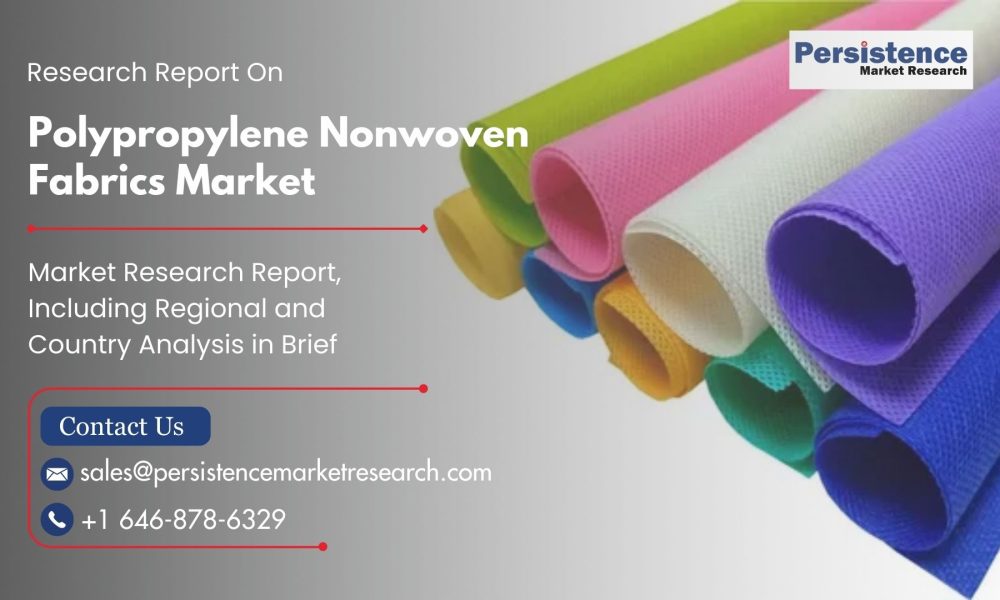
The global Persistence Market Research report on the polypropylene nonwoven fabrics market highlights one of the fastest-growing segments within technical textiles. Polypropylene nonwoven fabrics are engineered fabrics produced by bonding polypropylene fibers through mechanical, thermal, or chemical methods rather than traditional weaving or knitting. Their combination of lightweight properties, durability, breathability, moisture resistance, and cost efficiency makes them indispensable across diverse industries — from hygiene and healthcare to filtration, automotive, agriculture, and industrial sectors. According to the latest insights, the global polypropylene nonwoven fabrics market was valued at approximately US$ 31.1 billion in 2026 and is projected to expand to US$ 50.3 billion by 2033, growing at a compound annual growth rate (CAGR) of 7.1 % between 2026 and 2033.
Understanding Polypropylene Nonwoven Fabrics
Polypropylene (PP) nonwoven fabrics are manufactured using thermoplastic polypropylene fibers, which are transformed into continuous, bonded sheets without weaving. This manufacturing flexibility enables production of a wide range of fabric types — including spunbond, meltblown, composite, and others — each delivering distinct performance characteristics such as filtration efficiency, tensile strength, softness, and barrier protection. These fabrics are valued for their breathability, chemical resistance, moisture resistance, and disposability, making them especially suitable for single-use and high-performance applications.
Market Growth Dynamics
The expansion of the polypropylene nonwoven fabrics market is fueled by several interconnected factors:
- Rising Hygiene and Healthcare Demand
One of the most significant drivers of market growth is the surging demand for hygiene and medical products worldwide. Polypropylene nonwoven fabrics are extensively used in disposable hygiene items — including baby diapers, feminine hygiene products, adult incontinence products, and wipes — because of their softness, absorbency, and cost-effectiveness. Additionally, in the healthcare sector, PP nonwovens are critical components in surgical masks, gowns, drapes, and other protective supplies, especially where high barrier protection and comfort are essential. The continued emphasis on infection control, pandemic preparedness, and healthcare infrastructure expansion has bolstered demand for these materials.
- Multifaceted Industrial and Commercial Applications
Beyond hygiene and healthcare, polypropylene nonwoven fabrics are gaining traction across several other sectors:
- Filtration: Meltblown and other fine-fiber PP nonwovens are increasingly used in air and liquid filtration media due to their high filtration efficiency and breathability.
- Automotive: PP nonwovens are utilized in automotive interiors, insulation layers, and components that improve comfort and reduce vehicle weight.
- Agriculture: Nonwoven geotextiles and crop protection materials help shield plants from environmental stress while optimizing moisture retention.
- Furniture and Upholstery: Fabrics are employed in furniture lining, cushioning, and comfort layers due to their versatility.
These varied applications diversify market demand and contribute to a resilient growth trajectory across industries.
Segment Insights: Product and Application
The market is commonly segmented based on:
Product Type
- Spunbond nonwoven fabrics: Known for high strength and versatility, spunbond remains one of the dominant product types due to a balance of cost, durability, and wide applicability in hygiene, industrial, and filtration uses.
- Meltblown nonwoven fabrics: These offer superior filtration properties and are pivotal in high-efficiency filter media, particularly for healthcare and air filtration applications.
- Composite and specialty fabrics: Combining multiple layers or technologies, these fabrics enhance performance for specialized uses such as advanced medical products or premium industrial applications.
Application Spectrum
- Hygiene products dominate with the largest market share due to their continual high demand in both developed and emerging economies.
- Medical & healthcare: Driven by rising clinical procedures and stringent hygiene protocols, this segment contributes significantly to market growth.
- Industrial & filtration: Increased focus on clean air solutions and industrial filtration systems propels demand for high-performance nonwovens.
- Automotive and Agriculture: Growth in these sectors adds further demand, particularly for lightweight and durable materials that can enhance fuel efficiency and crop protection.
This diversity across applications helps insulate the market from fluctuations within any single sector.
Regional Market Outlook
North America
North America continues to hold a strong regional leadership position, largely because of well-established hygiene and healthcare industries, robust infrastructure, and high consumer awareness. The U.S. plays a dominant role within the region, accounting for a substantial portion of consumption due to developed medical supply chains and stringent regulatory environments that prioritize quality and safety standards.
Asia Pacific
The Asia Pacific region is emerging as one of the fastest-growing markets, propelled by expanding healthcare infrastructure, rising disposable incomes, and large populations in countries like China and India. Rapid urbanization, increased industrial activities, and growing adoption of modern hygiene products also underpin growth momentum in this region.
Europe and Other Regions
Europe maintains steady demand across hygiene, healthcare, and industrial applications, with countries investing in advanced manufacturing and sustainability initiatives. Latin America and the Middle East & Africa are gradually expanding their PP nonwoven usage driven by industrial and healthcare adoption, albeit at a more moderate pace relative to North America and APAC.
Market Challenges and Constraints
Despite robust growth, the market faces several challenges:
- Raw Material Price Volatility: Polypropylene resin prices are tied to crude oil markets, and fluctuations can impact production costs and profit margins for nonwoven manufacturers.
- Environmental Concerns: Increasing scrutiny of single-use plastics and regulatory pressures around sustainability could prompt shifts toward biodegradable or recyclable alternatives, challenging traditional PP nonwoven adoption.
- Competition from Alternatives: Materials like biodegradable fibers or specialized textiles can, in some applications, compete with polypropylene nonwovens, particularly where environmental sustainability is prioritized.
These factors encourage innovation in product design, material science, and recycling technologies.
Innovation and Future Outlook
Looking forward, several trends are shaping the polypropylene nonwoven fabrics market:
- Sustainability Push: Manufacturers are investing in recycled PP content and eco-friendly production to meet regulatory demands and consumer preference for greener materials.
- Technological Advancements: Improvements in production methods such as advanced spunbond and meltblown technologies enhance performance characteristics while reducing waste and costs.
- Expanded High-Performance Applications: Innovations in filtration efficiency, antimicrobial properties, and composite fabric technologies open new opportunities in industrial, medical, and technical textile segments.
Altogether, these trends position the polypropylene nonwoven fabrics market for sustained expansion, driven by innovation, application diversification, and global demand for cost-effective, high-performance materials.
Conclusion
The polypropylene nonwoven fabrics market is poised for significant long-term growth, powered by its indispensable role in hygiene, healthcare, filtration, automotive, and industrial applications. With a projected increase from US$ 31.1 billion in 2026 to US$ 50.3 billion by 2033 at a 7.1% CAGR, the industry reflects evolving consumer needs, technological advancement, and shifting global priorities toward performance, hygiene, and sustainability. Manufacturers that align with these trends — particularly through innovation and eco-friendly initiatives — will be best positioned to lead in this dynamic and expanding market landscape.
About Persistence Market Research:
Persistence Market Research delivers strategic research solutions that drive business growth. Founded in 2012 and registered in England and Wales in 2023 as Persistence Research & Consultancy Services Ltd., we have completed 3,600+ custom and syndicated studies and supported 2,700+ projects for leading research firms. Combining traditional methodologies with modern tools, we provide actionable insights to multinational corporations, consultants, investors, and government bodies, earning strong trust through long-term client relationships.
Contact Us:
Persistence Market Research
Second Floor, 150 Fleet Street,
London, EC4A 2DQ, United Kingdom
USA Phone: +1 646-878-6329
UK Phone: +44 203-837-5656
Email: [email protected]
Web: https://www.persistencemarketresearch.com




