
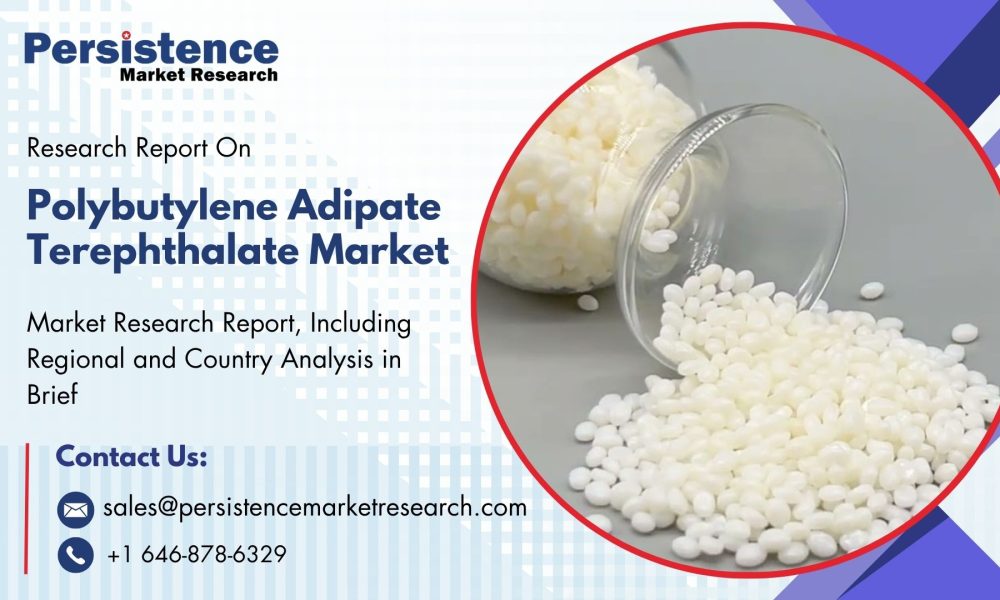
The global polybutylene adipate terephthalate market is witnessing a rapid surge in growth as sustainability takes center stage in modern manufacturing. With escalating concerns about plastic waste and environmental pollution, industries across the globe are shifting toward biodegradable and compostable materials. PBAT, a synthetic biodegradable polymer, has emerged as a leading solution bridging the gap between the performance of conventional plastics and the environmental benefits of bioplastics.
According to the latest study by Persistence Market Research, the global PBAT market size is expected to reach US$ 1,522.8 Mn by 2025 and grow at a robust CAGR of 9.2%, attaining a valuation of US$ 2,819.7 Mn by 2032. This growth is primarily fueled by the rising demand for eco-friendly and compostable plastic alternatives, as global policies and consumer preferences increasingly favor sustainable materials.
Get a Sample PDF Brochure of the Report (Use Corporate Email ID for a Quick Response): https://www.persistencemarketresearch.com/samples/35233
Growing Demand for Compostable Alternatives to Traditional Plastics
The demand for biodegradable plastics has been accelerating, driven by government regulations, environmental awareness, and corporate commitments to sustainability. PBAT, known for its excellent flexibility, toughness, and compostability, is emerging as one of the most promising materials in this category.
Unlike conventional petroleum-based plastics such as polyethylene or polypropylene, PBAT decomposes naturally under industrial composting conditions, leaving behind water, carbon dioxide, and biomass. This makes it a preferred choice for applications in packaging, agriculture, and consumer goods where environmental concerns are high.
Moreover, the material’s compatibility with other biodegradable polymers—such as polylactic acid (PLA) and starch-based plastics—enhances its versatility. This allows manufacturers to create blends that deliver both high performance and compostability, aligning with the circular economy model that many nations are adopting.
As bans on single-use plastics expand across Europe, North America, and Asia, the PBAT market is positioned for sustained growth. Companies are increasingly substituting non-degradable packaging materials with PBAT-based solutions to meet both regulatory standards and consumer expectations.
Packaging Industry: A Key Growth Driver
The packaging sector remains the largest consumer of PBAT, accounting for a substantial share of global demand. The transition toward sustainable packaging solutions is being accelerated by both consumer awareness and corporate environmental responsibility.
PBAT’s combination of biodegradability and mechanical strength makes it an ideal material for various packaging applications, including compostable bags, cling films, and food containers. Its flexibility and heat resistance enable it to replace low-density polyethylene (LDPE) in packaging films without compromising performance.
Major brands in food and beverage, retail, and logistics are incorporating PBAT into their packaging lines to reduce their carbon footprint and comply with sustainability goals. Additionally, the rise of e-commerce and food delivery services has intensified the demand for eco-friendly packaging materials, further boosting PBAT adoption.
Governments and municipalities across Europe have introduced stringent regulations to curb plastic waste, such as the EU Directive on Single-Use Plastics and extended producer responsibility (EPR) frameworks. These initiatives are encouraging manufacturers to shift toward PBAT-based packaging materials, thereby driving consistent market expansion.
Agricultural Applications on the Rise
Beyond packaging, PBAT is gaining traction in the agriculture sector, particularly in the production of mulch films, compost bags, and plant pots. These applications benefit from PBAT’s biodegradability, as it eliminates the need for costly and time-consuming removal of conventional plastic films after harvest.
PBAT-based mulch films decompose naturally into the soil, reducing plastic waste and improving soil health. This not only supports environmental sustainability but also lowers operational costs for farmers. The increasing adoption of sustainable farming practices and the push for biodegradable agricultural inputs in Europe and Asia-Pacific are expected to further drive demand.
Moreover, the growing emphasis on organic farming and environmentally responsible agriculture aligns perfectly with PBAT’s properties, making it a preferred choice for next-generation agro-products.
Technological Advancements and Production Expansion
Technological innovation plays a pivotal role in enhancing the performance, scalability, and affordability of PBAT. Manufacturers are investing in process optimization and polymer engineering to improve the material’s thermal stability, mechanical strength, and compostability rate.
Collaborations between chemical producers and research institutions are also fostering the development of PBAT blends that can match or even exceed the durability of conventional plastics. The integration of bio-based feedstocks into PBAT production is another major advancement, reducing reliance on fossil fuels and minimizing greenhouse gas emissions.
In addition, key market players are expanding their production capacities to meet the escalating global demand. Several large-scale PBAT manufacturing projects have been announced across Europe, China, and North America, reflecting the growing recognition of PBAT as a cornerstone material in the transition to sustainable plastics.
For Customized Insights on Segments, Regions, or Competitors, Request Personalized Purchase Options: https://www.persistencemarketresearch.com/request-customization/35233
Regional Market Insights
Europe: Leading the Transition Toward Bioplastics
Europe remains the largest market for PBAT, driven by strong environmental policies, consumer awareness, and corporate sustainability initiatives. The European Union’s commitment to achieving a circular economy by 2050 has prompted widespread adoption of biodegradable polymers in packaging, agriculture, and consumer goods.
Countries like Germany, France, Italy, and the UK are witnessing increased PBAT consumption in both industrial compostable packaging and agricultural films. Moreover, ongoing research and government support for biopolymer production are further strengthening the regional market.
Asia-Pacific: Fastest-Growing Region
The Asia-Pacific region is expected to register the fastest growth in the PBAT market, supported by expanding manufacturing capabilities and rising environmental awareness. China, in particular, has emerged as a global hub for PBAT production, with several large-scale facilities under development.
Government-led initiatives such as China’s Plastic Pollution Control Action Plan are encouraging industries to switch to biodegradable alternatives. Similarly, India, Japan, and South Korea are investing in bio-based plastic solutions to reduce plastic waste and meet sustainability goals.
North America: Sustainable Packaging Driving Growth
In North America, the growing consumer preference for eco-friendly packaging and rising adoption of compostable materials in retail and food industries are key growth drivers. The presence of major packaging manufacturers and ongoing technological advancements in polymer science further enhance market prospects.
Environmental Regulations and Market Challenges
While the outlook for PBAT is promising, the market faces certain challenges that need to be addressed for sustained growth. The high production cost of PBAT compared to conventional plastics remains a major restraint. However, as economies of scale improve and production technologies advance, prices are expected to decline gradually.
Another challenge lies in the limited composting infrastructure in many regions. Since PBAT requires specific industrial composting conditions for complete degradation, inadequate waste management facilities could limit its widespread adoption.
Nevertheless, ongoing efforts by governments and private players to expand composting networks, coupled with increased consumer education about biodegradable waste, are expected to mitigate these challenges over time.
Company Insights
The global PBAT market is characterized by a mix of leading chemical manufacturers and emerging biopolymer specialists focusing on sustainable innovation. Key companies operating in the market include:
✦ BASF SE
✦ Novamont S.p.A.
✦ SK Geo Centric Co., Ltd.
✦ Eastman Chemical Company
✦ Kingfa Sci. & Tech. Co., Ltd.
✦ Jiangsu Torise Biomaterials Co., Ltd.
✦ Lotte Fine Chemical Co., Ltd.
✦ Mitsubishi Chemical Group Corporation
✦ Anhui Jumei Biotechnology Co., Ltd.
✦ Chang Chun Group
These companies are actively expanding production capacities, investing in research and development, and forming strategic collaborations to enhance product performance and sustainability. Notably, joint ventures between chemical giants and renewable technology companies are accelerating the commercialization of advanced PBAT materials across global markets.
Future Outlook
The future of the polybutylene adipate terephthalate (PBAT) market appears highly promising, driven by the global transition toward sustainable, circular, and low-carbon materials. As regulatory frameworks tighten and public awareness about plastic pollution deepens, PBAT is expected to emerge as a cornerstone of the bioplastics revolution.
By 2032, the market’s valuation of US$ 2,819.7 Mn will reflect not just growing industrial adoption but also a fundamental shift in how societies view and utilize plastic materials. The convergence of innovation, regulation, and environmental responsibility will continue to propel PBAT forward as a viable, scalable alternative to conventional plastics.
In conclusion, the PBAT market is poised to play a transformative role in shaping a greener and more sustainable future. With ongoing investments, supportive policies, and expanding applications, PBAT stands at the forefront of the global movement toward biodegradable and compostable plastic solutions—marking a significant step toward reducing the world’s dependence on non-renewable plastics.
Explore the Latest Trending Research Reports:
About Persistence Market Research:
At Persistence Market Research, we specialize in creating research studies that serve as strategic tools for driving business growth. Established as a proprietary firm in 2012, we have evolved into a registered company in England and Wales in 2023 under the name Persistence Research & Consultancy Services Ltd. With a solid foundation, we have completed over 3600 custom and syndicate market research projects, and delivered more than 2700 projects for other leading market research companies’ clients.
Our approach combines traditional market research methods with modern tools to offer comprehensive research solutions. With a decade of experience, we pride ourselves on deriving actionable insights from data to help businesses stay ahead of the competition. Our client base spans multinational corporations, leading consulting firms, investment funds, and government departments. A significant portion of our sales comes from repeat clients, a testament to the value and trust we’ve built over the years.
Contact Us:
Persistence Market Research
Second Floor, 150 Fleet Street,
London, EC4A 2DQ, United Kingdom
USA Phone: +1 646-878-6329
UK Phone: +44 203-837-5656
Email: [email protected]
Web: https://www.persistencemarketresearch.com




