
The luxury perfume market is experiencing robust growth as consumers increasingly seek premium, personalized, and long-lasting fragrances that reflect their identity and lifestyle. Luxury perfumes are no longer just fragrance products but have evolved into status symbols associated with exclusivity, craftsmanship, and brand heritage. Rising disposable incomes, urbanization, and the growing influence of fashion and beauty trends are encouraging consumers to invest in high-end perfumes. The industry is captivating consumers with its blend of artistry, innovation, and sensory appeal, making luxury fragrances a key segment within the global beauty and personal care market.
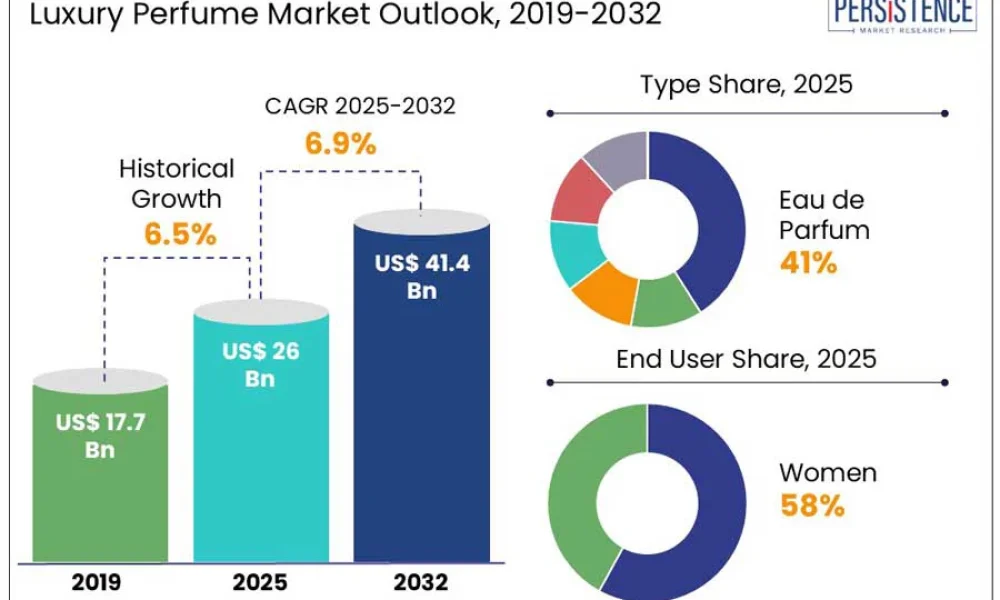
According to Persistence Market Research, the global luxury perfume market size is anticipated to rise from US$ 26 Bn in 2025 to US$ 41.4 Bn by 2032, witnessing a CAGR of 6.9% from 2025 to 2032. This growth is driven by increasing demand for niche and artisanal fragrances, along with rising consumer inclination toward premium grooming products. The premium eau de parfum segment is leading due to its long-lasting fragrance profile, while Europe remains a dominant region owing to its strong fragrance heritage and presence of luxury brands. Additionally, expanding retail channels and digital marketing strategies are enhancing brand visibility and consumer engagement worldwide.
Download Your Free Sample & Explore Key Insights : https://www.persistencemarketresearch.com/samples/35392
Key Highlights from the Report
➤ The luxury perfume market is projected to grow from US$ 26 Bn in 2025 to US$ 41.4 Bn by 2032 at a CAGR of 6.9%
➤ Increasing demand for niche, artisanal, and premium fragrance collections is driving market expansion
➤ Rising influence of celebrity endorsements and luxury branding strategies is boosting product visibility
➤ Growth in online retail platforms and direct-to-consumer channels is enhancing accessibility
➤ Expanding consumer interest in long-lasting and high-concentration perfumes is shaping product trends
➤ Strong demand from millennial and Gen Z consumers for personalized fragrances is fueling innovation
Market Segmentation
The luxury perfume market is segmented based on product type, distribution channel, and end-user demographics. Product categories include eau de parfum, eau de toilette, parfum, and cologne, with eau de parfum leading due to its higher concentration and longer-lasting effect. Consumers are increasingly drawn to premium formulations that provide a richer fragrance experience. Additionally, niche perfume brands focusing on unique ingredients and limited-edition collections are gaining popularity among high-end consumers seeking exclusivity.
From a distribution perspective, luxury perfumes are sold through specialty stores, department stores, brand boutiques, and online platforms. While physical retail continues to dominate due to the experiential nature of fragrance shopping, e-commerce is rapidly expanding as consumers prefer convenience and access to a wider product range. Online platforms also enable brands to offer personalized recommendations and exclusive product launches, further enhancing the consumer experience and boosting market growth.
Customize This Report for Your Exact Requirements : https://www.persistencemarketresearch.com/request-customization/35392
Regional Insights
Europe holds a leading position in the luxury perfume market, supported by its rich heritage in fragrance production and the presence of globally renowned perfume houses. Countries such as France and Italy are known for their expertise in perfumery, making the region a hub for innovation and premium product development. High consumer awareness and a strong culture of personal grooming contribute to sustained demand for luxury perfumes across the region.
North America is another key market, driven by strong purchasing power and the growing influence of social media and celebrity endorsements. Meanwhile, the Asia-Pacific region is emerging as a lucrative market due to rising disposable incomes and increasing adoption of luxury lifestyle products. Rapid urbanization, coupled with expanding retail infrastructure and growing interest in premium beauty products, is supporting the growth of luxury perfumes in countries such as China and India.
Market Drivers
The primary driver of the luxury perfume market is the growing consumer preference for premium and personalized products. Consumers today are seeking fragrances that align with their identity, lifestyle, and emotional expression. This has led to increased demand for niche perfumes and customized fragrance experiences. Luxury brands are responding by offering exclusive collections, limited editions, and bespoke fragrance services that cater to individual preferences, thereby enhancing consumer engagement and brand loyalty.
Another significant driver is the influence of branding, celebrity endorsements, and digital marketing. Luxury perfume brands leverage high-profile collaborations and social media campaigns to attract a wider audience. Influencers and celebrities play a crucial role in shaping consumer preferences and driving demand for specific fragrances. Additionally, the growing popularity of gifting luxury perfumes during special occasions is further boosting market growth, making perfumes a preferred choice in the premium gifting segment.
Market Restraints
Despite strong growth prospects, the luxury perfume market faces certain challenges. One key restraint is the high cost associated with premium fragrances, which can limit accessibility for price-sensitive consumers. Luxury perfumes often use rare and high-quality ingredients, resulting in higher production costs and retail prices. This restricts the market primarily to affluent consumer segments, potentially limiting broader adoption.
Another challenge is the increasing competition from counterfeit products and alternative fragrance options. The presence of imitation perfumes at lower prices can impact the sales of genuine luxury brands. Additionally, changing consumer preferences toward natural and organic products may require brands to reformulate their offerings, which can increase costs and complexity in production. These factors can create barriers for market growth if not effectively addressed.
Market Opportunities
The luxury perfume market presents significant opportunities through the expansion of niche and artisanal fragrance segments. Consumers are increasingly interested in unique scents that stand out from mass-market products. This trend is encouraging smaller and independent perfume brands to enter the market with innovative formulations and storytelling-based branding, creating new growth avenues for the industry.
Another promising opportunity lies in the integration of technology and personalization in fragrance retail. Digital tools such as AI-based fragrance recommendations and virtual try-on experiences are enhancing customer engagement. Additionally, the growth of emerging markets offers untapped potential, as rising middle-class populations and increasing exposure to global luxury trends drive demand for premium perfumes. Strategic expansion into these regions can significantly boost market growth in the coming years.
Unlock Complete Insights – Buy the Full Report : https://www.persistencemarketresearch.com/checkout/35392
Company Insights
Key players operating in the luxury perfume market include:
- Chanel
- Dior
- Hermès
- Tom Ford
- Yves Saint Laurent (YSL)
- Gucci
- Creed
- Guerlain
- Valentino
- Maison Francis Kurkdjian
- Amouage
- Clive Christian
- Diptyque
- Le Labo
- Byredo
Recent Developments
- October 2023: Chanel launched a new high-end fragrance collection focusing on rare and sustainable ingredients.
- May 2024: Estée Lauder expanded its luxury perfume portfolio with new niche fragrance brands targeting premium consumers.
Future Opportunities and Growth Prospects
The luxury perfume market is expected to maintain strong growth momentum as consumers continue to prioritize premium and personalized experiences. Increasing innovation in fragrance composition, sustainable sourcing of ingredients, and eco-friendly packaging solutions will play a key role in shaping the future of the market. Brands that focus on authenticity, exclusivity, and consumer engagement are likely to gain a competitive advantage.
Furthermore, the expansion of digital retail channels and the growing importance of emerging markets will create new opportunities for industry players. As consumer preferences continue to evolve, the demand for luxury perfumes that combine quality, innovation, and emotional appeal will remain strong, ensuring sustained growth for the global luxury perfume market.




