Plumbing problems have a lot in common with a toothache. When you first feel that tiny twinge, it’s easy to ignore it and hope it goes away on its own. But when you wait too long, that minor issue can quickly escalate into a painful, expensive, and unavoidable disaster. Your home’s plumbing system works the same way. It often gives you subtle clues that something is wrong long before a pipe bursts or a drain backs up completely.
Learning to spot these early warning signs is one of the most important things you can do as a homeowner. It allows you to address a small problem with a simple repair, rather than facing a major catastrophe and water damage down the road. While many of these fixes will require the expertise of a professional plumbing service, being able to identify the problem early is the critical first step.
Your house is always talking to you. Here are some of the key signs you need to learn to listen for.
The Sounds of Trouble
One of the first clues that something is amiss with your plumbing is often an unusual noise coming from your pipes or fixtures. Don’t dismiss these sounds as just “the house settling.”
- Banging or Hammering: A loud banging noise, especially when you turn off a faucet or an appliance quickly, is known as “water hammer.” It’s caused by a sudden stop in water flow that creates a shockwave in the pipes. While it might seem harmless, over time, this can damage joints and connections.
- Gurgling or Bubbling: Do you hear gurgling noises from a drain long after the water has gone down? Or does your toilet bubble when you use the sink? This often means your system is struggling to find air, which points to a clogged drain or a blocked vent stack.
- Whistling or Hissing: A faint whistling sound coming from your walls or fixtures when no water is running can indicate that your water pressure is too high. A more distinct hissing sound could be the sign of a small pinhole leak in a pipe.
What to Look For: The Visual Clues
Some of the most common signs of plumbing issues are ones you can see, if you know where to look. Take a regular walk through your home—especially in basements, under sinks, and in laundry rooms—and keep an eye out for these visual red flags.
- Water Stains: A yellowish or brown ring on a ceiling or wall is the classic sign of a slow leak from the floor above. Don’t just paint over it; find the source.
- Peeling or Bubbling Surfaces: If paint or wallpaper is starting to bubble or peel for no apparent reason, it’s often due to moisture building up in the wall behind it.
- A Surprisingly Lush Patch of Grass: If one spot in your yard is significantly greener and growing faster than the rest, it could be a sign of a leak in your main sewer line, which is fertilizing the grass from below.
Unpleasant Odors You Can’t Ignore
A persistent foul smell is a clear indicator that something is wrong in your plumbing or drain system.
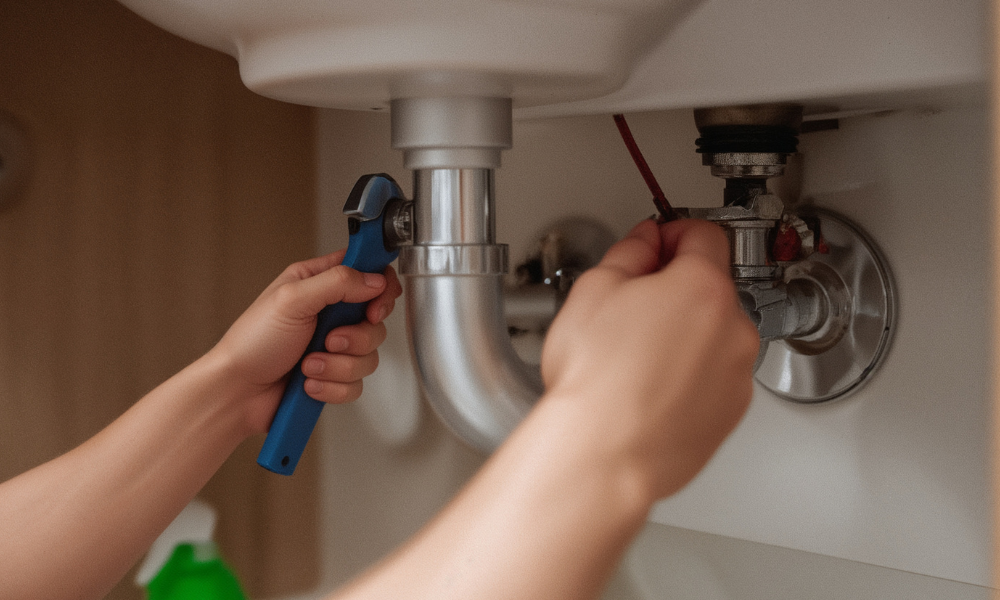
- Sewer Gas Smell: If you notice the smell of raw sewage in your home, it could be something as simple as a dry P-trap in a floor drain or an unused guest bathroom (the U-shaped pipe under a drain that holds water to block gases). However, it can also be a sign of a much more serious problem, like a cracked sewer line or a blocked vent pipe on your roof.
- Musty or Earthy Smells: A persistent musty odor, especially in a basement or bathroom, is a tell-tale sign of hidden mold growth. And mold only grows where there is a consistent source of moisture, meaning you likely have a slow, hidden leak.
Changes in Performance and Pressure
Pay attention to how your plumbing system functions day-to-day. A sudden change in performance is a clear signal that you need to investigate.
- Slow Drains: A single slow drain in a sink or tub is usually a simple clog. But if multiple drains in your house are draining slowly, the problem likely lies deeper in your main sewer line.
- A Sudden Drop in Water Pressure: If you turn on the shower and get a weak spray instead of the usual strong flow, it could indicate a problem. It might be a clog in that specific fixture, but if it’s happening throughout the house, it could be a sign of a hidden water leak or a problem with your water main.
Your Water Bill Suddenly Spikes
Finally, your water bill itself can be a powerful diagnostic tool. If you haven’t changed your family’s water usage habits but your bill suddenly jumps by 20%, 30%, or more, you almost certainly have a leak somewhere in your system. You can confirm this by turning off all water-using appliances in your house and then checking the small dial on your water meter. If it’s still spinning, water is flowing somewhere, and it’s costing you money.
Being a proactive homeowner doesn’t mean you have to know how to fix every problem yourself. It just means knowing how to listen when your house tells you something is wrong. Catching these signs early can save you from a world of expense and frustration down the road.