
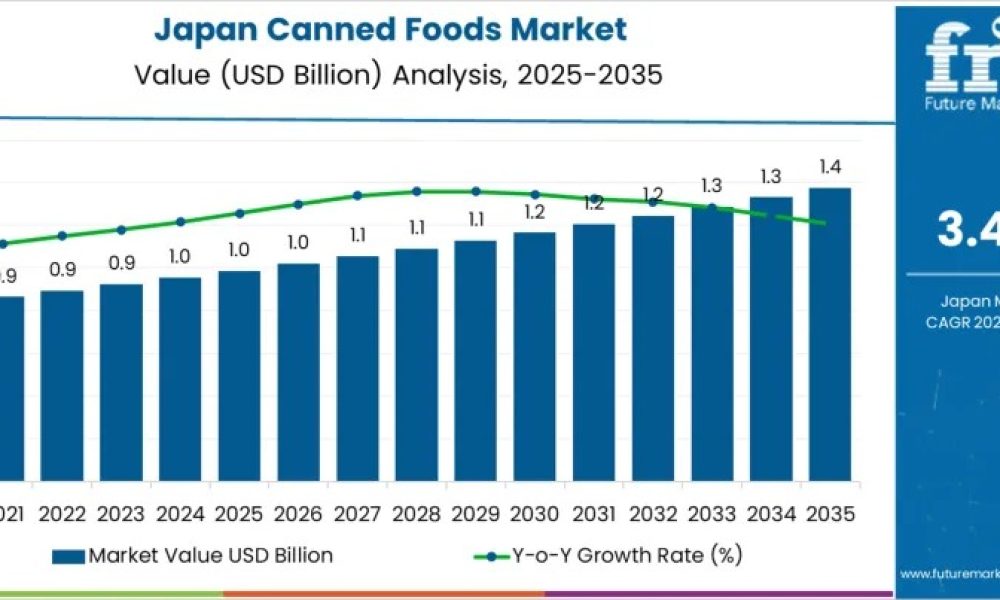
Japan’s canned foods industry is on a stable upward path, with demand projected to rise from USD 1.0 billion in 2025 to USD 1.4 billion by 2035, reflecting a compound annual growth rate (CAGR) of 3.4%. The market’s resilience is anchored in consumer reliance on shelf-stable, easy-to-prepare foods that align with fast-paced urban lifestyles and growing interest in emergency preparedness.
Canned foods remain a household staple across Japan due to their long shelf life, nutrient retention, and versatility. From ready meals and soups to fruits, vegetables, and seafood, the category continues to bridge convenience with nutrition, meeting the needs of working professionals, small households, and aging populations seeking practical meal solutions.
Request for Sample Report | Customize Report | Purchase Full Report! https://www.futuremarketinsights.com/reports/sample/rep-gb-29415
Between 2025 and 2030, the market is expected to add USD 0.2 billion in value, reaching USD 1.2 billion. Growth during this phase will be supported by packaging innovations such as easy-open cans, BPA-free linings, and eco-friendly materials. These developments enhance product safety, usability, and environmental appeal, strengthening consumer confidence in processed food formats.
From 2030 to 2035, another USD 0.2 billion in value addition is anticipated as demand for ready-to-eat and ready-to-heat options rises further. Premiumization is also shaping the category, with more consumers choosing canned products featuring organic ingredients, low-sodium formulations, and sustainability-focused branding.
Key Market Highlights
- Market value expected to grow at a 3.4% CAGR through 2035
- Canned fruits and vegetables lead with 38% product share
- Supermarkets and hypermarkets account for 42% of distribution
- Kyushu & Okinawa emerges as the fastest-growing region at 4.2% CAGR
Convenience Culture Strengthens Core Demand
Japan’s evolving household structure—marked by more single-person homes and dual-income families—is intensifying demand for quick, reliable meal components. Canned foods reduce preparation time while ensuring pantry stability, making them an essential component of modern food consumption patterns. Their role in disaster readiness, a significant consideration in Japan, further reinforces steady baseline demand.
At the same time, health-driven reformulations are expanding consumer acceptance. Manufacturers are introducing cleaner labels, reduced preservatives, and nutrient-focused offerings to counter perceptions that canned products are less fresh than alternatives.
Technology and Packaging Innovations Add Momentum
Advances in retort processing, heat treatment, and can-lining technologies are improving taste, texture, and nutritional retention. Modern preservation techniques allow canned meals, seafood, legumes, and vegetables to more closely resemble fresh equivalents in quality while maintaining extended shelf life.
Sustainability is another growth lever. Recyclable metal packaging and reduced material usage align with Japan’s environmental priorities, helping brands attract eco-conscious buyers and meet regulatory expectations.
Segment Leadership: Fruits, Vegetables, and Retail Channels
Canned fruits and vegetables dominate the market due to affordability, year-round availability, and convenience. They allow consumers and foodservice operators to incorporate produce without storage challenges or spoilage risks.
Supermarkets and hypermarkets remain the primary sales channel, offering product variety, competitive pricing, and bulk-buy options. However, online retail is expanding access, especially among urban consumers who value delivery convenience.
Regional Growth Patterns Reflect Lifestyle Shifts
Kyushu & Okinawa leads regional growth, supported by expanding retail networks and foodservice demand linked to tourism. Kanto follows, driven by Tokyo’s dense urban population and convenience-oriented habits. Kansai and Chubu show steady expansion, while Tohoku and other regions maintain gradual but consistent adoption as modern retail formats spread.
Challenges Remain Despite Positive Outlook
Rising raw material and metal packaging costs may pressure pricing. Additionally, competition from frozen meals, fresh ready-to-eat foods, and meal kits could limit category expansion. Still, ongoing innovation and health-focused product development are expected to offset these headwinds.
Competitive Landscape
Key companies shaping the market include:
- Conagra Brands, Inc.
- Campbell Soup Company
- Del Monte Foods, Inc.
- Kraft Heinz Company
- Bonduelle SA
These players emphasize product diversification, premium positioning, and sustainable packaging to strengthen market presence.
Japan’s canned foods sector is set to remain a dependable growth segment within the broader food industry, balancing convenience, quality, and environmental responsibility through 2035.
About Future Market Insights (FMI)
Future Market Insights, Inc. (FMI) is an ESOMAR-certified, ISO 9001:2015 market research and consulting organization, trusted by Fortune 500 clients and global enterprises. With operations in the U.S., UK, India, and Dubai, FMI provides data-backed insights and strategic intelligence across 30+ industries and 1200 markets worldwide.



