
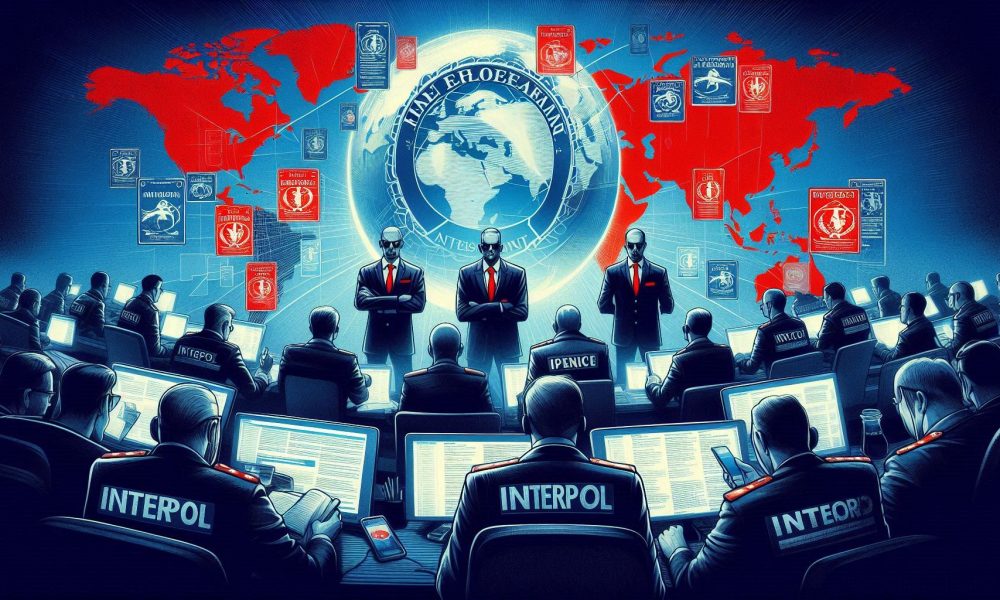
Vancouver, Canada – August 29, 2025 – Around the world, thousands of families face the painful reality of missing loved ones whose fates remain unknown. For many, the absence of answers can last years, even decades. Among the international tools available to bring closure,
INTERPOL Black Notices have emerged as a crucial tool in identifying unknown individuals across borders. Unlike other types of notices, Black Notices specifically address the humanitarian challenge of giving voice to the nameless and ensuring justice is served when criminal activity is suspected. In an era defined by global travel, migration, and transnational crime, their role has never been more significant.
Understanding INTERPOL Notices
INTERPOL, the International Criminal Police Organization, facilitates cooperation among 196 member countries. One of its most recognizable features is the notice system, which comprises multiple categories distinguished by color, each serving a specific purpose. Red Notices target fugitives, Blue Notices request information about individuals, and Yellow Notices assist in locating missing persons.
Black Notices stand apart, as they are issued to gather information on unidentified bodies. They are not arrest warrants, but rather humanitarian and investigative instruments intended to resolve identities and connect the deceased with their families and countries of origin.
A Black Notice contains details such as photographs, distinguishing physical features, DNA data, fingerprints, dental records, and sometimes digital evidence. These details are shared through INTERPOL’s I-24/7 secure communications network, making them accessible to law enforcement worldwide. By centralizing this data, INTERPOL allows investigators in different jurisdictions to cross-reference unknown bodies with missing persons reports, thereby increasing the likelihood of identification.
Why Identification Across Borders Matters
When an unidentified body is discovered, the challenges of identification often extend far beyond the borders of the country where the body was found. With global migration at record levels and millions crossing borders each year, unidentified bodies are frequently foreign nationals. In cases of human trafficking, organized crime, or irregular migration, individuals may lack valid documents, or their identities may be deliberately obscured. Without international coordination, such cases often remain unresolved.
Black Notices help bridge these gaps by creating a standardized, secure channel of communication. For families, identification brings closure, dignity, and the ability to carry out burial rites. For governments, identification is necessary for issuing death certificates, managing consular obligations, and addressing legal matters such as inheritance and citizenship. For law enforcement, identifying a body can lead to the discovery of larger criminal networks and prevent further harm.
Case Study: The Coastline Discovery in Europe
A striking example of this system in action occurred when the body of a young man was found along a southern European coastline. Local authorities initially had no leads, as the man carried no identification. Traditional methods yielded no match, and his case risked being classified as an “unidentified migrant death,” a fate shared by thousands of others each year.
However, by submitting forensic details to INTERPOL and issuing a Black Notice, investigators in another country were able to match the fingerprints with a missing persons report filed years earlier. The deceased was ultimately identified as a North African migrant. His family, who had long searched for him, was finally notified and able to claim his remains. This outcome demonstrates how Black Notices can transform a nameless tragedy into a story of closure and healing.
Case Study: Organized Crime and Transnational Investigations
Black Notices also play a significant role in criminal investigations. In one Central American case, a body was discovered with clear signs of homicide. Despite local inquiries, the victim remained unidentified. A Black Notice issued to INTERPOL databases triggered a match in Europe, where a family had reported their son missing.
His identification not only gave closure to the family but also provided crucial evidence linking the murder to a transnational organized crime group. This connection eventually led to the dismantling of a trafficking syndicate.
These cases highlight the dual role of Black Notices: serving humanitarian needs while also reinforcing law enforcement objectives.
Forensic Technology and the Future of Identification
Technological advances are reshaping the use of Black Notices. DNA sequencing, advanced imaging, and artificial intelligence are accelerating identification timelines. INTERPOL’s forensic databases enable the secure storage and sharing of biometric data, allowing for the identification of individuals even years after discovery.
In one Southeast Asian case, investigators found a body in a remote province with few distinguishing features. Traditional fingerprinting and dental comparisons yielded no results. By submitting photographs of the deceased’s tattoos to INTERPOL’s database, assisted by AI image recognition, authorities matched the body with a missing tourist from Europe. The case illustrated how the combination of digital forensics and international cooperation can produce breakthroughs that traditional methods alone could not achieve.
Legal and Ethical Dimensions
While Black Notices are powerful tools, they also raise questions about privacy, data protection, and human rights. Biometric data such as DNA and fingerprints are highly sensitive, and their international exchange must adhere to strict legal frameworks. Critics warn that the growing reliance on biometric databases poses a risk of potential misuse. At the same time, proponents argue that the benefits (dignity for the deceased, closure for families, and justice for victims) outweigh these concerns.
For organizations specializing in identity restructuring and legal record correction, such as Amicus International Consulting, these debates echo broader questions of lawful anonymity and record accuracy. Inaccuracies in official documents can complicate international investigations, leading to delays in identification or even wrongful conclusions. Ensuring that identity records are legally accurate and properly structured helps align individual rights with international legal systems.
Case Study: Aviation Disaster and Mass Identification
Aviation disasters highlight the importance of coordinated identification. In one incident involving multiple nationalities, the destruction of personal belongings and travel documents left many passengers unidentifiable.
Black Notices issued across INTERPOL’s network enabled the rapid exchange of biometric data and personal descriptors, expediting the identification process. Families received answers in weeks rather than years, and governments were able to fulfill consular and legal obligations without prolonged delays.
Migration, Human Trafficking, and the Global Dimension
The migration crisis has created a growing number of unidentified deaths worldwide. Refugees and migrants often travel without documentation, exposing them to dangers at sea, in deserts, and along border crossings. Many die anonymously, leaving families with no answers. Black Notices provide one of the only avenues for resolving these tragedies.
In regions such as the Mediterranean, where migrant deaths are common, authorities rely on Black Notices to connect unidentified bodies with missing migrants reported abroad. Each successful identification represents not only closure for one family but also contributes to a larger understanding of migration patterns, human trafficking routes, and humanitarian needs.
Case Study: Desert Crossing Victim
Authorities in North Africa discovered a body along a migration route crossing the Sahara Desert. Initial attempts to identify the victim were unsuccessful. Through INTERPOL, a Black Notice was issued containing DNA samples and photographs of personal belongings.
A match was eventually made with a missing persons report filed in Europe by relatives of a young man who had embarked on the dangerous journey. The identification provided both closure and critical data on the smuggling network responsible for organizing the crossings.
Balancing Humanitarian Needs with Security Interests
Black Notices reflect the delicate balance between humanitarian compassion and global security. Every unidentified body represents not only a personal tragedy but also a potential piece of evidence in transnational criminal investigations. Without proper identification, law enforcement risks overlooking key links in criminal chains involving trafficking, terrorism, and organized crime.
For consulting organizations like Amicus, which advise clients on lawful anonymity and legal identity restructuring, the lessons of Black Notices emphasize the importance of accurate, lawful, and verifiable identity frameworks. While anonymity may serve legitimate personal or security purposes, lawful structures ensure that international systems can function effectively when lives and deaths are involved.
The Future of Global Identification
The next decade is likely to see Black Notices evolve in tandem with technological advancements and international law. Blockchain-secured identity records, real-time biometric sharing, and enhanced artificial intelligence may revolutionize the speed and reliability of identifications. Global cooperation will be essential to ensure these innovations respect human rights while serving humanitarian and security objectives.
Case Study: Digital Identity and Cross-Border Tracing
A case in South America involved a body discovered with no physical documents but with a mobile device that contained fragments of a digital identity wallet. Through cross-border cooperation, INTERPOL linked the digital traces with blockchain-based records in another jurisdiction, confirming the victim’s identity. This case represents a glimpse into the future of international identification, where physical documents may play a diminished role compared with secure digital identities.
Conclusion
INTERPOL Black Notices serve as a vital tool in identifying unknown bodies across borders. They embody a commitment to dignity, closure, and justice, ensuring that even in death, individuals are not forgotten. From migration crises to organized crime investigations, Black Notices underscore the importance of international cooperation in addressing some of the most pressing challenges of our time.
For families, they bring closure. For governments, they fulfill legal and humanitarian obligations. For law enforcement, they provide leads that can dismantle dangerous networks.
Amicus International Consulting recognizes the broader lessons these notices carry for identity management and legal record correction. In a world where borders are increasingly porous, lawful identity frameworks and accurate record-keeping are essential. Whether in life or in death, identity matters, and the systems built to preserve it are vital to human dignity and global security.
Contact Information
Phone: +1 (604) 200-5402
Email: [email protected]
Website: www.amicusint.ca




