
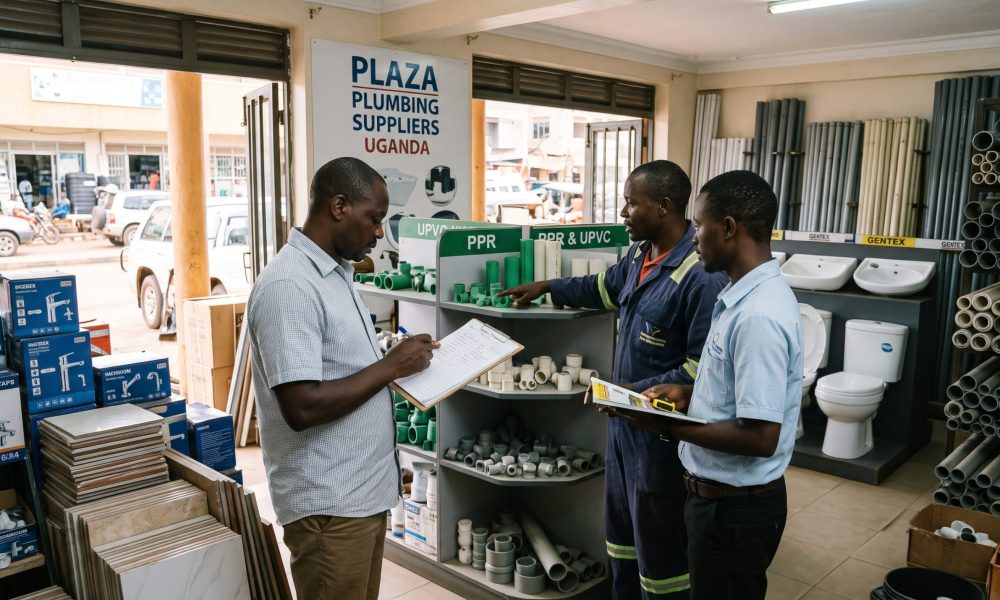
Rising construction costs, irregular water supply and a fast-growing property market mean that more Ugandans are building, extending and renovating their homes than ever. Yet ask any contractor or landlord in Kampala about their biggest regrets and the answers are surprisingly similar. Most of the expensive problems do not come from big design choices. They come from small buying decisions made in a hurry: the wrong pipe, a tank that is too small, tiles that run out halfway through the job, or a roof sheet that was thinner than the quote suggested.
This article lists the ten most common mistakes people make when buying building and plumbing materials in Uganda, explains why they happen, and shows how to avoid them. It is meant for homeowners, landlords, caretakers of rental properties and first-time builders.
Mistake 1: Shopping without a written list and a measured plan
Walking into a shop and asking “how much for tiles?” or “how much for a toilet?” gets you a number, but not a useful one. Prices depend on size, grade, brand and quantity. Before you ask for a quotation from any building materials supplier in Kampala, prepare a simple document with room measurements, the number of bathrooms and kitchens, and the type of finish you want. Suppliers can then quote accurately, and you can compare quotes fairly.
If you are not sure what to list, start with the major categories: plumbing, sanitary ware, tiles, water storage, kitchen fittings and roofing. Then break each down into items and quantities.
Mistake 2: Choosing pipes by price instead of by use
Plumbing is hidden behind walls and under floors, so mistakes here are the most expensive to fix. Each pipe material has a job it does well:
- PPR pipes and fittings suit hot and cold water supply inside the building because the joints are fused together and handle heat well.
- UPVC pipes are a common, affordable choice for cold water lines and for drainage and waste.
- HDPE pipes are flexible and corrosion-resistant, which makes them a good fit for underground mains and long outdoor runs.
Using UPVC for a hot water line, or mixing fittings from different systems, can lead to leaks within months. When you compare plumbing pipes and fittings in Uganda, ask the supplier which system each pipe belongs to, what pressure rating it has, and whether matching fittings are in stock. Popular systems such as Gentex pipes and fittings are often chosen because the range includes the elbows, tees, valves and adaptors needed to complete a job with one compatible set.
Mistake 3: Buying a water tank that is too small, or placing it badly
In many parts of Kampala, mains water is not guaranteed, so a tank is as important as a gutter or a door. A common error is choosing the tank by its price tag rather than by household need. As a rough planning figure, many people estimate 100 to 150 litres per person per day, though real use varies. Multiply by the number of occupants and by the number of days of reserve you want.
Then think about placement. Water is heavy, so the stand or base must be strong and level. Leave space for inlet, outlet, overflow and drain connections, and keep the tank accessible for cleaning. When you compare water tanks in Kampala, look at the plastic quality, the layers, UV protection and the warranty, not only the price. A cheap tank that cracks after a few seasons in the sun is not cheap.
If you are tracking water tank prices in Uganda, always ask what the quoted price includes. Delivery, a float valve, and fittings are sometimes extra.
Mistake 4: Ignoring hot water planning until the end
Hot water affects pipe choice, electrical load and bathroom layout, so it is better to decide early. Storage heaters, instant heaters and solar systems have different costs and electricity demands. Brands such as Fresh water heaters are widely discussed in Uganda, and whichever brand you pick, ask about warranty, service availability and spare parts before you buy. Make sure a qualified electrician installs the unit, with the proper safety devices.
Mistake 5: Treating sanitary ware as a simple purchase
A toilet that looks good in a catalogue may not suit your waste pipe position. Before buying, check whether you need a floor or wall outlet, how far the outlet sits from the wall, and whether the cistern, seat and fittings are included. Prices for toilets in Kampala often exclude some of these parts, which is why two quotes can look very different.
The same care applies to wash basins in Uganda: check the number of tap holes, whether a waste and trap are included, and the basin height for the people who will use it. If you are exploring sanitary ware suppliers in Uganda, find out which brands are held in stock and which are ordered. Brands such as Duravit, Cera and Mediclinics are sold in the region and serve different needs: Duravit is associated with premium bathroom ceramics, Cera with a broader mainstream range, and Mediclinics with commercial and accessible washroom products such as dispensers and grab rails. Stock and lead times vary, so confirm before you plan your schedule around a delivery.
Mistake 6: Forgetting the rest of the bathroom
Many budgets cover the toilet, basin and shower, then run out of money for the items that make a bathroom comfortable and finished. Plan from the start for taps and mixers, shower enclosures, bathroom cabinets, mirrors and accessories such as towel rails and soap holders. If a bathtub with a shower is part of the plan, check the floor strength and the room size first.
When choosing bathroom taps and mixers in Uganda, the internal cartridge matters more than the shine. Ceramic cartridges last longer than cheap plastic ones. Brands such as Docol taps are known for their finish and durability, but a sound mid-range tap from a reliable supplier can also give good service. Whatever you choose, visiting a bathroom showroom in Kampala lets you check sizes and finishes in person instead of relying on a photo.
Mistake 7: Buying too few tiles, or the wrong type
Tiles are among the largest costs in a renovation, and they are the easiest item to run short of. Always add roughly 10% to your measured area for cuts and breakages, and a bit more for diagonal layouts. Check the batch or shade number on every box, because tiles from different production runs can vary slightly in colour. Buy all the tiles for one room at the same time.
Use the right tile in the right place. Floor tiles in Uganda should be hard-wearing and suitable for foot traffic. Wall tiles are lighter and are not made for floors. For bathroom tiles in Kampala, put safety first: a glossy tile is slippery when wet, so choose a matt or textured finish with a good slip-resistance rating for showers and wet areas.
When you compare tile prices in Uganda, convert everything to price per square metre, because box sizes differ. Remember adhesive, grout and spacers, which are often left out of the first estimate. If you are searching for tile suppliers or tile shops in Kampala, visit at least two or three and take your measurements with you.
Mistake 8: Choosing kitchen fittings for looks only
Kitchens are used several times a day, so durability matters. Stainless steel kitchen sinks are popular in Uganda because they resist heat and stains, but thickness and finish vary. Ask for the steel gauge, the bowl and drainer layout, and the size of the cabinet it needs to fit. When comparing kitchen sink prices in Uganda, make sure you are looking at the same specification.
Match your kitchen taps to the sink, including the number of tap holes, the spout height and the reach. For cabinets, whether you are looking at kitchen cabinets in Kampala or elsewhere in Uganda, ask what the boards are made of, how the edges are sealed against moisture, and what hinges and drawer runners are used. These details decide how long the kitchen lasts. Small kitchen accessories such as waste traps, organisers and drying racks are inexpensive and make daily life easier, so include them in the budget.
Mistake 9: Comparing roofing quotes that are not like for like
The roof is the most important protection your building has, and roofing quotes are easy to misread. Two shops may quote very different prices for “iron sheets” when one is thicker, better coated or longer than the other. Before you compare roofing sheets prices in Kampala, ask each supplier for the gauge, the coating, the profile, the sheet length and the warranty.
Iron sheet prices in Uganda change with gauge, finish and the steel market, so ask for a dated written quotation and how long it stays valid. Do not forget the accessories: ridge caps, flashings, gutters and the correct nails or screws. Reputable roofing materials suppliers in Uganda will explain these details clearly and show you the manufacturer’s specification when asked.
Mistake 10: Buying from many places without checking compatibility
It is tempting to chase the lowest price for every single item from a different shop. The risk is that pieces do not fit together: a tank outlet that does not match your fittings, a mixer that does not suit your basin, a pipe system with missing adaptors. Hidden costs then appear in extra trips, returns and delays.
A practical approach is to buy related items from one supplier that carries a broad range. Established suppliers such as Plaza Plumbing Suppliers Uganda cover pipes, fittings, sanitary ware and bathroom products, which makes it easier to keep everything compatible and to ask one team for advice. If you are based in the east of Kampala, a supplier near Bweyogerere or the Industrial Area can also reduce transport time for heavy items.
A simple order of work to follow
Buying materials in the right order prevents damage and rework. The table below gives a general sequence for a renovation. Your project may differ, so adjust it with your contractor.
| Stage | What to buy or confirm | Why it comes at this point |
| 1 | Roofing sheets, gutters, accessories | Protects the building and everything inside from rain |
| 2 | Pipes, fittings, tank, drainage | Hidden work is cheaper and easier before walls and floors are finished |
| 3 | Water heater, electrical points | Needs coordination between plumber and electrician |
| 4 | Floor and wall tiles, adhesive, grout | Sanitary fixtures must be fitted to finished surfaces |
| 5 | Toilets, basins, taps, showers | Fitted after tiling to avoid damage |
| 6 | Cabinets, accessories, mirrors | Final finishing and fixing |
A short checklist before you pay
- Is every quotation itemised, with brand, size, material and quantity?
- Do you know the warranty period and what it covers?
- Is delivery included, and when will it arrive?
- Can unopened or wrongly supplied items be returned?
- Have you included about 10% for waste, extras and price changes?
- Have you kept receipts, product codes and batch numbers for future repairs?
Frequently asked questions
What is the best way to compare prices for building materials in Kampala?
Get at least two or three written quotations for the same specification. Compare the unit price (for example per square metre or per sheet), warranty, delivery and validity of the quote, not only the total.
Should I buy everything at once?
Buy items for each stage close to when you need them, but order long-lead items such as imported sanitary ware, premium taps or special tiles early. For tiles, buy the full quantity for each room in one purchase to match the batch.
Can I check the quality of products myself?
Yes, to a degree. Look for UNBS marks or recognised standards, pressure ratings on pipes, steel gauge on sinks and roofing, and warranty information. If you are unsure, ask your plumber or contractor to review the specification before you pay.
Is it better to visit a showroom?
For visible items such as taps, tiles, basins and cabinets, yes. For standard items like pipes and fittings, a clear specification is often enough. You can also compare plumbing hardware and bathroom fittings in Kampala against your list before visiting, so that you arrive knowing what to ask.
Final thoughts
A renovation rarely fails because of one large decision. It is usually the small ones that add up: a mismatched fitting, a missing box of tiles, a thin roofing sheet. Plan on paper, compare like for like, buy in a sensible order, and work with suppliers who explain their products. That approach protects your budget and your home.




