
I. Industry Development
[OpenAI and Broadcom Partner: Acquire 10GW of Computing Power and Design AI Chips with AI]
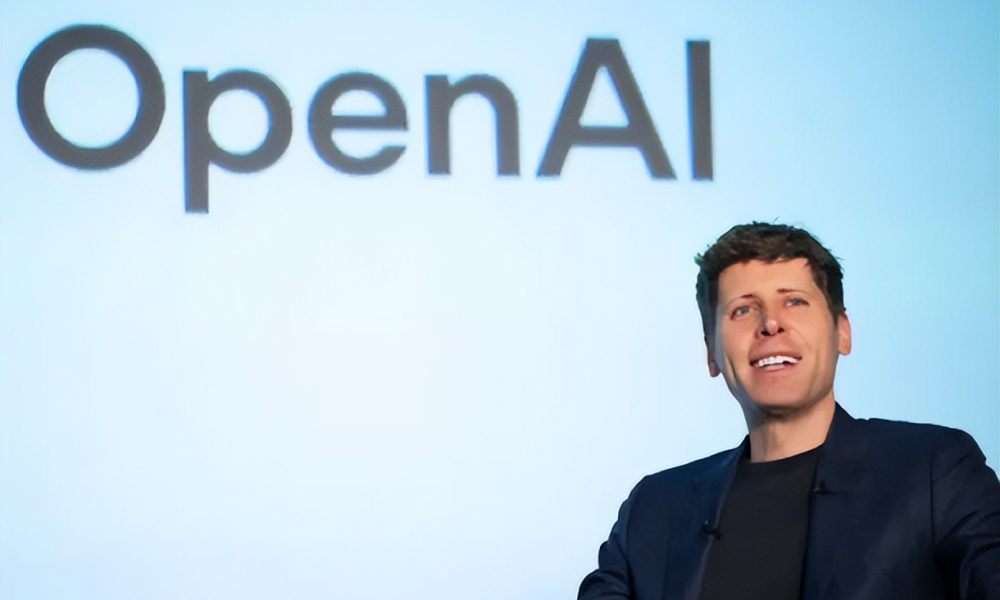
On October 13, AI giant OpenAI announced that it will collaborate with Broadcom to develop and deploy a 10GW-scale customized AI chip and network system rack. According to OpenAI’s public statements, this marks its official entry into chip manufacturing, a key step in the computing power race.

According to press releases from both companies, OpenAI will use these self-developed chips and systems to directly integrate its cutting-edge models and product development experience into hardware products, unleashing new levels of computing power and intelligence. The project is expected to begin deployment and refine the network system in the second half of 2026, with completion expected by the end of 2029.
[Apple (AAPL) Releases New Vision Pro with M5 Chip, Compatible with Over 1 Million Apps]
On October 15th, Apple launched the Apple Vision Pro, powered by the powerful M5 chip, delivering a leap in performance, superior display rendering, faster AI workflows, and improved battery life.

The upgraded Vision Pro also features a soft, comfortable double-layer knit headband for a more comfortable wearing experience. It also comes with visionOS 26, which delivers innovative spatial experiences including widgets, new Personas, an interactive Jupiter environment, and new Apple Intelligence features with support for more languages.
[Intel (INTC) Announces New AI Chip, Focusing on Inference as It Seeks a Return to the AI Market]
On October 15th, Beijing time, Intel reportedly announced a new AI chip for data centers on Tuesday, slated for release next year, marking the company’s renewed push into the AI chip market. Intel Chief Technology Officer Sachin Kati said at the Open Compute Summit on Tuesday that the new graphics processing unit (GPU) will be optimized for energy efficiency and can support a variety of use cases, including running AI applications or inference.

The new chip, called “Crescent Island,” is the latest attempt by the struggling Intel to capitalize on the AI investment boom, which has generated billions of dollars in revenue for AMD and Nvidia. Based on the design architecture used by Intel for its consumer GPUs, “Crescent Island” will feature 160GB of low-speed memory, which is slower than the high-bandwidth memory used in AMD and Nvidia’s data center AI chips.
[Samsung (SSNGY) Headset Launch Scheduled for October 21st]
Project Moohan is reportedly a mixed reality headset jointly developed by Samsung, Google, and Qualcomm. It features dual 4K screens, the Qualcomm XR2+ Gen 2 chip, and the Android XR operating system. Samsung recently announced that it will host a virtual event, dubbed “Galay Event,” at 10 PM ET on October 21st, where it will unveil more information about Project Moohan. The event will be livestreamed on Samsung.com, the Samsung Newsroom, and the Samsung YouTube channel.

[1 PFLOPS of computing power! NVIDIA (NVDA) Completes Delivery of DGX Spark, the Smallest AI Supercomputer!]
On October 14th, NVIDIA announced the official delivery of the world’s smallest AI supercomputer, the NVIDIA DGX Spark. To celebrate the global delivery of DGX Spark, NVIDIA founder and CEO Jensen Huang visited SpaceX’s Starship Facility in Texas and personally delivered one of the first DGX Sparks to SpaceX Chief Engineer Elon Musk. Musk posted on social media: “This is about 100x more compute per watt than the first dedicated AI computer, the DGX-1, that Jensen Huang gave me at OpenAI in 2016!”

Huang Renxun said, “Giving Elon the first DGX-1 gave birth to ChatGPT and ignited the AI revolution. DGX-1 not only ushered in the era of AI supercomputers, but also revealed the principles of scale that drive modern AI development. Now, DGX Spark allows us to return to our original aspiration: to put AI computers in the hands of every developer, thereby unleashing the next wave of technological breakthroughs.” ”
[Meta (META) will collect user conversations with AI glasses and generate recommended ads]
Meta will reportedly expand the use of data from its generative artificial intelligence feature, Meta AI. Meta AI interactions will be used to recommend content and deliver targeted ads on Facebook and Instagram.
Users’ voice and text conversations with Meta AI will influence future posts and ads they see. For example, if a user discusses hiking, they might see hiking-related Reels videos and groups, friend posts, and ads for hiking boots.

Meta stated that the company will not use sensitive information such as religious views, sexual orientation, political stance, health status, racial or ethnic background, philosophical beliefs, or union membership for ad targeting. Meta previously revealed that Meta AI has over 1 billion monthly users.
[Google (GOOG) Meet Launches AI Makeup Feature]
Recently, the conferencing app Google Meet has launched an AI makeup filter feature, which users can enable under “Appearance – Portrait Decoration.”
The AI makeup filter features 12 different makeup options. Google notes that the virtual makeup stays the same regardless of the user’s movement on screen, making it appear more realistic. For example, even if a user drinks coffee or touches their face during a meeting, the filter will remain on their face rather than shifting elsewhere.

II. Market Dynamics
[Apple (AAPL) Smartglasses May Feature a “Dual OS”!]
Recently, Bloomberg reported that Apple has abandoned plans for a lightweight headset (codenamed Vision Air) and will focus more on smartglasses.
According to Mark Gurman’s previous report, Apple may first launch a screenless version of its AI glasses, similar to the Ray-Ban Meta, and then expand into the AR glasses market.
In terms of product details, Apple’s smartglasses may run the same VisionOS as the Vision Pro. “From what I understand, the future device will run the full operating system when paired with a Mac, but will switch to a lighter, more mobile-friendly interface when connected to an iPhone.”
[WiMi (WIMI) Focuses on Blockchain Smart Contracts for IoT Systems, Promoting Data Management Optimization and Upgrades]
As the digital economy accelerates, blockchain technology, with its core characteristics of decentralization and immutability, has become critical infrastructure for rebuilding industry trust systems and optimizing business processes. Smart contracts, as the core vehicle for blockchain technology’s practical application, are a crucial support for achieving transaction automation and trusted processes.
Facing technical bottlenecks in traditional smart contracts, Wimi Hologram Cloud Inc. is comprehensively optimizing the data structure and core algorithms of smart contracts, starting from the underlying technical architecture, and is exploring new blockchain smart contracts suitable for IoT systems. In terms of data structure design, WiMi breaks through the limitations of traditional linear storage and innovatively adopts a hybrid storage architecture combining an efficient hash table and a tree structure, achieving both improved data storage and access efficiency.
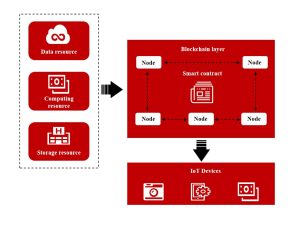
At the core algorithm level, the new smart contract system features a lightweight smart contract execution algorithm and an adaptive data compression algorithm tailored to the needs of IoT scenarios. Furthermore, at the software level, the new smart contract system optimizes code execution logic, reduces redundant computational operations, and lowers device CPU utilization.
Going forward, WiMi will continue to deepen its research and development of blockchain smart contract technology. It will develop more customized contract templates and algorithm models tailored to the diverse needs of IoT scenarios, further enhancing the technology’s adaptability and flexibility. The goal is to build a “blockchain + IoT” industry ecosystem, achieve more efficient and secure digital development, and inject new vitality into the high-quality development of the digital economy.
[Meta (META) Quest 3 Tops Steam VR Charts!]
Nearly two years after its release, the Quest 3 has finally taken the crown as the most-used VR headset on Steam.
The Quest 2’s four-and-a-half-year reign as the most-used VR headset on Steam has finally ended, replaced by the Meta Quest 3. Fittingly, the Quest 3’s ascent to the top spot comes almost exactly two years after its initial release on October 10, 2023.

Released in October 2020, the Quest 2 is more than just a more affordable and refined version of Meta’s promising new standalone “Quest” headset series. In comparison, the Quest 3 launched at a higher price point and without the backdrop of a global pandemic. It may have taken two years for it to become the most-used VR headset on Steam, but that doesn’t diminish the significance of this moment.
[Sharp Unveils Lightweight VR Headset!]
Recently, Japan held the fifth XR Metaverse exhibition, where Sharp exhibited a lightweight VR headset prototype. Some foreign media were given the device for hands-on testing.
The headset is a split-body, white device with Pancake optics, weighing approximately 200-250g. It supports diopter adjustment from 0 to -6.00 D, with the official version supporting diopters down to -9.00 D. Furthermore, the headset features inside-out tracking and can be used with the VR haptic controllers currently under development by Sharp.





