
The global hair texturizer product market is gaining strong traction as consumers increasingly seek flexible hair styling solutions that enhance natural texture without causing significant damage. Hair texturizers are widely used to loosen curls, improve manageability, and create diverse hairstyles while maintaining a natural appearance. The growing influence of social media trends, celebrity styling, and rising awareness of hair care routines has significantly boosted product adoption. Consumers today prefer products that allow them to experiment with styles while preserving hair health, which is encouraging manufacturers to introduce advanced and less harsh formulations.
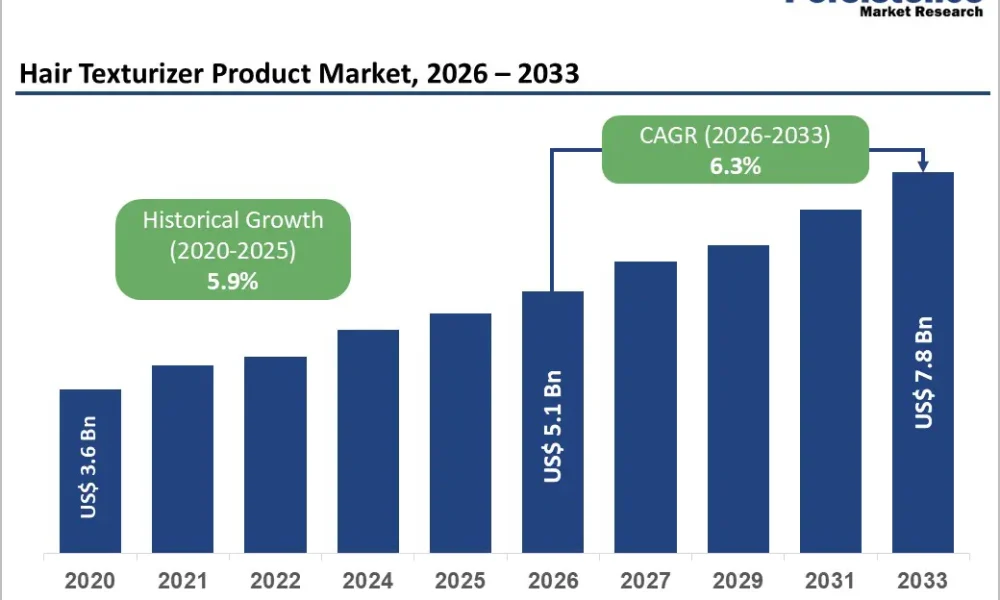
According to Persistence Market Research, the global hair texturizer product market is likely to be valued at US$ 5.1 Billion in 2026 and is expected to reach US$ 7.8 Billion by 2033, growing at a CAGR of 6.3% during the forecast period from 2026 to 2033. The market growth is driven by increasing demand for personal grooming products, particularly among younger consumers and urban populations. Cream-based texturizers dominate the segment due to ease of application and reduced scalp irritation, while North America leads the market owing to high consumer awareness, strong salon culture, and the presence of leading hair care brands.
Download Your Free Sample & Explore Key Insights : https://www.persistencemarketresearch.com/samples/34023
Key Highlights from the Report
➤ The hair texturizer product market is projected to grow from US$ 5.1 Billion in 2026 to US$ 7.8 Billion by 2033.
➤ Rising demand for natural-looking and manageable hairstyles is fueling product adoption globally.
➤ Increasing popularity of chemical-free and mild formulations is influencing product development strategies.
➤ Strong growth in salon services and professional hair care treatments is supporting market expansion.
➤ Expansion of e-commerce platforms and beauty retail chains is improving product accessibility.
➤ Growing awareness of hair health and damage prevention is encouraging innovation in safer texturizers.
Market Segmentation
The hair texturizer product market can be segmented based on product type, application, and distribution channel. Product types include cream-based, liquid, and gel-based texturizers, each offering distinct benefits. Cream-based products are the most preferred due to their smooth application and ability to minimize scalp irritation. Liquid texturizers, on the other hand, are widely used in professional salon settings for quick and uniform application. Gel-based variants are gaining traction among consumers seeking lightweight styling solutions that provide flexibility and hold without excessive chemical exposure.
Based on end-user segmentation, the market is divided into individual consumers and professional salons. Professional salons account for a significant share due to the expertise required for proper application and styling. However, the rising availability of easy-to-use home kits is expanding the consumer base among individual users. Distribution channels include supermarkets, specialty beauty stores, and online platforms. E-commerce is emerging as a fast-growing segment due to convenience, product variety, and increasing digital penetration, particularly in developing economies.
Customize This Report for Your Exact Requirements : https://www.persistencemarketresearch.com/request-customization/34023
Regional Insights
North America dominates the hair texturizer product market, driven by strong demand for advanced hair care solutions and a well-established salon industry. Consumers in the region are highly conscious of hair styling trends and frequently adopt new products to achieve desired looks. The presence of major beauty brands and ongoing product innovations further strengthens market growth. Additionally, the rising demand for safer and organic formulations is encouraging companies to expand their product portfolios.
The Asia-Pacific region is witnessing rapid growth due to increasing urbanization, rising disposable incomes, and growing awareness of personal grooming. Countries such as India, China, and Southeast Asian nations are experiencing higher adoption of hair styling products among younger populations. The expansion of beauty retail chains and online platforms is further boosting market penetration. Meanwhile, Europe continues to show steady demand supported by premium product adoption and a strong focus on hair health and sustainability.
Market Drivers
One of the primary drivers of the hair texturizer product market is the growing emphasis on personal grooming and appearance. Consumers are increasingly investing in hair care products that help them achieve stylish and manageable hair. The influence of social media platforms and beauty influencers has amplified awareness about hair texturizers, encouraging consumers to experiment with different hairstyles. This trend is particularly prominent among younger demographics, who are more inclined toward fashion-forward looks and personalized grooming routines.
Another key driver is the increasing demand for versatile and time-saving hair solutions. Hair texturizers provide a convenient way to modify natural hair texture without undergoing extensive chemical treatments. The availability of easy-to-use products that deliver salon-like results at home is further boosting market growth. Additionally, advancements in formulation technology have enabled manufacturers to develop products that reduce hair damage while offering effective styling results.
Market Restraints
Despite favorable growth conditions, the market faces certain challenges. One major restraint is the concern over chemical exposure and potential hair damage associated with traditional texturizers. Many consumers are cautious about using products that contain strong chemicals, as they can lead to dryness, breakage, or scalp irritation. This has led to increased demand for safer alternatives, putting pressure on manufacturers to reformulate their products.
Another limitation is the availability of alternative hair styling solutions such as natural hair care methods, heat styling tools, and organic treatments. These alternatives may reduce the dependence on chemical texturizers, especially among consumers who prioritize natural and holistic hair care approaches. Additionally, the need for proper application techniques can discourage some users, particularly those who lack professional guidance.
Market Opportunities
The growing demand for natural and organic hair care products presents significant opportunities for market players. Consumers are increasingly seeking formulations that are free from harsh chemicals and enriched with natural ingredients such as oils, plant extracts, and proteins. Developing eco-friendly and sustainable products can help companies attract environmentally conscious consumers and strengthen brand loyalty.
Another promising opportunity lies in product innovation and customization. Brands can focus on developing texturizers tailored to specific hair types, textures, and styling needs. Personalized solutions that cater to diverse consumer preferences can enhance user satisfaction and drive repeat purchases. Expanding into emerging markets where awareness of hair styling products is increasing also offers substantial growth potential for the industry.
Checkout Now & Download Complete Market Report : https://www.persistencemarketresearch.com/checkout/34023
Company Insights
Key players operating in the hair texturizer product market include:
L’Oréal S.A.
Procter & Gamble Co.
Unilever PLC
Revlon Inc.
Strength of Nature LLC
SoftSheen-Carson
Avlon Industries Inc.
Namaste Laboratories
African Pride
ORS Hair Care
Recent Developments
- January 2024: L’Oréal introduced a new range of mild hair texturizers focused on reducing chemical damage and improving hair health.
- October 2023: Procter & Gamble expanded its professional hair care portfolio with advanced texturizing solutions targeting salon professionals.
Future Opportunities and Growth Prospects
The future of the hair texturizer product market appears promising, supported by evolving consumer preferences and continuous innovation in hair care products. The demand for safer, more effective, and customizable solutions is expected to drive further product development. Manufacturers are likely to invest in research and development to create formulations that balance performance with hair health.
Moreover, the expansion of digital retail channels and increasing consumer awareness in emerging markets will create new growth avenues. Strategic partnerships with salons, influencer marketing, and the introduction of eco-friendly products will play a crucial role in shaping the market’s long-term trajectory.




