
The green building materials market is experiencing rapid growth as the global construction industry shifts toward sustainable development and low-carbon infrastructure. Green building materials are designed to reduce environmental impact throughout the building lifecycle by improving energy efficiency, minimizing carbon emissions, and enhancing indoor air quality. These materials include low-carbon concrete, recycled steel, advanced insulation systems, and low-VOC paints that contribute to sustainable construction practices.
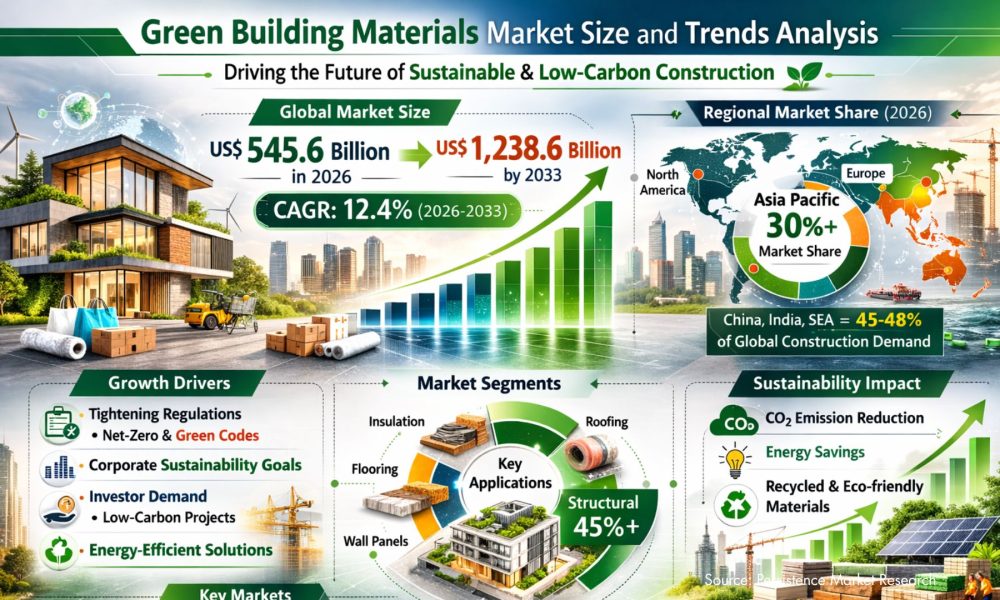
According to Persistence Market Research, the global green building materials market is expected to be valued at US$ 545.6 billion in 2026 and is projected to reach US$ 1,238.6 billion by 2033, expanding at a CAGR of 12.4% between 2026 and 2033. This strong growth reflects the construction sector’s shift toward environmentally responsible materials driven by stricter regulations, ESG commitments from corporations, and increasing demand for energy-efficient buildings.
Green building materials help reduce operational energy consumption by 20–30% in building systems and support sustainable building certifications such as LEED, BREEAM, and IGBC. These materials are increasingly specified in both new construction and renovation projects due to their ability to deliver long-term cost savings and environmental benefits.
Get Your FREE Sample Report Instantly – Click Now: https://www.persistencemarketresearch.com/samples/33981
Key Drivers of Market Growth
Rising Regulatory Pressure for Sustainable Construction
Government regulations are one of the most important drivers accelerating the adoption of green building materials. Many countries are introducing stricter building energy codes and carbon reduction mandates to reduce emissions from the construction sector. These regulations require developers to incorporate environmentally friendly materials in construction projects.
For example, policies such as the Energy Performance of Buildings Directive (EPBD) in Europe and federal procurement requirements in the United States promote the use of low-carbon construction materials. These frameworks encourage the adoption of advanced insulation, low-VOC coatings, and recycled materials in large infrastructure projects. As sustainability regulations become more stringent worldwide, the demand for green construction materials is expected to grow rapidly.
Increasing Adoption of Green Building Certifications
Green building certification programs are significantly influencing the demand for eco-friendly construction materials. Certifications such as LEED (Leadership in Energy and Environmental Design), BREEAM, and IGBC are widely recognized benchmarks for sustainable construction practices.
Developers increasingly pursue these certifications to enhance property value, improve building performance, and attract environmentally conscious investors and tenants. As a result, construction companies are specifying materials that meet sustainability standards and contribute to certification requirements.
The growing emphasis on ESG (Environmental, Social, and Governance) performance in real estate investments has further strengthened this trend, making green materials an essential component of modern construction projects.
Rapid Urbanization and Infrastructure Development
Urbanization in emerging economies is creating significant opportunities for green building materials. Countries in Asia Pacific, Latin America, and Africa are experiencing rapid population growth and increasing demand for residential and commercial infrastructure.
Large-scale housing programs and infrastructure projects require cost-effective building materials that support sustainability goals. Governments are therefore promoting green construction practices in urban development initiatives.
For example, large housing programs in developing economies are increasing demand for materials such as thermal insulation systems, fly ash bricks, and recycled steel. These materials reduce environmental impact while improving building durability and energy efficiency.
Growth of Energy-Efficient Building Solutions
Energy efficiency is a key factor driving the adoption of green building materials. Buildings account for a significant share of global energy consumption and carbon emissions. By using advanced insulation, reflective roofing systems, and energy-efficient façade materials, developers can significantly reduce energy consumption in buildings.
Thermal insulation materials, including mineral wool and glass wool, are among the fastest-growing segments in the green building materials market. These solutions help maintain indoor temperature, reduce heating and cooling costs, and improve overall building performance.
As energy costs continue to rise and governments implement net-zero building targets, energy-efficient materials will play an increasingly important role in sustainable construction.
Market Segmentation
By Product Type
Structural Product
Exterior Product
Interior Product
Others
By End-user
Commercial
Residential
Industrial
By Material Type
Green / Low-Carbon Concrete
Thermal Insulation Materials (Mineral Wool / Glass Wool)
Recycled Steel
Fly Ash Bricks / AAC Blocks
Low-VOC Paints & Coatings
Others
By Region
North America
Europe
East Asia
South Asia & Oceania
Latin America
Middle East & Africa
Structural Materials Leading Market Adoption
Structural materials hold a dominant share of the green building materials market, accounting for more than 45% of total market revenue. These materials include low-carbon concrete, engineered timber, and recycled steel reinforcement used in building structures.
Structural components are responsible for a significant portion of a building’s embodied carbon footprint, making them a key focus area for decarbonization efforts. Low-carbon concrete technologies that use supplementary cementitious materials such as fly ash and slag can reduce emissions by 25–35% compared to traditional concrete.
In addition, engineered wood products and recycled steel are gaining popularity as sustainable alternatives to conventional materials due to their lower environmental impact and improved lifecycle performance.
Thermal Insulation Materials Driving Rapid Growth
Thermal insulation materials are among the fastest-growing segments in the green building materials market. Increasing energy efficiency regulations and net-zero building mandates are driving the demand for high-performance insulation systems.
Materials such as mineral wool, glass wool, aerogels, and vacuum insulation panels are widely used to improve building thermal performance. These solutions help reduce heating and cooling energy consumption while maintaining indoor comfort levels.
Advanced insulation technologies are particularly important in regions with extreme climate conditions, where maintaining energy efficiency is essential for reducing operational costs and environmental impact.
Commercial Sector Dominating Market Demand
The commercial construction sector currently represents the largest end-use segment in the green building materials market, accounting for over 45% of total demand. Corporate sustainability goals and ESG investment strategies are driving the adoption of environmentally friendly building materials in commercial properties.
Office buildings, shopping centers, hotels, and institutional facilities increasingly incorporate green materials to improve energy efficiency and reduce environmental impact. Many companies also view sustainable buildings as a way to enhance brand reputation and attract environmentally conscious customers.
Meanwhile, the residential sector is emerging as the fastest-growing segment due to increasing demand for energy-efficient homes and government initiatives supporting sustainable housing.
Asia Pacific Leading Regional Market Growth
Asia Pacific dominates the global green building materials market, accounting for more than 30% of global market share. Rapid urbanization, strong infrastructure investment, and government initiatives promoting sustainable construction are key factors supporting market growth in the region.
Countries such as China, India, Japan, and Southeast Asian nations are expanding their construction sectors and implementing energy efficiency regulations. These initiatives encourage developers to adopt green materials in both residential and commercial projects.
North America and Europe also represent significant markets due to strong regulatory frameworks, widespread adoption of green building certifications, and growing awareness of environmental sustainability.
Competitive Landscape
The global green building materials market is moderately consolidated with several major companies competing through innovation, product development, and strategic partnerships. Leading manufacturers are investing in research and development to create advanced materials that reduce carbon emissions and improve building performance.
Key companies operating in the market include:
- BASF SE
- PPG Industries
- LafargeHolcim
- Heidelberg Materials
- Sika AG
- Kingspan Group
- Owens Corning
These companies are expanding their sustainable product portfolios and forming collaborations with construction firms to strengthen their market positions.
Get a Customized Market View in One Click: https://www.persistencemarketresearch.com/request-customization/33981
Future Outlook
The future of the green building materials market appears highly promising as sustainability becomes a central focus in the construction industry. Governments, investors, and developers are increasingly prioritizing environmentally responsible construction practices, which is driving the demand for low-carbon and energy-efficient materials.
Technological advancements in material science, along with the development of cost-effective green alternatives, are expected to further accelerate market adoption. Emerging economies will play a crucial role in shaping market growth due to rapid urbanization and large-scale infrastructure development.
As the global construction industry continues to transition toward sustainable practices, green building materials will remain a critical component in achieving long-term environmental and economic goals.
About Persistence Market Research:
Persistence Market Research delivers strategic research solutions that drive business growth. Founded in 2012 and registered in England and Wales in 2023 as Persistence Research & Consultancy Services Ltd., we have completed 3,600+ custom and syndicated studies and supported 2,700+ projects for leading research firms. Combining traditional methodologies with modern tools, we provide actionable insights to multinational corporations, consultants, investors, and government bodies, earning strong trust through long-term client relationships.
Contact Us:
Persistence Market Research
Second Floor, 150 Fleet Street,
London, EC4A 2DQ, United Kingdom
USA Phone: +1 646-878-6329
UK Phone: +44 203-837-5656
Email: [email protected]
Web: https://www.persistencemarketresearch.com




