
It is learned that Google (GOOG) announced on the social platform that Android XR will power the ecosystem of headsets and glasses, and bring Gemini to these devices, which can accompany you and provide help at any time.
Gemini introduces AI glasses and XR headsets
Previously, at the Google I/O event, Google announced Project Aura, which focuses on the upcoming smart glasses powered by Android XR.
In addition, Google wrote in a shared blog: “When we launched Android XR with Samsung and Qualcomm, we shared how headsets such as Samsung’s Project Moohan can provide an immersive experience on an infinite screen. Gemini will make Android XR headsets easier to use and more powerful through understanding.
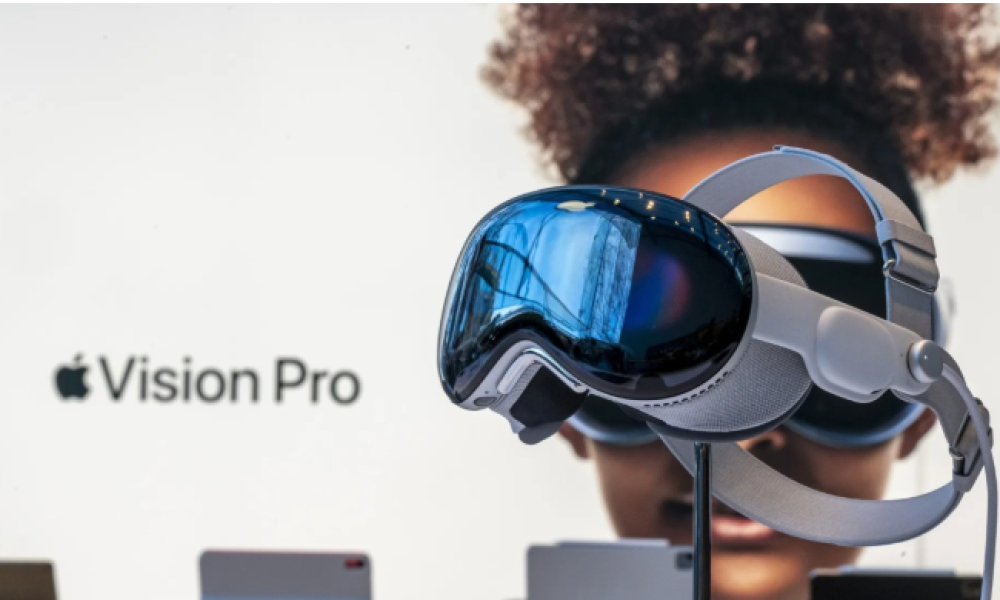
Update M4 version Vision Pro
At the same time, on July 10 local time, according to Bloomberg, Apple (AAPL) is planning to upgrade its $3,499 Vision Pro headset as early as this year for the first time, aiming to improve the performance and comfort of this device that has received mediocre response from consumers.
The updated version of Vision Pro will include a faster processor and components that can better run artificial intelligence (AI) functions. The new version will be equipped with a new headband to make it easier for users to wear it for a long time. This upcoming upgrade of Apple also paves the way for greater changes in the future.
Previous news, according to an Apple engineer, Tim Cook is eager for Apple to launch real augmented reality (AR) glasses, “nothing else matters”, AR Glasses have become Tim Cook’s “top priority.” In the long run, Apple’s goal is to eventually dominate the smart glasses category – no matter what its final form.

It is worth mentioning that in the face of Apple’s strong advantages in brand, technology integration and user ecology, Meta (META) must get ahead. Meta demonstrated its first AR glasses Meta Orion in 2024, which attracted market attention. Apple is also developing real AR glasses, with the goal of launching them in 2030. The product will be launched on the market before the end of the year.
In order to gain an advantage in the future battlefield of AR glasses, Meta is spending $3.5 billion to engage in in-depth cooperation with the world’s largest eyewear manufacturer. In this way, Meta wants to establish advantages that are difficult for others to surpass in the two key points of “fashion sense” and “daily wearing convenience” that determine whether AR glasses can be popularized.
This move further deepens Meta’s ongoing cooperation with EssilorLuxottica in the field of smart glasses development. You should know that EssilorLuxottica is the creator of two well-known eyewear brands, Ray-Ban and Oakley.
At present, the Ray-Ban smart glasses sold by Meta integrate practical functions such as embedded cameras and AI assistants; and recently, Meta has launched a new series of Oakley brand products using similar technology.
WiMi fully bets on the future of AR glasses
Public information shows that Wimi Hologram Cloud, the first holographic AR stock Inc (WIMI), taking holographic technology as the core technology reserve of AR glasses, fully bets on the future of AR glasses, optimizes the management of the industrial chain through 5G+holographic+AR technology, improves the quality and interactivity of virtual content, and continuously enhances the user’s immersive experience, aiming to become a leading technology company in the consumer-grade AR glasses market.
So far, WiMi’s technology layout covers three major directions: AR underlying technology, AI algorithm, and hardware innovation, providing key support for AR glasses. In addition, WiMi has also independently developed an AI development engine to support real-time rendering of dynamic AR glasses, lower the threshold for content production, and improve the environmental perception, real-time translation, and gesture recognition capabilities of AR glasses through AI visual algorithms, so as to achieve more natural virtual-real interaction.
Conclusion
According to WellsennXR data, the sales volume of global AI smart glasses (excluding XR fusion products) has grown rapidly, from only 210,000 pairs in 2023 to 4 million pairs by 2025. This means that this year’s smart glasses will definitely usher in a blowout. The entire industry is moving towards real smart glasses, and it is also a huge challenge for manufacturers to enter the smart glasses industry.




