
Definition
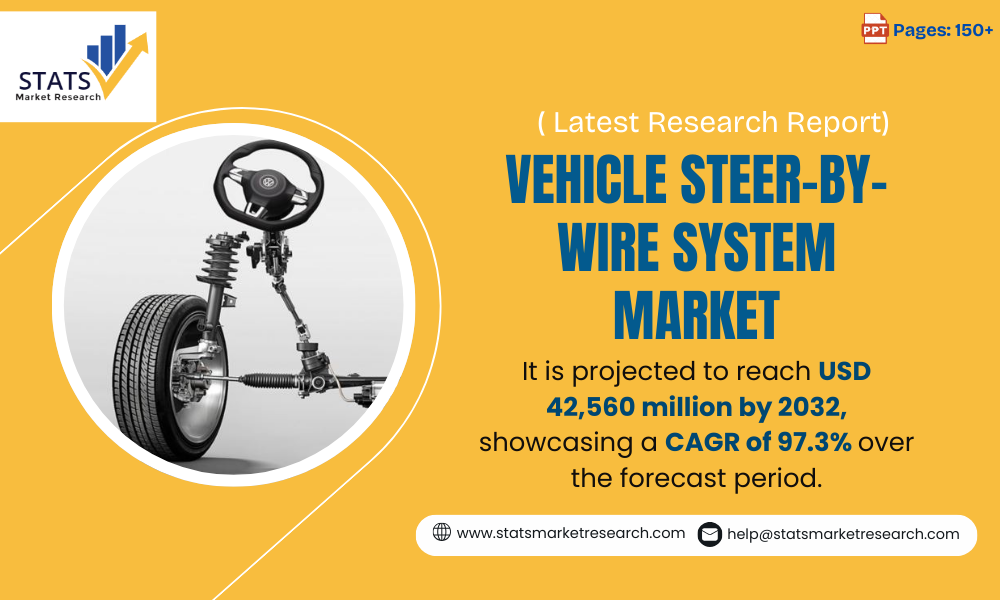
Vehicle steer-by-wire systems are an advanced automotive steering technology that replaces conventional mechanical linkages between the steering wheel and the vehicle’s wheels with electronic sensors, actuators, and control units. This technology transmits steering inputs through electrical signals rather than physical connections, offering precise control, reduced vehicle weight, and enhanced driving dynamics.
Key system types include:
- Mechanical Redundancy Systems: Incorporate backup mechanical connections to ensure steering functionality in the event of electronic failure.
- Electric Backup Redundancy Systems: Provide electronic fail-safe mechanisms, critical for fully autonomous vehicle operations and enhanced reliability.
The technology is especially relevant in autonomous vehicles (Level 3–5), electric vehicles (EVs), and advanced driver assistance systems (ADAS), enabling modular vehicle design, space optimization, and integration with complex automotive electronics.
Recent Developments in the Vehicle Steer-by-wire System Market
The vehicle steer-by-wire (SBW) market is rapidly evolving, driven by the increasing demand for electric and autonomous vehicles. Recent developments are primarily focused on enhancing safety, reliability, and functionality. Key trends include the development of single-chip systems that integrate multiple functions, and the use of redundant fail-safe systems to ensure operation even in the event of a component failure. Automakers are also focusing on creating more intelligent and adaptive steering systems that can adjust based on road conditions, speed, and driver preferences. This technology is a prerequisite for higher levels of autonomous driving, as it allows for seamless electronic control of the steering without a mechanical link.
Major Distribution of Vehicle Steer-by-wire Systems
The distribution of vehicle steer-by-wire systems is largely controlled by major Tier 1 automotive suppliers. Companies like Bosch, ZF Friedrichshafen, JTEKT, Nexteer Automotive, and Continental are dominant players in this market. They distribute their products directly to Original Equipment Manufacturers (OEMs) for integration into new vehicle models, particularly high-end passenger cars and electric vehicles. While the aftermarket for these complex systems is currently limited, some suppliers are also exploring opportunities to provide solutions for retrofitting vehicles or for use in niche, lower-volume applications. The distribution is heavily concentrated in regions with strong automotive manufacturing bases, such as North America, Europe, and Asia-Pacific.
Market Size
Global vehicle steer-by-wire system market was valued at USD 398 million in 2024. It is projected to grow from USD 425 million in 2025 to USD 42,560 million by 2032, exhibiting a CAGR of 97.3% during the forecast period.
Significant growth drivers include:
- Autonomous vehicle adoption: Level 4–5 vehicles are projected to see rapid uptake post-2027, creating high demand for steer-by-wire technology.
- Electric vehicle expansion: Global EV sales are expected to exceed 30 million units annually by 2030, driving integration of lightweight, energy-efficient steering systems.
- Automotive electronics advancement: Improved electronic control units (ECUs), actuators, and torque simulation algorithms are enhancing system reliability and driving feel.
Real-world examples demonstrating market potential:
- ZF Friedrichshafen AG: Investing in silicon carbide-based power electronics to improve steer-by-wire efficiency.
- Nexteer Automotive: Secured contracts with multiple Chinese EV manufacturers for fault-tolerant steer-by-wire platforms.
- Bosch and Schaeffler: Developing integrated steering, braking, and suspension control systems using mechatronics expertise.
Download FREE Sample of this Report @ https://www.statsmarketresearch.com/download-free-sample/8057068/global-vehicle-steerbywire-system-forecast-market
Market Dynamics
Drivers: Accelerating Demand for Autonomous Vehicles
- Integration with autonomous architecture: Eliminates mechanical linkages for seamless vehicle automation.
- Packaging efficiency: Frees space for advanced driver assistance and electrification components.
- Improved reliability: Advanced fail-safe mechanisms ensure safe operation in Level 4–5 autonomous vehicles.
Drivers: Electric Vehicle Revolution
- Weight reduction: Up to 15% compared to traditional hydraulic steering systems.
- Energy efficiency: Optimized steering response maximizes EV range.
- Modular cabin design: Enables retractable steering wheels and innovative interior layouts.
Restraints: Safety Certification Challenges
- Lengthy certification: Safety validation can exceed 24 months per new implementation.
- Regulatory fragmentation: Divergent global standards increase compliance complexity.
- Premium segment limitation: Cost-intensive systems are primarily deployed in high-end vehicles.
Challenges: Cybersecurity Vulnerabilities
- Connected system risk: Integration with vehicle networks increases attack surfaces.
- High complexity: Robust encryption and intrusion detection systems increase design costs.
- Evolving regulations: Continuous software updates required to maintain cybersecurity compliance.
Opportunities: Advancements in Haptic Feedback Technology
- Realistic steering feel: Advanced torque simulation replicates physical steering sensation.
- Customizable profiles: Adaptive response to driver behavior, vehicle speed, and road conditions.
- AI integration: Enables dynamic adjustment of steering feedback for optimal driver experience.
Opportunities: Emerging Markets
- Cost-optimized solutions: Simplified steer-by-wire configurations for emerging economies.
- Scalable architectures: Modular designs adaptable across multiple vehicle platforms.
- Growing demand: Rising middle-class adoption of advanced vehicle technologies in Asia-Pacific.
Regional Analysis
- Asia-Pacific: Leading market adoption due to EV production, OEM collaboration, and cost-effective solutions (China, Japan, South Korea).
- North America: Focus on commercialization with Nexteer, Bosch, and ZF partnerships for premium and autonomous vehicle segments.
- Europe: Premium vehicle adoption and stringent safety standards drive market growth.
- Emerging Markets: Middle East, Africa, and Latin America offer cost-sensitive growth opportunities.
Get the Complete Report & TOC @ https://www.statsmarketresearch.com/global-vehicle-steerbywire-system-forecast-market-8057068
Competitor Analysis
Key players combine legacy automotive expertise with cutting-edge electronics and software capabilities:
- ZF Friedrichshafen AG (Germany): Expertise in chassis and integrated steering systems; investing in silicon carbide power electronics.
- JTEKT Corporation (Japan): Focused on advanced redundancy architectures and OEM partnerships.
- Nexteer Automotive (U.S.): High-availability steer-by-wire platform contracts in China.
- Schaeffler AG (Germany): Mechatronics integration for steering, braking, and suspension.
- Robert Bosch GmbH (Germany): Integrated electronic control and steering solutions.
- KYB Corporation (Japan) & Mando Corporation (South Korea): Compact vehicle adoption and cost-optimized systems.
Global Vehicle Steer-by-Wire System: Market Segmentation Analysis
This report provides a deep insight into the global vehicle steer-by-wire system, covering all its essential aspects. From macro analysis to micro-level insights on market size, competitive landscape, development trends, niche opportunities, drivers, challenges, SWOT analysis, and value chain evaluation. It helps readers understand competitive dynamics, formulate strategies, and identify profitable opportunities.
Market Segmentation (by Application)
- Level 3 Vehicle
- L4-L5 Vehicle
Market Segmentation (by Type)
- Mechanical Redundancy
- Electric Backup Redundancy
Key Company
- ZF Friedrichshafen AG (Germany)
- JTEKT Corporation (Japan)
- Nexteer Automotive (U.S.)
- Schaeffler AG (Germany)
- Robert Bosch GmbH (Germany)
- KYB Corporation (Japan)
- Mando Corporation (South Korea)
- NSK Steering Systems (Japan)
- Zhejiang Shibao (China)
- DECO Automotive (France)
- Teemo Technology (China)
- ThyssenKrupp AG (Germany)
Geographic Segmentation
- Asia-Pacific: China, Japan, South Korea, India
- North America: U.S., Canada, Mexico
- Europe: Germany, France, UK, Italy
- Rest of the World: Middle East, Africa, Latin America
FAQ
Q1: What is the current market size of the vehicle steer-by-wire system?
- Valued at USD 398 million in 2024, projected to reach USD 42,560 million by 2032 with a CAGR of 97.3%.
Q2: Which are the key companies operating in this market?
- ZF Friedrichshafen, JTEKT Corporation, Nexteer Automotive, Schaeffler, Bosch, KYB, Mando, NSK Steering Systems, Zhejiang Shibao, DECO Automotive, Teemo Technology, ThyssenKrupp.
Q3: What are the key growth drivers in this market?
- Autonomous vehicle adoption, EV growth, advanced automotive electronics, and haptic feedback technology.
Q4: Which regions dominate this market?
- Asia-Pacific leads, followed by North America and Europe. Emerging economies show untapped potential.
Q5: What are the emerging trends in this market?
- AI-driven haptic feedback, modular system architectures, cost-optimized solutions for emerging markets, and integrated steering, braking, and suspension systems.
About Us
☎️ International: +1 (332) 2424 294
📄 Website: www.statsmarketresearch.com
Join us on LinkedIn:- https://www.linkedin.com/company/statsmarketresearch




