
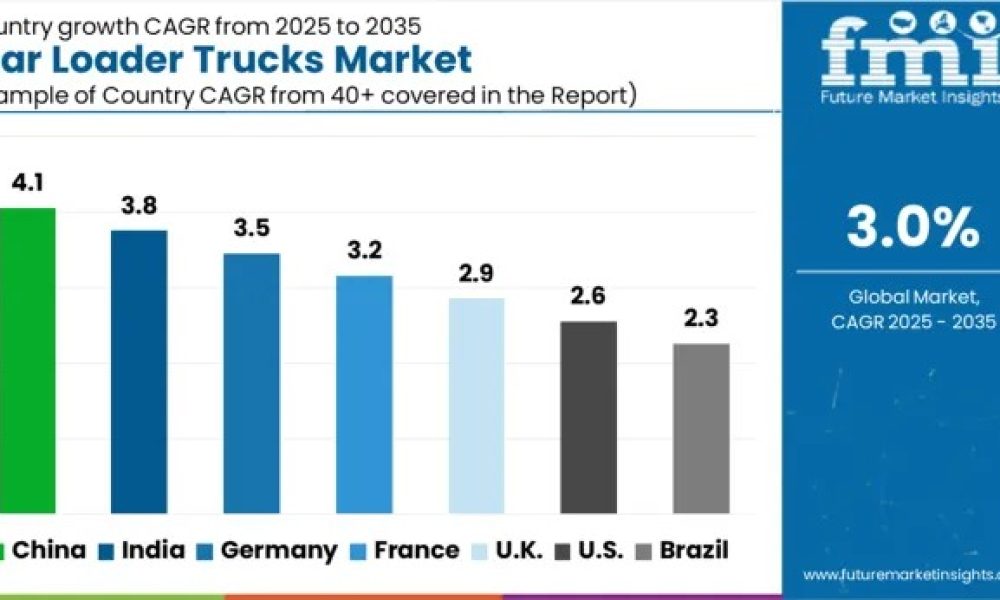
The global rear loader trucks market is set for steady, structurally resilient growth over the next decade, underpinned by rising urban waste generation, modernization of municipal fleets, and increasing emphasis on operational efficiency in waste management. Valued at USD 5.9 billion in 2025, the market is projected to reach USD 8.0 billion by 2035, expanding at a compound annual growth rate (CAGR) of 3.0% during the forecast period. This consistent growth trajectory reflects the essential role of rear loader trucks in municipal, commercial, and industrial waste collection systems worldwide.
Analysis of long-term growth patterns indicates relatively low volatility in annual expansion rates, highlighting a market characterized by predictable demand and stable replacement cycles. Incremental gains during the early forecast years reflect cautious capital allocation by municipalities and private operators, while mid-term acceleration is expected as regulatory pressures and efficiency requirements drive fleet upgrades. By the latter half of the decade, growth stabilizes, supported by infrastructure investment, emerging market adoption, and public–private partnerships focused on improving collection efficiency and urban sanitation outcomes.
Steady Growth Anchored in Urban Waste Management Needs
Rear loader trucks remain a foundational asset in waste management operations due to their versatility, durability, and suitability for dense urban environments. Between 2025 and 2028, market expansion is expected to remain moderate as operators prioritize incremental upgrades and life extension of existing fleets. However, from 2029 to 2032, growth is anticipated to strengthen as technological improvements—including automated loading mechanisms, enhanced hydraulic efficiency, and compliance with stricter emission standards—encourage broader fleet modernization.
Although minor deceleration is forecast during 2033–2034 due to saturation in mature markets and longer vehicle service lives, overall demand remains resilient. Urban population growth, increasing waste volumes, and the need for reliable sanitation infrastructure continue to sustain procurement activity. By 2035, the market reaches a stable growth phase, supported by emerging economies expanding municipal fleets and developed regions adopting next-generation, efficiency-focused rear loader trucks.
Get access to comprehensive data tables and detailed market insights — request your sample report today!
https://www.futuremarketinsights.com/reports/sample/rep-gb-25851
Waste Collection Dominates End-Use Demand
The waste collection sector represents the largest demand contributor, accounting for approximately 44% of the global market. Municipal authorities and private service providers rely heavily on rear loader trucks for residential and urban waste collection due to their ability to handle diverse waste streams efficiently. Construction and demolition (C&D) activities contribute a further 25%, reflecting the importance of rear loader trucks in transporting debris from infrastructure and real estate projects.
Street cleaning accounts for around 15% of demand, while recycling and municipal services collectively provide complementary growth. Together, waste collection, C&D, and street cleaning represent 84% of overall market demand, underscoring that urban sanitation, infrastructure development, and public cleanliness remain the primary drivers of long-term market expansion.
Diesel, Automatic Transmissions, and Medium Capacity Lead Adoption
By fuel type, diesel-powered rear loader trucks are projected to account for 52.3% of market revenue in 2025. Diesel engines continue to be favored for their high torque, durability, and efficiency in stop-and-go operations typical of waste collection routes. The widespread availability of refueling infrastructure and advancements in low-emission diesel technology reinforce their continued dominance, even as alternative fuels gain gradual traction.
From a technology perspective, automatic transmission systems are expected to capture 58.7% of market share. Automatic drivetrains reduce driver fatigue, improve safety, and enhance fuel optimization in congested urban settings. Their ability to lower maintenance costs and improve productivity has made them the preferred choice for fleet operators focused on total cost of ownership.
In terms of capacity, the 10–20 tons segment leads with a 59.3% revenue share. This category offers an optimal balance between payload efficiency and maneuverability, making it well suited for urban and suburban waste collection. Medium-capacity trucks reduce the number of collection trips while maintaining access to narrow streets, supporting both operational efficiency and fuel economy.
Regional Dynamics Reflect Infrastructure and Regulatory Trends
North America, Asia-Pacific, and Europe remain the key growth regions for the rear loader trucks market. Asia-Pacific is emerging as the fastest-growing region, driven by rapid urbanization, expanding municipal infrastructure, and increasing government focus on sanitation and smart city initiatives. China leads global growth with a projected CAGR of 4.1%, supported by large-scale fleet modernization programs and investments in advanced waste management technologies. India follows at 3.8%, reflecting rising waste volumes and government-led improvements in urban sanitation systems.
Europe continues to demonstrate stable growth, led by Germany at 3.5% CAGR, supported by stringent environmental regulations and adoption of energy-efficient, low-emission vehicles. The United Kingdom and France maintain steady expansion as municipalities replace aging fleets with advanced rear loader trucks aligned with sustainability targets. In the United States, growth of 2.6% is driven by fleet modernization, emission compliance, and the integration of telematics and automation to improve operational efficiency.
Drive Your Business Growth Strategy: Checkout the Report for Key Insights
https://www.futuremarketinsights.com/checkout/25851
Competitive Landscape Focused on Efficiency and Reliability
The competitive environment of the rear loader trucks market is shaped by a focus on payload capacity, durability, and lifecycle efficiency. Leading manufacturers such as Heil Environmental, Labrie Enviroquip Group, McNeilus Truck & Manufacturing, and New Way Trucks maintain strong positions through robust product portfolios designed for residential, commercial, and industrial applications. High compaction ratios, ease of maintenance, and adaptability to varying waste streams remain key differentiators.
Manufacturers are increasingly integrating telematics, GPS-enabled route optimization, and advanced safety features to enhance fleet management and operator safety. The gradual introduction of alternative fuel options, including electric and hybrid rear loader trucks, reflects the industry’s response to tightening emission standards and sustainability objectives.
Outlook: Essential Infrastructure with Long-Term Stability
The rear loader trucks market demonstrates a stable and predictable growth outlook, supported by its critical role in urban waste management and public health infrastructure. As cities expand and regulatory frameworks evolve, demand for efficient, durable, and technologically advanced waste collection vehicles will remain consistent. With steady replacement cycles, emerging market adoption, and incremental innovation, rear loader trucks are positioned to remain an indispensable component of global waste management systems through 2035 and beyond.
Why Choose FMI: Empowering Decisions that Drive Real-World Outcomes: https://www.futuremarketinsights.com/why-fmi
About Future Market Insights (FMI)
Future Market Insights, Inc. (FMI) is an ESOMAR-certified, ISO 9001:2015 market research and consulting organization, trusted by Fortune 500 clients and global enterprises. With operations in the U.S., UK, India, and Dubai, FMI provides data-backed insights and strategic intelligence across 30+ industries and 1200 markets worldwide.



