
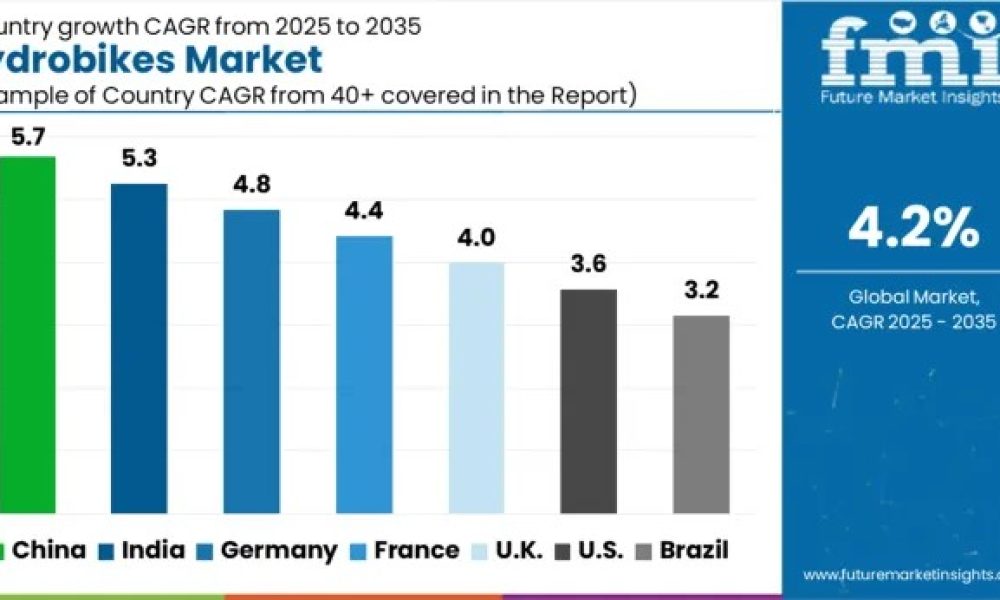
The global hydrobikes market is demonstrating consistent expansion as demand rises for sustainable, low-impact water recreation and fitness solutions. Valued at USD 84.4 million in 2025, the market is projected to reach USD 127.4 million by 2035, advancing at a compound annual growth rate (CAGR) of 4.2% over the forecast period. This steady trajectory reflects a gradual yet durable shift in consumer preferences toward environmentally responsible leisure activities that combine physical wellness with outdoor experiences.
Hydrobikes—pedal-powered watercraft designed for stability, safety, and ease of use—are gaining traction across recreational, tourism, and fitness applications. Their appeal lies in offering a non-motorized alternative to traditional watercraft while delivering cardiovascular benefits and broad accessibility for users of varying skill levels.
Early Growth Supported by Recreation and Tourism Adoption
Between 2021 and 2025, the hydrobikes market expanded from USD 68.7 million to USD 84.4 million, marking the early growth phase. Annual market values increased steadily, reaching USD 71.6 million in 2022, USD 74.6 million in 2023, USD 77.7 million in 2024, and USD 81.0 million just ahead of 2025. This period was characterized by measured adoption within recreational and tourism settings, supported by gradual expansion of water sports infrastructure and growing awareness of low-impact aquatic exercise.
While penetration remained limited in emerging regions, established leisure destinations increasingly incorporated hydrobikes into rental fleets, waterfront attractions, and resort activities. The absence of dramatic growth spikes underscores the market’s stable foundations rather than speculative expansion.
Get access to comprehensive data tables and detailed market insights — request your sample report today!
https://www.futuremarketinsights.com/reports/sample/rep-gb-25425
Mid-Term Expansion Driven by Fitness and Rental Models
From 2026 to 2030, the market is expected to maintain a steady upward trajectory, rising from USD 84.4 million to USD 108.0 million. Annual increments reflect widening adoption, with market values projected at USD 87.9 million in 2026, USD 91.6 million in 2027, USD 95.5 million in 2028, USD 99.5 million in 2029, and USD 103.7 million in 2030.
This phase is shaped by increased integration of hydrobikes into fitness-oriented recreation, wellness programs, and structured rental offerings. Their suitability for low-impact cardiovascular exercise positions hydrobikes favorably among health-conscious consumers and rehabilitation-focused activities, while rental operators benefit from diversified revenue models such as guided rides and group experiences.
Long-Term Outlook Reinforced by Sustainable Leisure Trends
Between 2031 and 2035, the hydrobikes market enters a mature yet expanding phase, growing from USD 108.0 million to USD 127.4 million. Annual values are forecast to reach USD 112.6 million in 2031, USD 117.3 million in 2032, USD 122.2 million in 2033, and USD 127.4 million by 2035. Growth during this period is supported by sustained interest in eco-friendly tourism, continued investment in waterfront development, and improvements in product design and materials.
Single-Person Models and Recreational Use Dominate Demand
By product type, single-person hydrobikes account for approximately 68% of total market revenue in 2025, reflecting strong demand for individually operated, easy-to-maneuver models. Their affordability, compact storage requirements, and adaptability to lakes, rivers, and coastal waters make them a preferred choice for both private owners and rental operators.
From an application perspective, the recreational segment represents nearly 50% of market revenue, driven by leisure use at resorts, lakeside destinations, and adventure tourism hubs. Ease of operation without specialized training and alignment with eco-conscious travel trends continue to support this segment’s leadership.
Material preferences further shape market dynamics, with aluminum-based hydrobikes holding around 40% share due to their favorable balance of strength, corrosion resistance, lightweight performance, and recyclability. Advances in aluminum manufacturing have enhanced durability while maintaining cost efficiency for manufacturers and buyers alike.
Regional Growth Patterns Highlight Emerging Opportunities
Geographically, North America, Europe, and Asia-Pacific remain the most influential regions. China leads country-level growth with a 5.7% CAGR, followed by India at 5.3%, reflecting expanding tourism infrastructure and rising interest in recreational water activities. France (4.4%), the United Kingdom (4.0%), and the United States (3.6%) continue to benefit from strong outdoor recreation cultures and established rental ecosystems.
These regional patterns underscore the importance of localized strategies, particularly partnerships with tourism operators, public leisure projects, and fitness-oriented programs.
Drive Your Business Growth Strategy: Checkout the Report for Key Insights
https://www.futuremarketinsights.com/checkout/25425
Competitive Landscape Focused on Innovation and Positioning
Competition in the hydrobikes market centers on design innovation, user experience, and targeted positioning. Key participants include Hydrobike Inc., Schiller Bikes, Manta5, Aurea Bike, and Austin Water Bikes, each emphasizing distinct value propositions ranging from stability-focused recreational models to premium and electric-assist designs. Strategic priorities include expanding rental partnerships, improving ergonomics and portability, and increasing visibility through tourism and lifestyle channels.
Market Outlook
As sustainable leisure, wellness-driven recreation, and experiential tourism gain prominence, hydrobikes are evolving from niche products into versatile watercraft solutions. While challenges such as higher upfront costs and limited awareness persist, ongoing product innovation, regional expansion, and diversified business models continue to strengthen the market outlook.
The hydrobikes market’s measured yet resilient growth trajectory positions it as an increasingly attractive segment within the broader water sports and outdoor recreation landscape—one defined by stability, sustainability, and long-term opportunity.
Why Choose FMI: Empowering Decisions that Drive Real-World Outcomes: https://www.futuremarketinsights.com/why-fmi
About Future Market Insights (FMI)
Future Market Insights, Inc. (FMI) is an ESOMAR-certified, ISO 9001:2015 market research and consulting organization, trusted by Fortune 500 clients and global enterprises. With operations in the U.S., UK, India, and Dubai, FMI provides data-backed insights and strategic intelligence across 30+ industries and 1200 markets worldwide.



