
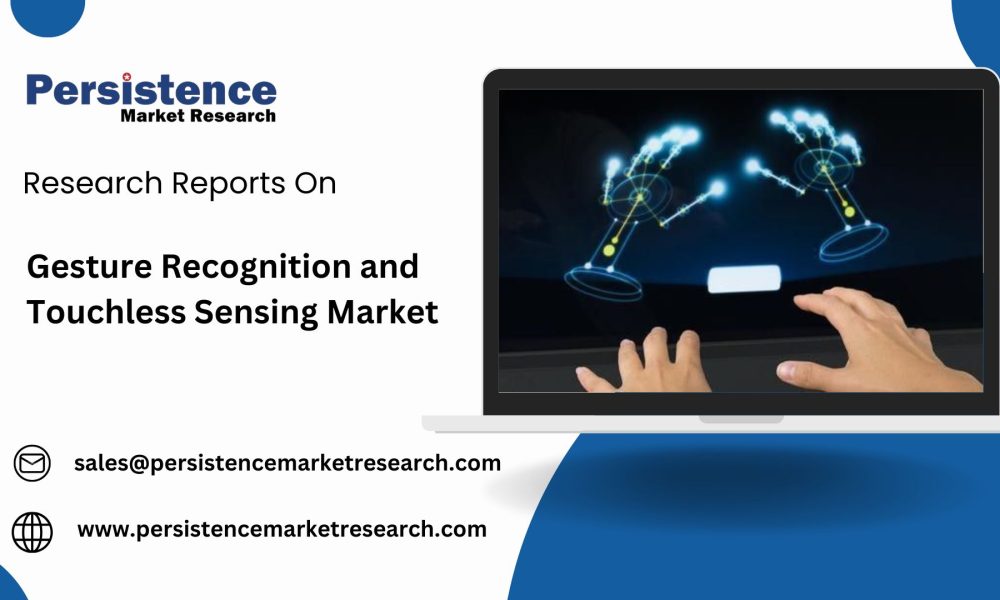
In today’s rapidly evolving digital landscape, gesture recognition and touchless sensing technologies are becoming key enablers of human-computer interaction. With the rise of artificial intelligence (AI), machine learning (ML), and the Internet of Things (IoT), industries across the globe are investing in seamless, contactless solutions to meet the growing demand for safety, convenience, and personalization.
The global gesture recognition and touchless sensing market is projected to reach US$ 29.5 billion by 2025 and is expected to grow at a remarkable CAGR of 21.8% between 2025 and 2032, attaining a value of US$ 117.3 billion by 2032. The applications of these technologies span across retail, hospitality, healthcare, automotive, smart homes, and beyond, redefining how humans interact with machines.
Market Dynamics Driving Growth
Several factors are propelling the adoption of gesture recognition and touchless sensing:
- Health and Safety Concerns Post-Pandemic
The COVID-19 pandemic accelerated the demand for touchless technologies as consumers and businesses sought hygienic alternatives to shared surfaces such as kiosks, payment terminals, and elevator buttons. - Integration of AI and Machine Learning
AI-powered gesture recognition systems are now capable of accurately interpreting complex human gestures and contextualizing user intent. This makes them more reliable and user-friendly across industries. - Growth of Smart Devices
The proliferation of smartphones, smart TVs, and wearable devices equipped with gesture sensors has made the technology accessible to a wider consumer base. - Rising Demand for Personalization
Retail and hospitality sectors are leveraging gesture recognition to provide personalized customer experiences, from AI-driven recommendations to seamless contactless payments. - Automotive Innovation
Advanced driver assistance systems (ADAS) and in-car infotainment are increasingly adopting gesture recognition for safety and convenience, allowing drivers to control features without taking their eyes off the road.
Gesture Recognition in Retail and Hospitality
The retail and hospitality industries are at the forefront of adopting gesture recognition and touchless sensing. These sectors are increasingly using the technology to create contactless payment systems, personalized consumer experiences, and interactive displays.
- AI-Powered Touchless Kiosks
Retailers and restaurants are deploying kiosks that recognize hand gestures, allowing customers to browse menus, customize orders, and pay without physically touching a screen. - Gesture-Based Digital Signage
Interactive displays in shopping malls and hotels are being enhanced with gesture recognition to engage customers. These systems can suggest personalized products, run advertisements that respond to consumer gestures, and provide immersive brand experiences. - Seamless Checkout
By 2027, the retail industry is set to account for 25% to 30% of the gesture recognition market as adoption of contactless checkout and gesture-based advertising accelerates.
This adoption is not only improving customer satisfaction but also streamlining operations by reducing waiting times and minimizing human error in service delivery.
Smart Homes: A Hub of Touchless Technologies
The concept of smart homes is evolving beyond just voice control. Gesture recognition is now playing a pivotal role in enabling residents to interact with their environment in intuitive and convenient ways.
- Home Automation
By 2027, around 35% of all smart homes are expected to feature gesture and touchless technologies. Users will be able to switch lights on and off, control thermostats, and operate appliances with simple hand movements. - Integration with Voice Assistants
Devices like Amazon Echo and Google Nest are anticipated to incorporate gesture-based controls, merging voice and gesture recognition to create more natural and seamless interaction experiences. - Energy Efficiency
Gesture-driven automation can optimize energy consumption by recognizing user presence and automatically adjusting lighting, temperature, or device usage.
These advancements will redefine convenience and efficiency in residential spaces while catering to the rising demand for contactless living.
Healthcare Applications: Touchless Precision
Healthcare is another critical domain where gesture recognition and touchless sensing are gaining traction. In sterile environments like operating rooms, doctors and surgeons can use gesture-based systems to manipulate digital images or patient data without direct contact. This reduces contamination risks and improves efficiency.
- Telehealth Expansion
Touchless technologies are being integrated into telehealth platforms, enabling remote consultations where patients can interact with devices through gestures. - Elderly and Disability Care
Gesture recognition provides accessible control options for elderly and disabled individuals, allowing them to operate smart home devices or healthcare monitors with ease.
These applications highlight the transformative potential of touchless systems in enhancing patient care and safety.
Elevate your business strategy with comprehensive market data. Request a sample report now: https://www.persistencemarketresearch.com/samples/35050
Automotive Industry: Driving Gesture Recognition Forward
The automotive industry is rapidly integrating gesture recognition into in-car infotainment systems, navigation, and safety features.
- Driver Safety
Gesture recognition allows drivers to control music, answer calls, or adjust climate settings without taking their eyes off the road, thereby reducing distractions. - Luxury and Electric Vehicles
High-end brands like BMW, Mercedes-Benz, and Tesla are incorporating gesture-based features into their vehicles to enhance driving experiences and differentiate themselves in a competitive market. - ADAS and Future Mobility
As autonomous and semi-autonomous vehicles evolve, gesture recognition will play a significant role in driver-to-vehicle communication and passenger entertainment systems.
The adoption of gesture recognition in the automotive sector demonstrates its potential to merge safety with innovation.
Touchless Technology in Banking and Payments
Financial institutions are embracing gesture and touchless sensing technologies to enhance security and customer experience:
- Biometric Authentication
Facial recognition, iris scanning, and palm-vein authentication are enabling secure, touch-free transactions at ATMs and banking kiosks. - Contactless Payments
Gesture-based payment terminals allow consumers to make purchases simply by waving their hand or presenting a registered biometric identifier.
This reduces transaction times, minimizes physical contact, and ensures a frictionless payment journey.
Key Challenges in Adoption
Despite strong growth prospects, the gesture recognition and touchless sensing market faces several challenges:
- High Implementation Costs
Advanced sensors and AI integration can be expensive, creating barriers for small businesses and consumers in emerging markets. - Accuracy and Reliability Issues
Environmental factors such as lighting, background noise, or camera resolution can affect gesture detection accuracy. - Privacy Concerns
As gesture and biometric recognition collect sensitive user data, regulatory frameworks must address privacy and data security risks. - User Learning Curve
Adoption of gesture-based interfaces requires consumer familiarity and training, which may initially slow down mainstream acceptance.
Regional Insights
- North America
Leads in adoption, driven by early integration of gesture recognition in gaming (e.g., Microsoft Kinect) and automotive applications. Strong presence of technology giants accelerates innovation. - Europe
Significant adoption in automotive and healthcare sectors, supported by government initiatives promoting contactless and AI-driven solutions. - Asia Pacific
Projected to witness the fastest growth, fueled by a booming smart device ecosystem, rising disposable incomes, and widespread smart home adoption in countries like China, Japan, and South Korea. - Middle East & Africa
Increasingly deploying touchless solutions in retail, hospitality, and banking sectors, particularly in smart city initiatives. - Latin America
Gradual adoption in retail and entertainment sectors, though growth is constrained by higher costs and limited infrastructure.
Future Opportunities and Innovations
The coming years will witness groundbreaking innovations in gesture recognition and touchless sensing:
- AI-Enhanced Gesture Prediction
Predictive AI models will anticipate user intent, making interfaces more intuitive. - Multimodal Interfaces
Future devices will integrate gestures, voice, and biometrics for seamless interaction. - Metaverse and AR/VR
Gesture recognition will play a key role in immersive experiences within virtual and augmented reality environments, enabling natural interactions. - Robotics and Industrial Automation
Touchless control of robots and machines will revolutionize manufacturing, logistics, and hazardous environment operations.
Conclusion
The global gesture recognition and touchless sensing market is poised for exponential growth, transforming industries and daily lives alike. From retail and hospitality to healthcare, automotive, and smart homes, the adoption of these technologies reflects the world’s shift toward safety, personalization, and convenience.
As the market surges from US$ 29.5 billion in 2025 to US$ 117.3 billion by 2032, businesses that invest in gesture recognition and touchless sensing today will be better positioned to deliver future-ready experiences. Despite challenges related to cost, privacy, and accuracy, advancements in AI, machine learning, and IoT will continue to drive innovation, ensuring that touchless interaction becomes a cornerstone of the digital era.
Related Reports:




