
The Food Truck Market has evolved into a dynamic and influential segment within the global food service ecosystem, driven by changing consumer lifestyles and the rising demand for convenient dining options. Food trucks provide a unique blend of affordability, accessibility, and culinary diversity, making them highly appealing to urban populations, working professionals, and younger consumers. Their mobility allows operators to serve multiple locations, increasing customer reach while reducing operational expenses associated with traditional restaurant setups. According to Persistence Market Research, the market has grown as a thriving sector of the food service industry, providing affordable, high-quality, and diversified cuisine in a mobile setting. Entrepreneurs are increasingly attracted to the lower initial investment requirements and operational flexibility offered by food trucks. In addition, technological integration such as digital payments, social media marketing, and location tracking has enhanced customer engagement and operational efficiency.
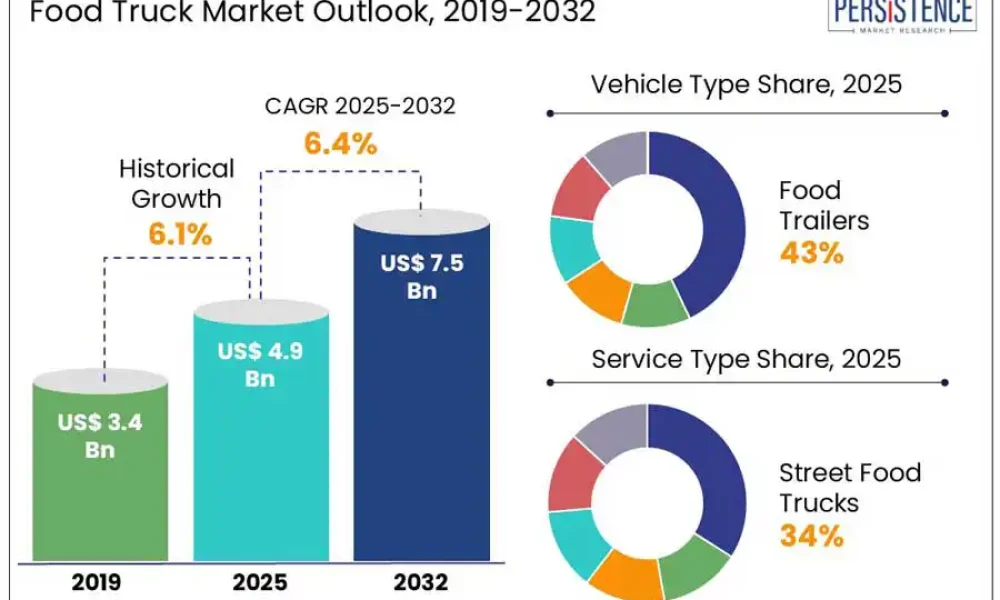
The global Food Truck Market size is anticipated to rise from US$ 4.9 Bn in 2025 to US$ 7.5 Bn by 2032, reflecting sustained expansion driven by consumer demand for flexible and affordable food services. The market is projected to witness a CAGR of 6.4% by 2032, indicating steady and reliable growth throughout the forecast period. This growth trajectory is supported by increasing consumer preference for experiential dining and the convenience offered by mobile food vendors. The ability of food trucks to operate in high-traffic areas, festivals, and corporate zones enhances their revenue potential and market visibility. The leading segment is expected to be gourmet and specialty food trucks, as consumers seek premium quality and unique menu options at accessible prices. In terms of geography, North America is anticipated to remain the leading regional market due to strong street food culture, supportive regulations, and high consumer spending.
Get Your FREE Sample Report Instantly Click Now: https://www.persistencemarketresearch.com/samples/35285
The key players studied in the report include:
- Premier Food Trucks
- Prestige Food Trucks
- Bostonian Body, Inc.
- Food Truck Company B.V.
- Futuristo Trailers
- M&R Trailers
- MRA
- MSM Catering Trucks Manufacturing
- The Fud Trailer Company
- United Food Trucks United, LLC
- VS VeicoliSpeciali
- Legion Food Trucks
- Hungry Wheels
- Arete Food Trailers LLC
- Lacomma Food Truck
- Heat Custom
Key Highlights from the Report
➤ Rising consumer preference for convenient and mobile dining solutions is accelerating Food Truck Market growth globally
➤ Lower startup and operational costs compared to traditional restaurants are encouraging entrepreneurship and market expansion
➤ Increasing demand for gourmet street food and diverse culinary experiences is strengthening premium food truck segments
➤ Urbanization and high foot traffic zones are enhancing revenue opportunities for mobile food service operators
➤ Digital marketing, online ordering, and cashless payment systems are improving operational efficiency and customer engagement
➤ Expansion of food festivals, events, and outdoor dining culture is contributing significantly to market growth
Market Segmentation
By Vehicle Type
- Cargo Vans
- Step Vans
- Box Trucks
- Food Trailer
- Bus
- Others
By Service Type
- Street Food Trucks
- Gourmet Food Trucks
- Fast food trucks
- Dessert Food Trucks
- Vegan Food Trucks
- Others
By Region
- North America
- Europe
- East Asia
- South Asia and Oceania
- Middle East and Africa
- Latin America
Regional Insights
North America continues to lead the Food Truck Market due to strong consumer acceptance of street food culture and supportive entrepreneurial environments. Major cities provide ideal operating conditions with high population density and frequent public events. The presence of innovative culinary entrepreneurs contributes to continuous menu diversification and market competitiveness. Regulatory frameworks in many urban areas have evolved to accommodate mobile food vendors, encouraging new entrants. The popularity of food truck festivals and community gatherings supports brand visibility and customer engagement. Consumer willingness to experiment with new cuisines strengthens demand for specialty food trucks. Digital ordering and location-based services enhance customer convenience and vendor efficiency. Corporate partnerships and urban redevelopment projects also create new opportunities. Overall, North America remains a key growth hub.
Other regions are also witnessing steady growth as urbanization and changing lifestyles increase demand for mobile food services. Expanding middle-class populations and rising disposable income contribute to increased spending on convenient dining options. Tourism growth supports demand for street food experiences in major cities. Cultural diversity encourages culinary innovation and menu experimentation. Government initiatives supporting small businesses contribute to market expansion. Increasing digital connectivity enhances marketing and customer engagement. Younger demographics show strong interest in mobile and experiential dining formats. The rise of food festivals and outdoor events further strengthens market visibility. These factors collectively support global market expansion.
Customize This Report for Your Exact Requirements: https://www.persistencemarketresearch.com/request-customization/35285
Market Drivers
One of the primary drivers of the Food Truck Market is the lower initial investment required compared to traditional restaurants. Entrepreneurs can launch food truck businesses with significantly reduced infrastructure costs while maintaining operational flexibility. This accessibility encourages new business entrants and promotes market competition. Additionally, changing consumer lifestyles favor convenient and quick meal options, especially among working professionals and urban residents. The ability of food trucks to operate in high-demand areas enhances revenue potential. Social media platforms allow vendors to promote their offerings and attract customers effectively. The rise of experiential dining trends also supports market expansion. Consumers increasingly value unique and personalized food experiences. These factors collectively drive sustained market growth.
Another important driver is the increasing popularity of food festivals and outdoor events. These events provide food truck operators with opportunities to reach large audiences and build brand recognition. Event-based operations offer higher revenue potential compared to fixed-location services. Collaboration with event organizers enhances business visibility and customer engagement. The flexibility of food trucks allows operators to adapt quickly to event schedules and locations. Seasonal events and cultural festivals create recurring revenue opportunities. Corporate partnerships further strengthen market stability. Growing tourism also contributes to increased demand for mobile food services. These drivers continue to strengthen the market outlook.
Market Restraints
Despite its growth potential, the Food Truck Market faces several operational and regulatory challenges. Licensing requirements and zoning restrictions vary across regions, creating barriers for new entrants. Compliance with health and safety regulations can increase operational complexity and costs. Limited space within food trucks restricts menu variety and operational efficiency. Weather conditions also affect daily operations and revenue consistency. Competition among food trucks and traditional restaurants can limit profitability. Parking availability in high-demand areas remains a significant challenge. These factors can impact business sustainability and growth potential.
Operational limitations such as storage capacity and staffing constraints also pose challenges. Food trucks must manage inventory carefully to avoid waste and shortages. Equipment maintenance and fuel costs contribute to operational expenses. Limited seating capacity can restrict customer experience compared to traditional restaurants. Dependence on location-based demand creates revenue variability. Regulatory changes can affect operational permissions and business continuity. These challenges require strategic planning and adaptability. Overcoming these restraints is essential for sustained market growth.
Market Opportunities
The Food Truck Market presents significant opportunities through technological integration and digital innovation. Online ordering systems and mobile applications enhance customer convenience and streamline operations. Digital payment solutions improve transaction efficiency and reduce operational friction. Social media marketing enables vendors to build strong brand identities and engage directly with customers. Data analytics helps operators understand customer preferences and optimize menus. Technology-driven efficiency supports business scalability. These innovations create competitive advantages for food truck operators.
Expansion into emerging urban areas and untapped markets also offers strong growth potential. Increasing urbanization creates new customer bases and revenue opportunities. Partnerships with corporate offices and event organizers enhance business stability. Diversification into specialty and health-focused menus attracts broader consumer segments. Sustainable practices such as eco-friendly packaging improve brand perception. Innovation in menu offerings supports long-term competitiveness. These opportunities position the market for continued expansion.
Recent Developments
- January 2025 – Cousins Maine Lobster expanded its food truck operations into new urban markets to strengthen customer reach
- October 2024 – The Halal Guys introduced new menu innovations and expanded mobile food services to enhance brand visibility
Ready to Dive Deep? Buy Full Report Today: https://www.persistencemarketresearch.com/checkout/35285
Frequently Asked Questions
➤ What are the main factors influencing the Food Truck Market growth between 2025 and 2032?
➤ Which companies are the major sources of innovation in the Food Truck Market?
➤ What are the key opportunities and risks present in the Food Truck Market?
➤ How do leading Food Truck Market companies compare in terms of growth and expansion strategies?
➤ What does regional expansion mean for the future of the Food Truck Market?
Future Opportunities and Growth Prospects
The future of the Food Truck Market appears highly promising as consumer demand for flexible, affordable, and experiential dining continues to increase. The projected growth from US$ 4.9 Bn in 2025 to US$ 7.5 Bn by 2032 highlights strong long-term potential supported by innovation and entrepreneurship. Technological advancements, including digital ordering and location tracking, will continue to enhance operational efficiency and customer engagement. Expansion into emerging urban markets and partnerships with corporate organizations will further strengthen growth opportunities. The increasing popularity of gourmet and specialty food offerings will support premium market segments. Sustainability initiatives and eco-friendly practices will improve brand perception and customer loyalty. As consumer lifestyles continue to evolve, food trucks will play a vital role in shaping the future of the global food service industry.




