
Global Digital Biomarkers Market Overview (2025-2033)
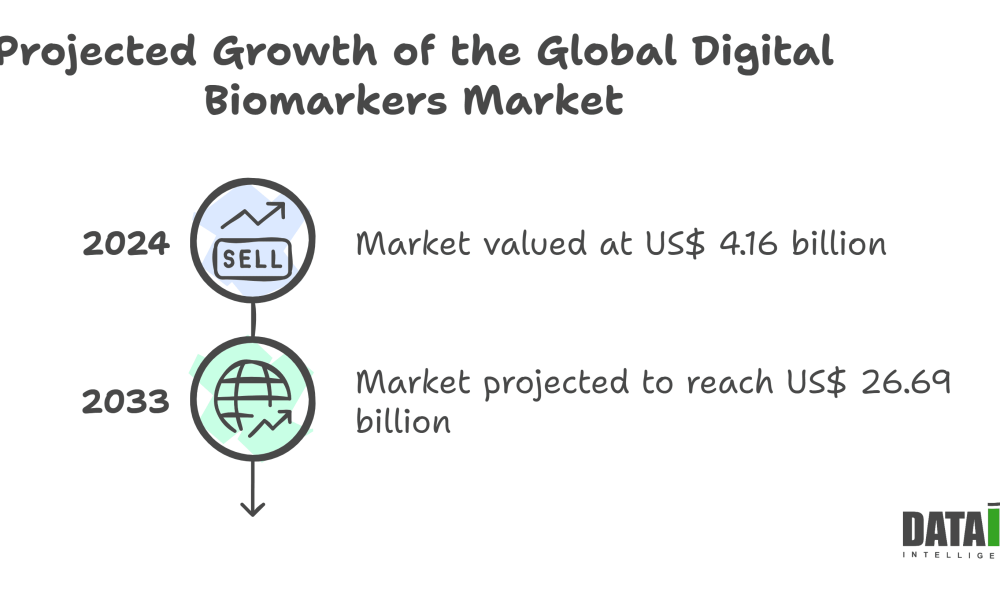
The global digital biomarkers market was valued at US$ 4.16 billion in 2024 and is expected to grow at a CAGR of 22.7%, reaching US$ 26.69 billion by 2033.
Digital biomarkers are objective, quantifiable data collected through wearables, mobile apps, sensors, and digital platforms to track health metrics, assess disease progression, and improve treatment outcomes in real-time. These biomarkers help monitor heart rate, blood pressure, glucose levels, sleep patterns, activity levels, cognitive function, and neurological conditions.
Download Free Sample: https://www.datamintelligence.com/download-sample/digital-biomarkers-market
Market Scope & Key Insights
| Metrics | Details |
| CAGR | 22.7% |
| Market Size (2024) | US$ 4.16 billion |
| Market Size (2033) | US$ 26.69 billion |
| Forecast Period | 2025-2033 |
| Segments Covered | System Component, Application, End-User, and Region |
| Largest Region | North America |
| Fastest Growing Region | Europe |
| Report Insights | Market Size, Growth Drivers, Technological Innovations, Mergers & Acquisitions, Regulatory Analysis, Competitive Landscape, and Supply Chain Strategies |
Market Dynamics: Growth Drivers & Challenges
- Expanding Adoption of Wearable Devices & Mobile Health Technologies
The increasing use of wearables such as smartwatches, fitness trackers, and biosensors is driving the demand for real-time health monitoring solutions. These devices play a key role in early disease detection, personalized treatment, and improved patient care.
📌 Example:
- In December 2024, ElectronRx launched purpleDx, a cardiopulmonary assessment app that allows chronic respiratory patients to monitor lung function biomarkers at home, improving treatment plans and patient outcomes.
- Increasing Role of Digital Biomarkers in Drug Development
Pharmaceutical companies are leveraging digital biomarkers to enhance clinical trials, regulatory approvals, and patient monitoring. These biomarkers help:
- Assess drug efficacy in real-time.
- Improve patient adherence.
- Enable early detection of treatment responses and adverse effects.
📌 Example:
- In November 2024, Neuron23 partnered with Roche to use Roche’s digital biomarker technology in the NEULARK Phase 2 clinical trial for early-stage Parkinson’s disease.
- Data Security & Privacy Concerns
As digital biomarkers involve the collection of sensitive health data, compliance with strict data protection regulations like GDPR (Europe) and HIPAA (U.S.) poses a significant challenge. These concerns impact user adoption and increase the complexity of integrating digital biomarkers into mainstream healthcare.
Customize Your Scope: https://www.datamintelligence.com/customize/digital-biomarkers-market
Market Segmentation
By System Component:
- Wearable Devices (Smartwatches, Fitness Trackers, Biosensors)
- Mobile Applications
- Sensors & Digital Platforms
- Data Integration & Analytics Platforms
📌 Market Leader:
- The wearable devices segment dominates the market due to their real-time data tracking capabilities, improving disease management in cardiovascular, metabolic, and neurological conditions.
By Application:
- Cardiovascular Diseases
- Neurological Disorders
- Respiratory Conditions
- Metabolic Disorders (Diabetes, Obesity, etc.)
- Gastrointestinal Disorders
📌 Fastest-Growing Segment:
- Neurological Disorders – AI-powered voice analysis, gait tracking, and cognitive monitoring are driving the adoption of digital biomarkers for Alzheimer’s, Parkinson’s, and mental health disorders.
By End-User:
- Pharmaceutical Companies (Drug Development & Clinical Trials)
- Healthcare Providers (Hospitals, Clinics, Telemedicine Platforms)
- Payers (Insurance & Healthcare Plans)
- Academic & Research Institutions
📌 Fastest-Growing Segment:
- Pharmaceutical Companies are rapidly integrating digital biomarkers into clinical trials to enhance drug efficacy assessment and regulatory submissions.
- In March 2024, Biogen and Indivi partnered to use digital biomarkers for Parkinson’s research with the Konectom platform in a Phase 2b clinical trial.
Regional Insights
North America: Market Leader
- High healthcare technology investments drive the adoption of AI-powered digital biomarkers.
- Regulatory support from the FDA and NIH is accelerating the development of biometric-driven clinical research.
- Growing prevalence of chronic diseases such as diabetes, cardiovascular conditions, and mental health disorders fuels demand for continuous monitoring.
- In May 2024, the Digital Biomarker Summit USA discussed AI-driven wearable devices, digital phenotyping, and clinical trial integration in Tarrytown, NY.
Europe: Fastest Growing Market
- GDPR compliance ensures secure data sharing, boosting patient adoption.
- The European Medicines Agency (EMA) is actively supporting digital biomarkers in clinical research.
- Increasing focus on preventive healthcare is driving investments in wearables, AI-powered monitoring, and digital health analytics.
Example:
- In February 2024, Biofourmis formed strategic partnerships with leading pharmaceutical companies to develop digital biomarkers for clinical trials across Europe, the U.S., Asia-Pacific, and MEA.
Competitive Landscape: Leading Companies
The digital biomarkers market is highly competitive, with major players focusing on AI innovation, strategic partnerships, and clinical trial integration.
Key Market Players:
- Koneksa Health
- Altoida Inc.
- Empatica Inc.
- Evidation Health, Inc.
- ActiGraph LLC
- Quartet Health
- IXICO plc
- Vivo Sense
- Aural Analytic
- Neurotrack Technologies, Inc.
Why Purchase This Report?
✔ Pipeline & Innovations – Insights into ongoing clinical trials, product pipelines, and emerging medical devices.
✔ Market Positioning & Product Performance – Analysis of product adoption rates, competitive landscape, and pricing strategies.
✔ Regulatory & Data Privacy Analysis – Impact of GDPR, HIPAA, and regulatory approvals on market growth.
✔ Real-World Evidence & Physician Preferences – Understanding patient engagement, clinician adoption, and telehealth integration.
✔ Market Expansion Strategies – Identifying growth opportunities, investment hotspots, and emerging market trends.
Report Includes:
- 61 key tables, 59 visual figures, and 210 pages of in-depth analysis.
- Data-driven insights on market trends, pricing models, and healthcare innovations.
- Competitive strategies, supply chain optimization, and sustainability trends in digital health.




