
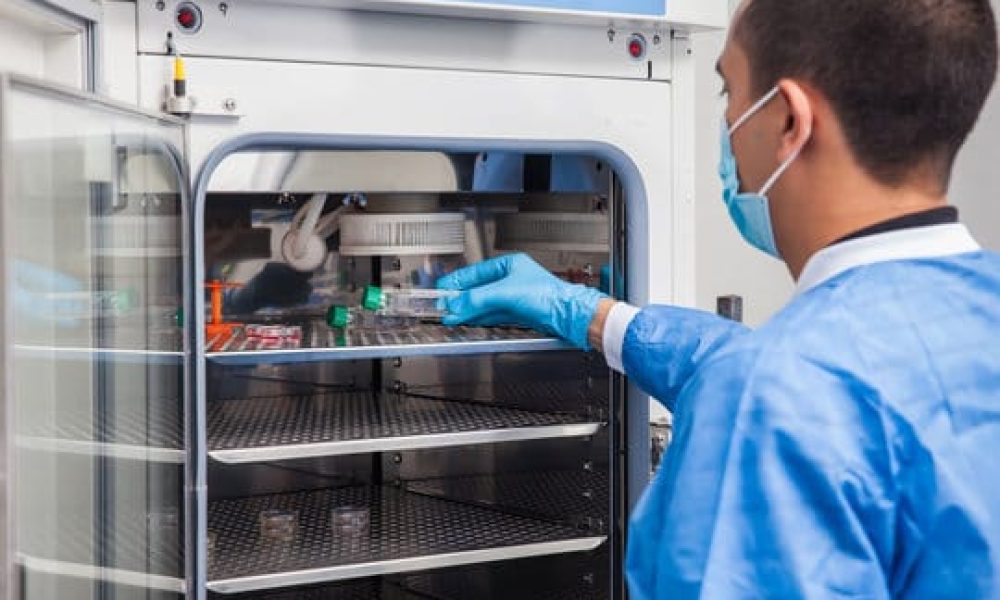
As per the projections by Future Market Insight, the global cell culture incubator market is set to experience remarkable expansion, reaching an impressive value of USD 4,305.1 million by 2033. This growth is likely to be driven by a steady CAGR of 6.4%, showcasing a substantial increase from its estimated worth of USD 2,315.5 million in 2023.
The market expansion can be attributed to the escalating prevalence of chronic diseases. The increasing incidence of conditions like cancer, diabetes, and autoimmune disorders is fueling the demand for innovative medicines and treatments. Intensive cancer research and drug discovery efforts heavily rely on cell culture models to investigate tumor behavior and drug responses comprehensively. In light of the escalating cancer rates and the demand for more effective treatments, the cell culture incubator market has witnessed a notable upswing.
Stay Ahead with Market Trends: Access Your Sample Report Now! https://www.futuremarketinsights.com/report-sample#5245502d47422d34333932
Due to the imperative for studying age-related disorders and advancing drug development, along with the growing interest in regenerative medicine, there is a projected rise in demand for cell and tissue culture incubators driven by the aging population. Currently, more than 8% of the world’s population is over the age of 65, a number that is expected to surpass 15% by 2050.
Due to the continuous growth of the pharmaceutical industry, there is an anticipated increase in demand for cell culture incubators. These incubators are essential equipment for pharmaceutical research and development. Likely, the demand for cell culture incubators to support research is likely to rise due to the global increase in health spending.
The biopharmaceutical industry is experiencing remarkable growth due to the rising prevalence of chronic diseases and the urgent need for personalized medicine. Consequently, there has been an exponential surge in demand for cutting-edge cell culture incubators, crucial for advancing research and development processes to produce biological drugs and vaccines.
Anticipated market growth suggests a potential increase in the demand for cell culture incubators as new medications are developed and introduced. With regenerative medicine, including stem cell research and tissue engineering, garnering widespread attention, the importance of cell culture incubators cannot be overstated. These essential tools play a pivotal role in maintaining the intricate conditions required for cultivating and nurturing specialized cell types, fostering the potential for groundbreaking medical breakthroughs.
The rising demand for efficiency and precision has spurred the trend of automating cell culture processes and integrating incubators with other advanced laboratory equipment. This seamless collaboration enhances control, data management, and overall efficiency in cell culture workflows, fostering a new era of innovation.
Apart from the aforementioned factors, the cell culture incubator market growth is further boosted by technological advancements. These technological developments have led to the creation of more sophisticated cell culture incubators. For example, certain models now incorporate advanced imaging capabilities and remote monitoring features, which are driving their demand in both industrial and research settings.
Continuous strides in cell culture techniques and technologies have revolutionized the landscape, boosting efficiency, mitigating contamination risks, and enhancing cell-based research and production yields. As scientists strive for excellence, the demand for state-of-the-art cell culture incubators designed to support these advanced techniques has soared significantly.
Key Takeaways Cell Culture Incubator Market
- United States With a 32.2% global market share in 2022, the U.S. dominates the cell culture incubator market, driven by significant R&D investments, a strong biotech presence, and growing applications in drug discovery and bioprocessing.
- Europe Holding a 29.4% market share in 2022, Europe is poised for rapid growth due to supportive regulations, rising healthcare standards, and increasing vaccine production. The demand for cell culture incubators is fueled by advancements in viral vaccine manufacturing.
- United Kingdom (CAGR: 6.5%) Growth is driven by increasing demand for biopharmaceuticals, the rise of chronic diseases, and the adoption of 3D cell culture models for drug discovery and tissue engineering.
- Germany (CAGR: 7.5%) Strong biotech and pharma investments, expanding use of cell-based assays, and stringent regulatory standards contribute to market growth.
- Asia Pacific Expected to grow at the fastest CAGR during 2023-2033, supported by increasing healthcare expenditures, adoption of regenerative medicines and cancer immunotherapies, and advancements in clinical research.
- China (CAGR: 7.8%) Rapid expansion in the biopharmaceutical sector, government support for regenerative medicine, and rising demand for stem cell research are fueling market growth.
- India (CAGR: 7.4%) Growth is driven by biotech and pharma R&D expansion, increasing automation in laboratories, and demand for smart incubators with remote monitoring features.
- Japan (CAGR: 4.2%) A technologically advanced market integrating AI-powered incubators for real-time monitoring and predictive analytics, improving culture efficiency and outcomes.
Increased Market Demand: Get In-Depth Analysis and Insights with Our Complete Report! https://www.futuremarketinsights.com/reports/cell-culture-incubator-market
Competitive Landscape in the Cell Culture Incubator Market
Leading players are continually focusing on innovation and technological advancements to enhance product performance and reliability. They are investing in research and development to offer cutting-edge solutions that provide optimal growth conditions for cell cultures. Additionally, market leaders are expanding their global presence through strategic partnerships and acquisitions, ensuring a robust supply chain and customer support network to maintain a competitive edge in the industry.
Recent Developments by Key Players
- In August 2021, the renowned biosafety and contamination control technology company, The Baker Company, Inc., introduced ReCO2ver™. It is a cutting-edge cell culture incubator known for its swift recovery capabilities. This revolutionary product enhances the company’s offerings in the microbiology, cell culture, and biological safety sectors, providing added value to its esteemed customers worldwide.
- In January 2020, Olympus introduced a state-of-the-art incubation monitoring system designed to enhance the workflow of regenerative medicine. The OLYMPUS Provi CM20 monitoring system offers advanced features such as cell count and confluency analysis. It also provides valuable quantitative data on the well-being of cell cultures during the incubation process.
Key Players
- The Mosaic Company
- Eurochem Group AG
- Israel Chemicals Ltd.
- Coromandel International Ltd.
- Nutrien Ltd.
- PJSC PhosAgro
- Yara International ASA
- The OCP Group
- JESA
- MIRA Organics and Chemicals PVT LTD
Get Expert Healthcare Industry Insights Now! https://www.futuremarketinsights.com/industry-analysis/life-science-and-biotechnology
Key Segments Profiled In the Cell Culture Incubator Industry Survey
By Type:
- Air-jacketed
- Water-jacketed
- Direct Heat
By Sensor Technology:
- Infra-red
- Thermal Conductivity
By Application:
- For Pharmaceutical Applications
- For Biomedical and Clinical Labs
- For Government Research
- For IVF Processes
- For Other Applications
By Region:
- North America
- Latin America
- Europe
- Asia Pacific
- Middle East & Africa
About Future Market Insights (FMI)
Future Market Insights, Inc. (ESOMAR certified, recipient of the Stevie Award, and a member of the Greater New York Chamber of Commerce) offers profound insights into the driving factors that are boosting demand in the market. FMI stands as the leading global provider of market intelligence, advisory services, consulting, and events for the Packaging, Food and Beverage, Consumer Technology, Healthcare, Industrial, and Chemicals markets. With a vast team of over 400 analysts worldwide, FMI provides global, regional, and local expertise on diverse domains and industry trends across more than 110 countries.




