
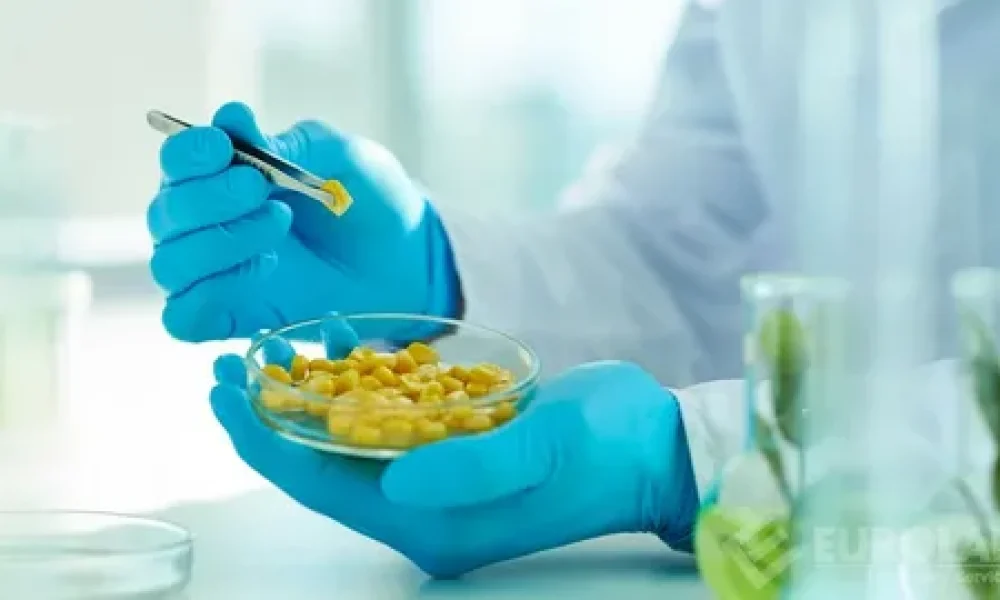
The global food testing services market is on the cusp of significant transformation. Projected to expand from USD 25.4 billion in 2025 to an impressive USD 56.8 billion by 2035, the sector is set to grow at a robust CAGR of 8.5% over the forecast period. Behind this remarkable trajectory lies a confluence of factors: growing consumer awareness about foodborne illnesses, increasingly complex global supply chains, and stricter enforcement of food safety standards by regulatory bodies such as the FDA, EFSA, and Codex Alimentarius.
As food safety becomes a central pillar of public health and consumer trust, manufacturers, processors, and importers are rapidly strengthening testing protocols. What was once a regulatory checkbox has now evolved into a strategic priority and a brand assurance mechanism.
Rising Demand for Microbiological Testing
In 2025, microbiological testing accounts for 34.6% of the market, making it the largest segment. This dominance reflects the growing need to combat pathogens such as Salmonella, Listeria, and E. coli, which continue to drive costly recalls and health risks globally.
The surge in demand for ready-to-eat meals and minimally processed foods—products inherently more vulnerable to contamination—is accelerating investment in rapid detection methods. Techniques such as real-time PCR, ELISA, and advanced culture methods are increasingly preferred for their sensitivity, accuracy, and speed.
Notably, microbiological testing has expanded its role beyond regulatory compliance. Today, it serves as a brand protection tool, ensuring companies safeguard reputation and consumer confidence while meeting evolving standards.
Full Market Report available for delivery. For purchase or customization, please request here:
https://www.futuremarketinsights.com/reports/sample/rep-gb-10486
Chemical and Allergen Testing: The Next Frontier
While microbiology addresses immediate threats, chemical and allergen testing is emerging as a long-term trust builder for consumers and regulators alike. Growing awareness of pesticide residues, heavy metals, food adulterants, and hidden allergens is prompting manufacturers to invest in advanced profiling techniques.
This segment, forecast to grow at a CAGR of 9.2%, is also benefiting from the global clean-label movement. Companies seeking to verify claims such as organic, non-GMO, and allergen-free are relying on spectrometry, chromatography, and immunoassay-based methods.
With allergen-related recalls constituting a significant share of food recalls globally, chemical and allergen testing is now viewed as a commercial necessity, not just a regulatory obligation.
Regional Growth Dynamics
Emerging markets are expected to play a decisive role in shaping the industry’s next decade.
- United States (CAGR 6.2%): Increasing recalls and consumer demand for organic, clean-label foods are driving investment in specialized microbiological and allergen testing.
- United Kingdom (CAGR 5.8%): A focus on sustainability, traceability, and transparency is pushing demand for comprehensive testing services across both organic and plant-based foods.
- Germany (CAGR 5.7%): With a robust food processing sector, Germany is emphasizing advanced, multi-layered testing systems to meet EU compliance standards.
- France (CAGR 6.0%): Ethical sourcing and sustainability-linked certifications are fueling demand for chemical and nutritional testing.
- Italy (CAGR 5.4%): Known for its culinary exports, Italy is strengthening testing protocols for allergens, pesticides, and pathogens to maintain high safety levels.
- South Korea (CAGR 7.1%): Among the fastest-growing markets, South Korea is seeing rising demand for testing in functional and plant-based foods.
- China (CAGR 7.0%): With rapid expansion in food production and exports, Chinese companies are increasingly investing in comprehensive testing to gain global certification.
- Japan (CAGR 5.5%): Stricter regulations and consumer demand for high-quality foods are driving greater reliance on detailed allergen and pesticide testing.
- Australia (CAGR 5.0%) & New Zealand (CAGR 4.8%): Both nations are focusing on export integrity, particularly for dairy, seafood, and organic produce, making testing vital to meet international standards.
Established Leaders Expand, New Entrants Innovate
The competitive landscape of the food testing services market is evolving rapidly. Global giants such as Eurofins Scientific, SGS SA, Intertek Group plc, Bureau Veritas, ALS Limited, Mérieux NutriSciences, NSF International, and TÜV SÜD are leading the charge by:
- Expanding global laboratory networks
- Integrating AI and automation into laboratory information management systems (LIMS)
- Offering end-to-end testing solutions across raw materials, finished goods, and environmental safety
Meanwhile, niche players like QIMA, Symbio Laboratories, and Romer Labs are carving out space with specialized expertise in areas such as GMO detection, mycotoxin testing, and field diagnostics. Their agility and responsiveness to local markets make them attractive partners for emerging food categories like plant-based proteins, functional foods, and alternative ingredients.
Even smaller laboratories, including Microbac Laboratories, EMSL Analytical, Food Safety Net Services (FSNS), and Campden BRI, are leveraging regional trust and targeted expertise to win clients in highly competitive environments.
Request Customization for Your Unique Needs:
https://www.futuremarketinsights.com/customization-available/rep-gb-10486
Beyond Compliance: A Strategic Industry Pillar
The next decade of food testing will be about more than compliance—it will be about building trust and resilience in the global food system. Testing providers are already embedding new services such as:
- Blockchain-enabled traceability platforms to track food from farm to fork
- Carbon footprint measurement and sustainability-linked certifications to align with ESG goals
- Mobile and decentralized testing labs to deliver diagnostics closer to production sites
- Next-generation sequencing and AI-driven analytics to enable predictive risk management
By combining cutting-edge science with a commitment to transparency, the food testing industry is positioning itself as a strategic backbone of global food safety modernization.
Looking Ahead
With demand for safe, sustainable, and traceable food rising across the globe, the food testing services market is entering a defining decade. Established leaders are investing in automation, AI, and lab networks, while emerging innovators are creating new niches in specialized testing and fast diagnostics.
From large-scale multinational exporters to small organic brands, food producers recognize that testing is no longer an optional cost of compliance—it is a critical investment in consumer trust, brand integrity, and market access.
As one industry expert put it: “Food safety today is not just about passing a regulation—it’s about proving to your consumers that your brand stands for trust, transparency, and care.”
With its projected USD 56.8 billion market size by 2035, the industry is well on its way to becoming one of the most influential pillars of global food and beverage value chains.



