
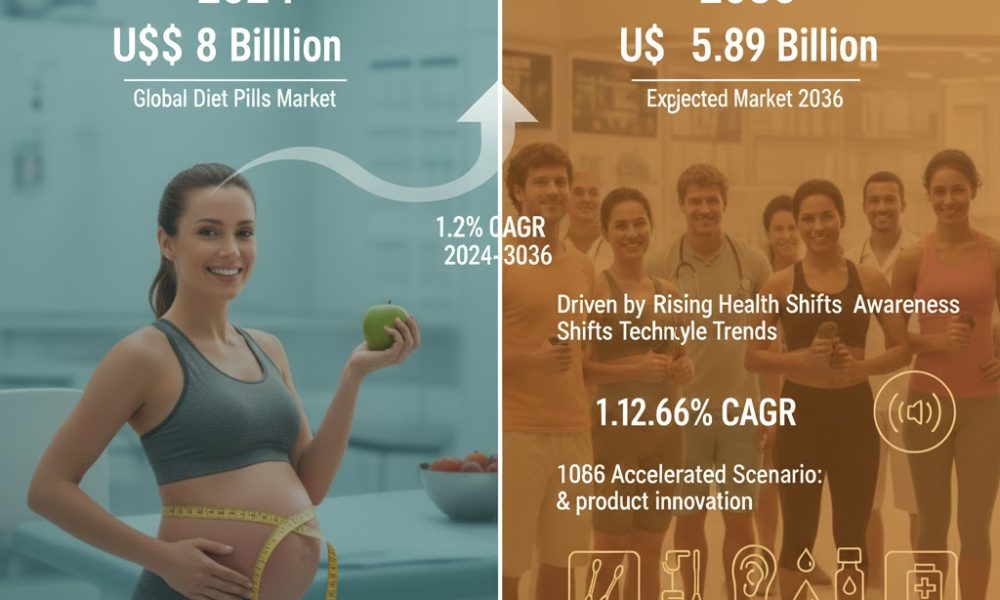
The global diet pills market is entering a decisive decade, shaped by rising obesity prevalence, pharmaceutical innovation, regulatory scrutiny, and a sharp convergence between traditional supplements and prescription-grade weight-loss drugs. What was once a niche segment of over-the-counter slimming aids is now evolving into a clinically validated, data-driven industry attracting multibillion-dollar investments.
Market Size & Growth Outlook
The global diet pills market was valued at approximately USD 1.8–1.9 billion in 2024 and is projected to grow at a double-digit CAGR of 10–13%, reaching between USD 4.5 billion and USD 5.9 billion by 2032–2034, depending on product mix and regulatory pathways.
North America remains the largest market, driven by high obesity rates, prescription adoption, and strong e-commerce penetration, while Asia-Pacific is forecast to be the fastest-growing region due to urbanization, rising disposable income, and increasing lifestyle-related disorders.
Importantly, the broader weight-loss drugs market—which includes injectable and oral GLP-1 therapies—is expanding far faster, projected to grow from USD 65 billion in 2025 to nearly USD 380 billion by 2035, underscoring the structural shift toward medically supervised weight management.
To access the complete data tables and in-depth insights, request a Discount On The Report here: https://www.factmr.com/connectus/sample?flag=S&rep_id=868
Key Demand Drivers
1. Escalating Global Obesity Burden
Over 650 million adults worldwide are obese, with obesity-related conditions such as diabetes and cardiovascular disease driving demand for effective weight-management solutions. This has reframed diet pills from cosmetic products to preventive healthcare tools.
2. Consumer Preference for Convenience
Pills remain the most accessible and discreet weight-loss format. Compared to injections or invasive procedures, oral products offer lower psychological and logistical barriers, supporting adoption across younger demographics and first-time users.
3. Digital & Direct-to-Consumer Channels
Online pharmacies, telehealth prescriptions, and subscription models are expanding access and normalizing long-term usage. E-commerce is now one of the fastest-growing distribution channels in the category.
Disruption Signals Reshaping the Industry
Rise of Prescription-Grade Oral Therapies
A pivotal disruption came with the approval of daily oral GLP-1 weight-loss pills. Clinical trials showed 13–17% average body-weight reduction over 64 weeks, comparable to injectable alternatives. Analysts estimate oral therapies could account for around 20% of the obesity-drug market by 2030.
This innovation blurs the boundary between “diet pills” and prescription medicines, raising efficacy expectations across the entire category.
Regulatory Tightening
Governments are increasing scrutiny of ingredient transparency, health claims, and side effects—particularly for herbal and stimulant-based supplements. While this raises compliance costs, it also eliminates low-quality competitors and strengthens consumer trust.
Price Accessibility & Reimbursement
Pharmaceutical players are aggressively lowering prices and negotiating reimbursement to accelerate adoption. Monthly pricing for new oral therapies has dropped below USD 150–350, signaling a long-term volume-driven strategy rather than premium positioning.
Competitive Landscape Evolution
The market is diverging into three strategic tiers:
Pharmaceutical-Backed Diet Pills
Clinically tested, prescription or semi-prescription products targeting metabolic pathways (e.g., GLP-1 agonists). These dominate revenue growth and investor interest.Hybrid Nutraceuticals
Products combining natural ingredients with evidence-based formulations, positioned for wellness-oriented consumers seeking “lighter” alternatives.Legacy OTC Supplements
Traditional appetite suppressants and fat burners face declining credibility unless reformulated with clinical validation.
Industry Scenarios (2025–2035)
Scenario 1: Medicalization Dominates (High Probability)
Diet pills increasingly become part of chronic disease management. Prescription and doctor-supervised products account for the majority of revenue, while low-efficacy supplements exit the market. Market growth remains strong but concentrated among fewer players.
Scenario 2: Two-Track Market (Most Likely)
A scenario where pharmaceutical diet pills grow rapidly alongside a regulated but resilient wellness segment. Consumers self-select based on medical need, affordability, and risk tolerance.
Scenario 3: Regulatory Shock (Low Probability)
Major safety incidents or regulatory bans could temporarily stall growth, particularly in herbal supplements. However, pharmaceutical players would likely benefit from increased trust.
Strategic Implications for Stakeholders
Manufacturers must invest in clinical trials, ingredient traceability, and digital health integration.
Investors should focus on companies positioned at the intersection of pharmaceuticals, telehealth, and oral delivery innovation.
Retailers & Platforms will increasingly act as health intermediaries, not just sales channels.
Policymakers face the challenge of balancing access, safety, and affordability amid explosive demand.
Conclusion
The global diet pills market is transitioning from a fragmented supplement industry into a clinically anchored, technology-enabled healthcare segment. With obesity rates rising and oral drug innovation accelerating, the next decade will favor players that combine scientific credibility, regulatory compliance, and scalable access. For industry leaders, the opportunity is no longer about selling weight loss—it is about delivering sustainable metabolic health at scale.
Have a specific Requirements and Need Assistant on Report Pricing or Limited Budget please contact us – [email protected]
To View Related Report :
Europe Diet Pills Market https://www.factmr.com/report/europe-diet-pills-market
Powder Dietary Supplements Industry Analysis in the UK https://www.factmr.com/report/united-kingdom-powder-dietary-supplements-industry-analysis



