
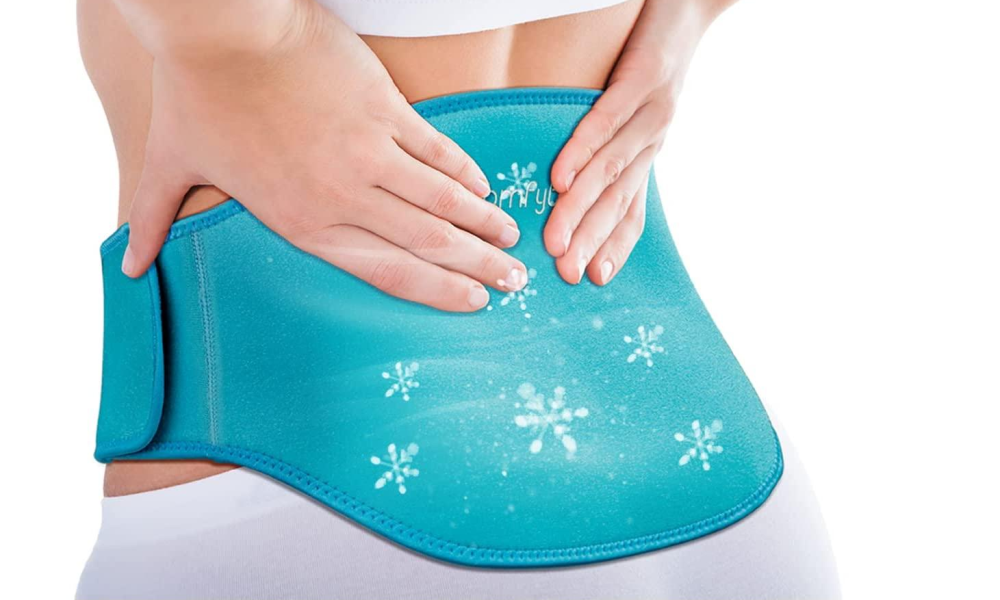
Cold therapy wraps for back pain and spinal surgery recovery address one of the most common and most difficult-to-manage pain and inflammation situations in orthopedic care. Back pain — whether from acute injury, chronic degenerative conditions, or surgical intervention — affects more people than almost any other musculoskeletal condition, and the lower back presents specific challenges for cold therapy application that make the quality and design of the product used significantly more consequential than for more straightforward joint applications.
Why the Back Is Particularly Difficult to Treat With Cold Therapy
The lower back presents a set of cold therapy challenges that other anatomical areas don’t — primarily because of the difficulty of maintaining consistent contact between a cold therapy product and a curved, mobile body surface that changes shape with every movement. A standard flat gel pack placed against the lower back and held in place by lying on it delivers cold primarily to the contact points rather than conforming to the lumbar curve in a way that brings the therapeutic surface into consistent contact with the tissue that needs treatment.
This inconsistent contact means that standard cold therapy approaches for back pain are less efficient than they need to be — requiring longer application times to deliver meaningful therapeutic effect because only a portion of the target area is receiving consistent cold contact at any given moment. For patients in the acute post-surgical phase where comfort and pain management directly affect mobility and recovery progress, that inefficiency has real consequences.
Purpose-built cold therapy wraps designed for back application conform to the lumbar curve rather than bridging across it, maintaining consistent full-surface contact that delivers therapeutic cold across the entire treatment area rather than at isolated contact points.
Acute Back Injury vs Spinal Surgery Recovery
Cold therapy wraps for back pain address two distinct clinical situations that have different characteristics and slightly different application considerations. Acute back injury — muscle strains, ligament sprains, disc herniations — generates an immediate inflammatory response that cold therapy manages most effectively when applied quickly after the injury occurs and maintained consistently through the acute phase.
For spinal surgery recovery — lumbar fusion, discectomy, laminectomy, and other procedures — the post-surgical inflammatory response is more sustained and the pain management needs extend over a longer recovery period than typical acute soft tissue injuries. The surgical trauma itself generates inflammation that peaks in the first 48 to 72 hours but continues at meaningful levels for days to weeks depending on the procedure’s extent and the individual’s healing response.
In both situations the mechanism of benefit is the same — cold reduces nerve conduction velocity which directly reduces pain signaling, causes vasoconstriction that limits swelling, and reduces metabolic activity in the treated tissue which limits secondary inflammatory damage. The application duration and frequency differ somewhat between acute injury and surgical recovery contexts, but the fundamental physics of why cold therapy works are consistent across both.
Duration as the Key Variable for Back Pain Treatment
One of the most consistent limitations of standard cold therapy approaches for back pain is application duration — the period during which the product maintains therapeutic temperature. Standard consumer gel packs cool a surface effectively for 20 to 30 minutes before warming to the point where their benefit diminishes, which means active management of cold therapy — changing packs, refreeze cycles, maintaining the therapy — is required to sustain benefit across the hours when pain management matters most.
For back pain patients in the acute phase after injury or surgery, that active management burden falls during a period when mobility is most limited and when the effort of managing cold therapy competes with the rest that recovery requires. Extended-duration cold therapy that maintains therapeutic temperature for three or more hours removes that management burden — allowing patients to rest through a sustained cold therapy session rather than attending to pack changes every half hour.
For spinal surgery patients in the immediate post-operative period, this extended duration becomes particularly valuable overnight — when pain management is most critical to sleep quality and when actively managing cold therapy is least practical.
Securing the Wrap During Rest and Movement
Back cold therapy application faces a securing challenge that joint applications don’t encounter in the same way — the wrap needs to maintain position during both static rest and the careful limited movement that post-surgical rehabilitation requires from the earliest phases. A cold pack that shifts position when a patient adjusts posture or attempts to stand from lying is delivering inconsistent therapy and adding the frustration of repeated repositioning to an already uncomfortable recovery experience.
Wraps designed with secure fastening systems — adjustable straps that hold the wrap in position across the lumbar area without requiring constant readjustment — provide consistent therapy through position changes in a way that improvised securing methods don’t reliably achieve. For patients working with physical therapists in early post-surgical mobilization, being able to keep cold therapy in place during gentle therapeutic movement rather than removing it entirely for every position change extends the total effective treatment time during recovery sessions.
Who Benefits Most From Quality Back Cold Therapy
The patients who see the most meaningful difference between purpose-built cold therapy wraps for back pain and standard consumer alternatives are those with the highest pain management needs during recovery — post-surgical patients in the acute recovery window, individuals with severe acute disc or muscle injuries, and patients for whom adequate pain management is directly limiting their ability to participate in the rehabilitation activities that determine long-term recovery outcomes.
For those patients, the difference between cold therapy that works effectively and cold therapy that’s logistically burdensome and physically inconsistent isn’t a minor convenience issue — it’s a factor in how well they sleep, how readily they engage with physical therapy, and ultimately how complete their recovery is.




