
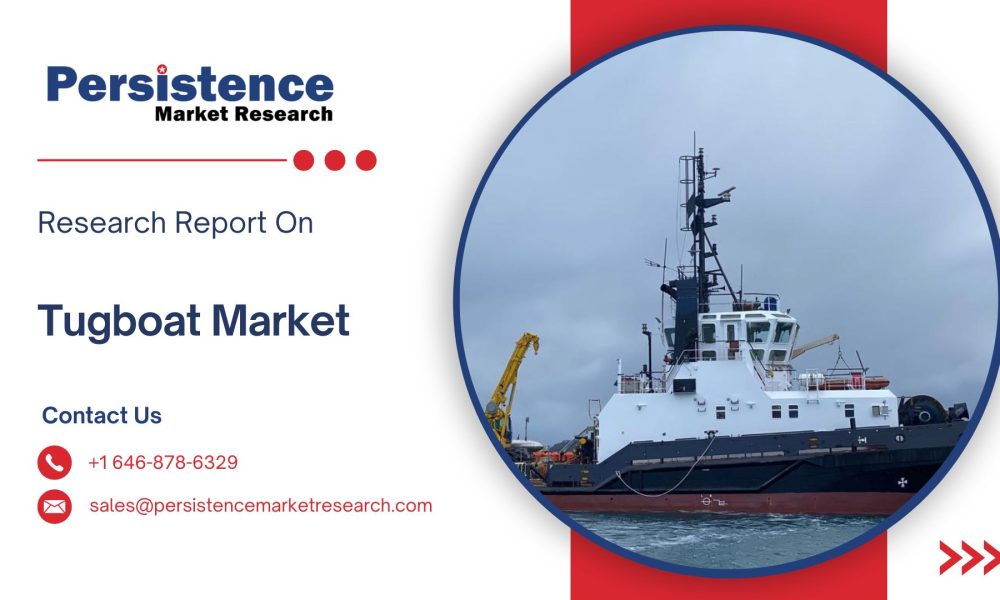
The global tugboat market is projected to experience steady growth, expanding from a valuation of US$ 2.99 billion in 2025 to approximately US$ 4.18 billion by 2032, registering a compound annual growth rate (CAGR) of 4.9% over the forecast period from 2025 to 2032. This growth is propelled by increasing maritime trade volumes, modernization of port infrastructure, and a growing emphasis on environmental sustainability within the shipping and port operations industries.
Tugboats serve as critical enablers in maneuvering larger vessels through congested harbors, narrow waterways, and during docking operations. The escalation in global seaborne trade, expansion of mega-ports, and the introduction of larger container and tanker vessels necessitate enhanced tugboat capabilities to ensure safe, efficient vessel handling. Moreover, stricter environmental regulations mandating reduced emissions and improved fuel efficiency are driving the adoption of advanced propulsion technologies and eco-friendly designs, further stimulating market demand.
Receive Sample of Research Report @ https://www.persistencemarketresearch.com/samples/18667
Segmentation Analysis
By Type
The tugboat market is broadly segmented into conventional tugboats and tractor tugboats. Conventional tugboats, which use traditional propulsion systems such as fixed propellers and rudders, continue to dominate the market owing to their widespread use in small to mid-sized ports and general harbor operations. Their proven reliability and cost-effectiveness maintain their popularity among operators in regions with less stringent emission norms.
In contrast, tractor tugboats, equipped with azimuth thrusters that provide superior maneuverability and higher bollard pull, are gaining traction particularly in large ports handling ultra-large vessels. These tugs offer enhanced control and dynamic positioning capabilities, making them essential in congested or complex waterways. The tractor tug segment is witnessing the fastest growth, spurred by increasing adoption in modern port facilities, offshore terminals, and specialized salvage operations.
By Vehicle/Product/Service Type
In terms of product and service type, the market includes new tugboat sales, retrofit and upgrade services, and charter or rental services. New tugboat construction is a significant driver, especially in emerging economies where port infrastructure is expanding. The demand for newer, more powerful, and environmentally compliant vessels is strong, leading shipyards and manufacturers to innovate and meet these evolving needs.
Simultaneously, retrofit and upgrade services are becoming increasingly relevant as existing fleets undergo modernization to comply with international emissions standards such as IMO Tier III and local regulations. Retrofitting older vessels with cleaner propulsion systems, exhaust gas cleaning technologies, and automation tools extends operational life while aligning with sustainability goals.
Charter and rental services are also growing, providing flexible fleet solutions to shipping companies and port operators facing fluctuating demand or project-specific requirements. This segment benefits from the increasing complexity of maritime logistics and the need for scalable, cost-effective tug operations.
By Propulsion and Technology
Propulsion technology is a critical factor shaping the tugboat market. Diesel engines remain predominant, but hybrid and fully electric propulsion systems are increasingly being integrated into new builds and retrofit projects. These systems reduce emissions, lower operating costs, and improve maneuverability. For instance, battery-electric tugs are gaining interest in European and North American markets, where regulatory frameworks and green port initiatives incentivize zero-emission operations.
Advanced propulsion technologies such as azimuth thrusters and Voith Schneider Propellers are redefining tugboat performance by offering omnidirectional thrust and enhanced precision in vessel handling. These technologies are particularly favored in environments requiring tight maneuvering and fast response times.
Additionally, digital technologies like AI-powered navigation assistance, IoT-enabled engine monitoring, and predictive maintenance platforms are being increasingly adopted. These innovations improve operational efficiency, reduce downtime, and optimize fuel consumption, thereby driving overall cost savings.
Request Customization of Report: https://www.persistencemarketresearch.com/request-customization/18667
Regional Insights
Leading Regions
North America and Europe currently lead the global tugboat market in terms of revenue and technological advancement. North America, with its extensive coastline, major shipping ports such as the Port of Houston and the Port of Los Angeles, and strong regulatory push towards greener maritime operations, sustains steady demand for advanced tugboats. Similarly, Europe benefits from large ports like Rotterdam, Antwerp, and Hamburg, where port authorities are actively implementing sustainability measures and infrastructure upgrades that drive tugboat modernization.
Asia-Pacific is emerging as a vital market due to its rapidly expanding maritime trade, burgeoning shipbuilding industry, and ongoing port expansions in China, India, Japan, and Southeast Asia. The region’s focus on upgrading port facilities and accommodating larger vessels positions it as a significant growth engine for tugboat sales and services.
Fastest-Growing Region
The Middle East and Africa (MEA) region is anticipated to be the fastest-growing market through 2032. This growth is underpinned by significant investments in port infrastructure across the Gulf Cooperation Council (GCC) countries, including the UAE, Saudi Arabia, and Qatar. The expansion of mega-ports like Jebel Ali and King Abdullah Port, coupled with increased offshore oil and gas activities requiring specialized tug services, propels market demand. Additionally, growing regulatory emphasis on emission reductions and sustainable port operations supports adoption of modern, eco-friendly tugboats in this region.
Unique Features and Innovations in the Market
Modern tugboats differentiate themselves through several innovative features and technological integrations. Foremost is the increasing use of eco-friendly propulsion systems such as hybrid-electric drives and LNG-powered engines, which help operators comply with stringent emission regulations while maintaining performance.
Technological integration of AI and IoT systems allows for real-time monitoring of vessel conditions, predictive analytics for maintenance, and enhanced navigational support. This digital transformation enables operators to optimize fuel efficiency, reduce operational costs, and extend asset lifespan. Moreover, connectivity solutions powered by 5G networks facilitate instant communication between tugboats, port authorities, and vessel operators, improving coordination and safety in complex maritime environments.
Design innovations focusing on ergonomics, crew comfort, and noise reduction are also prominent, reflecting industry efforts to improve working conditions and comply with occupational safety standards.
Market Highlights
The tugboat market’s growth is strongly influenced by the need for safer, more efficient harbor operations amid rising maritime traffic. Businesses across shipping, logistics, offshore energy, and port management are adopting modern tug solutions to reduce turnaround times, minimize collision risks, and meet regulatory mandates.
Environmental regulations play a critical role, as governments and international bodies increasingly enforce limits on sulfur oxide (SOx), nitrogen oxide (NOx), and particulate emissions from marine vessels. These mandates compel operators to invest in cleaner technologies and fleet upgrades, accelerating demand for next-generation tugboats.
Cost reduction through fuel efficiency and maintenance optimization remains a key driver. Operators seek vessels with lower total cost of ownership (TCO), which is achieved through innovative propulsion systems, advanced hull designs, and digital asset management tools.
Sustainability initiatives by port authorities worldwide, including carbon-neutral port goals and green financing schemes, further encourage the uptake of environmentally friendly tugboats.
Key Players and Competitive Landscape
The tugboat market features several prominent global and regional manufacturers and service providers. Leading companies include Robert Allan Ltd., Sanmar Denizcilik, ASD Tug Company, Tidewater Marine, Svitzer, and Bollinger Shipyards.
Robert Allan Ltd. is renowned for its innovative hull designs and advanced propulsion configurations that optimize performance and fuel consumption. Their strategic focus on R&D and client-specific customization positions them as a market leader in high-performance tugboats.
Sanmar Denizcilik, a Turkish shipbuilder, has rapidly expanded its footprint by delivering a broad range of tugs, from harbor assist to escort tugs, and emphasizes environmental compliance and operational reliability.
Svitzer, a global towage operator, integrates fleet modernization with digital technologies and sustainability practices, enhancing operational efficiency and safety in its worldwide tug operations.
Bollinger Shipyards focuses on constructing customized tugs for offshore oil and gas support, combining rugged build quality with advanced automation systems.
Market participants continue to pursue strategic partnerships, technological innovation, and geographic expansion to capitalize on rising demand, particularly in emerging markets such as Asia-Pacific and MEA.
Outlook
The global tugboat market is set for sustainable growth driven by expanding maritime trade, increasing vessel sizes, and a concerted push toward greener, more efficient port operations. With a forecasted CAGR of 4.9% and an anticipated market value exceeding US$ 4.18 billion by 2032, the industry is poised for technological transformation and diversification.
Emerging trends such as hybrid and electric propulsion, AI-enabled fleet management, and digital twin technologies will reshape tugboat design and operation. Simultaneously, evolving regulations focused on emissions and safety will compel continuous fleet upgrades and innovation.
As ports modernize and global maritime traffic intensifies, tugboats will remain indispensable, serving as vital assets that ensure the safe, efficient, and sustainable movement of vessels worldwide. Industry stakeholders who invest in advanced technology adoption, regulatory compliance, and strategic expansion will be best positioned to capitalize on the expanding market landscape.
Explore more related market insights and reports by visiting our website.




