
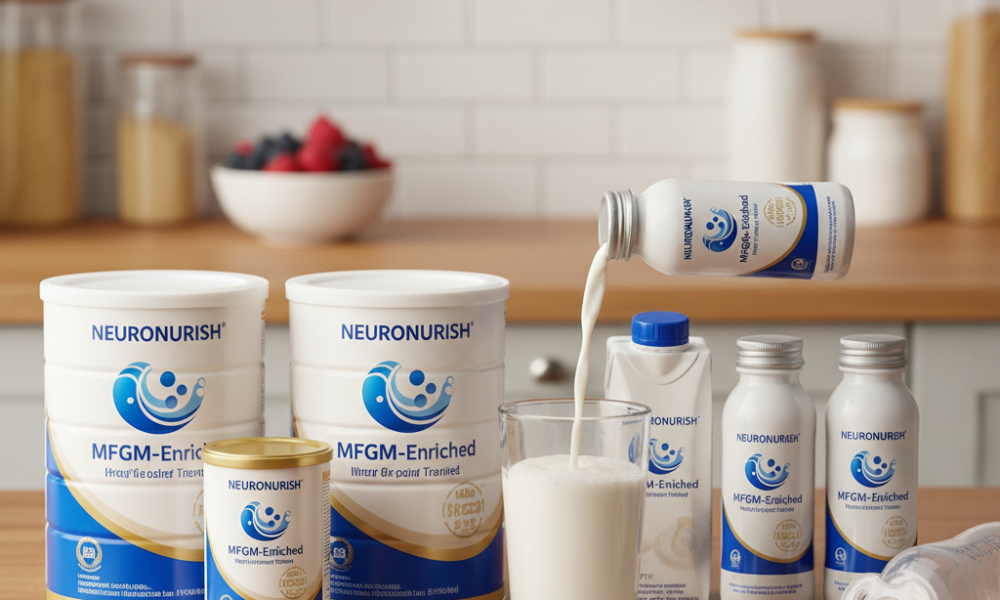
The European Union is witnessing a rapid rise in demand for MFGM-enriched powders and ready-to-drink (RTD) nutrition products, underscoring a major shift in consumer priorities toward brain health, pediatric development, and premium nutrition. According to recent industry estimates, sales of these products are projected at USD 1.04 billion in 2025, with revenues expected to more than double to USD 2.29 billion by 2035, growing at a healthy CAGR of 8.2%.
This growth reflects stronger regulatory frameworks across EU member states, rising pediatric nutrition investments, and increasing consumer awareness about the critical role of early childhood brain development.
Get the Comprehensive Report – Available on Request: https://www.futuremarketinsights.com/reports/sample/rep-gb-23466
Infant Formula Powders Dominate Sales
Infant formula powders remain the heart of this market, expected to account for 69% of total sales in 2025. Their dominance is tied to strong healthcare endorsements, regulatory compliance, and long shelf life benefits. Pharmacies lead as the preferred distribution channel, capturing 52% of the market, supported by trust from healthcare professionals and parent recommendations.
Beyond infant nutrition, new segments such as toddler drinks, adult cognitive supplements, and sports nutrition RTDs are steadily expanding. Adult supplements enriched with MFGM, for instance, are gaining ground among aging populations seeking cognitive support, while performance-oriented consumers are showing increasing loyalty to sports nutrition RTDs that feature MFGM for recovery and brain performance.
Regional Dynamics: Eastern Europe Takes the Lead in Growth
While mature Western European markets like Germany, France, and the Netherlands continue to drive absolute sales, Poland and the Czech Republic are emerging as growth leaders, with projected CAGRs of 9.2% and 9.1% respectively between 2025 and 2035. Rising healthcare investment, rapid regulatory adoption, and expanding pharmacy networks in these regions are closing the gap with traditional Western hubs.
By 2035, per capita consumption in leading countries is projected to reach 1.4 kilograms, compared to 0.7–0.9 kilograms in 2025. Major metropolitan areas will play a pivotal role, with London (USD 196 million), Paris (USD 180 million), Berlin (USD 155 million), Amsterdam (USD 97 million), and Madrid (USD 83 million) expected to emerge as high-demand centers.
Consumer Adoption: From Parents to Performance Athletes
Consumer demand is strongest among health-conscious millennial parents who prioritize clinically validated products to support infant brain and immune health. At the same time, cognitive health seekers and elderly nutrition users are increasingly turning to MFGM-enriched supplements, while fitness enthusiasts are carving out a niche in sports-oriented formats.
The price premium of MFGM-enriched products over conventional nutrition, once a barrier, has been narrowing—falling from 24% in 2020 to 18% in 2025—thanks to advancements in extraction technology and economies of scale. This trend is making premium nutrition accessible to a wider base of middle-income households across Europe.
Competitive Landscape: Innovation and Expansion Strategies
The competitive environment blends global giants with specialized nutrition brands, all focused on expanding access, affordability, and clinical credibility.
- Danone Nutricia continues to dominate with its Aptamil and Nutrilon lines, supported by strong pediatric healthcare networks and Europe-based manufacturing.
- Nestlé, leveraging its NAN and Gerber brands, capitalizes on its extensive European distribution and research-backed product formulations.
- HiPP, the German organic pioneer, has successfully integrated MFGM into its organic infant formula, appealing to clean-label and sustainability-conscious parents.
- Holle remains focused on biodynamic and anthroposophic nutrition, catering to highly selective consumer groups across Germany, Austria, and Switzerland.
- Arla Foods leverages its dairy heritage and extraction expertise to supply both branded and white-label MFGM solutions, giving it an edge in cost and scale.
Beyond the big players, emerging manufacturers and private-label pharmacy brands are entering the market with competitive pricing—often 12–18% below branded equivalents—broadening access while expanding household trial. Smaller companies are actively investing in synthetic MFGM alternatives and blended phospholipid complexes, bringing new technologies and product differentiation to the space.
A Market with Expanding Horizons
With innovation driving affordability, and healthcare systems increasingly recommending advanced nutrition solutions, the EU MFGM-enriched powders and RTDs market is poised for transformative growth. The combination of established global leaders, pioneering organic specialists, and ambitious new entrants ensures a competitive yet collaborative environment, fostering new technologies and broader consumer adoption.
By 2035, what was once a niche premium category will have matured into a mainstream choice for families, health-conscious individuals, and performance-driven consumers across Europe.
For purchase or customization, please request here – https://www.futuremarketinsights.com/customization-available/rep-gb-23466
Get the Comprehensive Report – Available on Request:
About the Report
This report on the Demand of MFGM-enriched Powders & RTDs in the European Union: Size and Share Forecast Outlook 2025–2035 provides in-depth insights into market dynamics, consumer adoption trends, regional growth patterns, and competitive strategies. It highlights how both established companies and emerging players are reshaping the future of MFGM nutrition in the European Union.
About Future Market Insights (FMI)
Future Market Insights, Inc. (ESOMAR certified, recipient of the Stevie Award, and a member of the Greater New York Chamber of Commerce) offers profound insights into the driving factors that are boosting demand in the market. FMI stands as the leading global provider of market intelligence, advisory services, consulting, and events for the Packaging, Food and Beverage, Consumer Technology, Healthcare, Industrial, and Chemicals markets. With a vast team of over 400 analysts worldwide, FMI provides global, regional, and local expertise on diverse domains and industry trends across more than 110 countries.



