
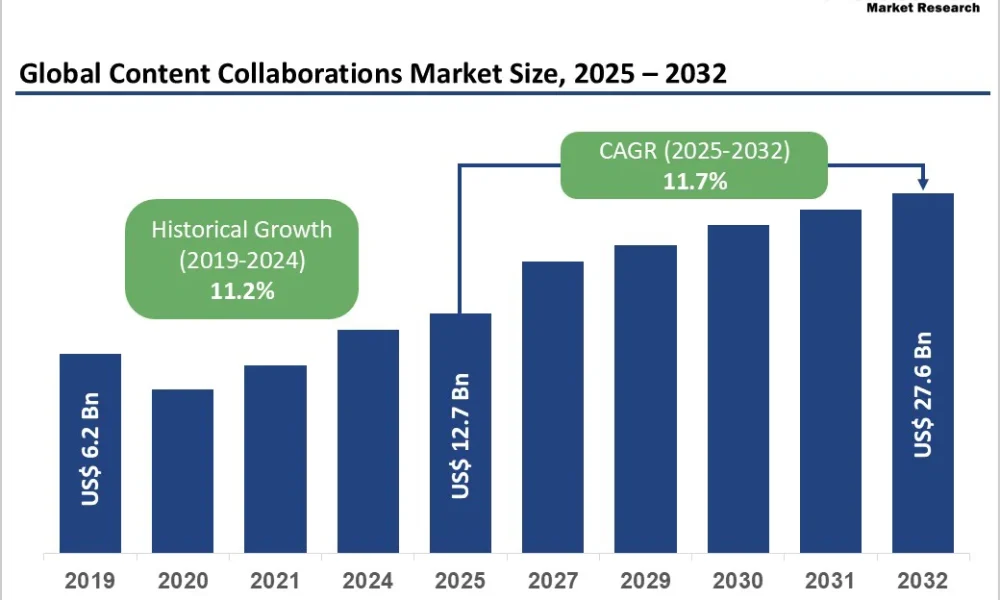
The global content collaborations market is witnessing remarkable growth, reflecting the evolving dynamics of digital marketing and influencer-driven campaigns. The market is expected to reach US$12.7 billion in 2025, with projections indicating a rise to US$27.6 billion by 2032, achieving a CAGR of 11.7% during the forecast period from 2025 to 2032. This growth trajectory underscores the increasing significance of co-created content, technological advancements, and the rising need for brands to engage with their audiences in innovative ways.
Content collaborations have emerged as a strategic tool for brands across industries seeking authentic engagement. The proliferation of digital channels, social media platforms, and influencer marketing initiatives has amplified the demand for collaborative content strategies. Co-created content not only enhances credibility but also allows brands to connect with audiences in a more meaningful and interactive manner.
Driving Factors Behind Market Growth
Several factors are driving the robust growth of the content collaborations market:
- Increasing Prevalence of Digital Marketing Strategies
Digital marketing has become a core component of brand promotion, offering opportunities to target audiences with precision and personalization. Companies are increasingly integrating content collaborations into their digital marketing strategies to leverage shared expertise, resources, and audiences. These collaborations facilitate a more authentic brand narrative, helping companies differentiate themselves in crowded marketplaces.
- Rising Demand for Authentic Brand Storytelling
Consumers today are more discerning than ever. Traditional advertising methods are losing effectiveness, as audiences seek relatable, trustworthy, and engaging content. Content collaborations allow brands to co-create campaigns with influencers, creators, and other companies, resulting in authentic storytelling that resonates with the target audience. This authenticity drives higher engagement rates and fosters long-term brand loyalty.
- Advancements in Collaboration Platforms
The adoption of advanced collaboration platforms, including AI-powered tools and cloud-based solutions, has significantly improved efficiency in co-creating content. These platforms enable seamless communication, content management, and analytics, allowing brands to monitor performance and optimize campaigns in real-time. The rise of collaborative technologies has removed traditional barriers to entry, making content collaboration accessible to businesses of all sizes.
- Growth of Interactive and Shareable Content
Visual content, particularly videos, has emerged as a dominant medium for engaging audiences. Videos account for over 40% of the market revenue, driven by their ability to capture attention and enhance user interaction. Interactive content, such as polls, quizzes, and live streams, further amplifies engagement, making content collaborations a highly effective strategy for brands aiming to boost visibility and impact.
Market Segmentation Insights
The content collaborations market is segmented by region, industry, content type, and target audience. Each segment offers unique growth opportunities and reflects the evolving landscape of content marketing.
Regional Overview
- Leading Region: North America
North America is projected to command a 40% market share in 2025, making it the leading region for content collaborations. The dominance of this market is attributed to mature digital ecosystems, widespread adoption of influencer marketing, and significant R&D activities, particularly in the United States. Brands in this region are leveraging content collaborations to strengthen their digital presence and engage tech-savvy consumers effectively. - Fastest-growing Region: Asia Pacific
The Asia Pacific market is experiencing rapid growth, fueled by an explosion of social media users, increasing awareness of branded content, and growing investments in e-commerce platforms across China and India. Rising mobile penetration and digitalization in these regions offer untapped opportunities for brands to engage audiences through collaborative campaigns.
Industry Analysis
- Dominant Industry: Technology
The technology sector holds approximately 35% of the market share. Tech brands have been at the forefront of content collaborations due to their digital-first strategies and the tech-savvy nature of their audiences. Collaborative campaigns in this sector often revolve around product launches, tutorials, reviews, and influencer-led content, ensuring high engagement and visibility.
Content Type Trends
- Leading Content Type: Video
Videos are the most favored medium for content collaborations, accounting for over 40% of market revenue. The visual appeal, storytelling potential, and high shareability of videos make them ideal for co-created content. Live videos, short-form videos, and interactive multimedia content have further expanded the scope for innovative campaigns.
Target Audience
- Millennials as Key Consumers
Millennials contribute nearly 30% of the market revenue, highlighting their strong affinity for digital platforms and collaborative content. This demographic is highly responsive to influencer marketing and interactive campaigns, making them a primary focus for brands seeking engagement and conversion through content collaborations.
Elevate your business strategy with comprehensive market data. Request a sample report now: https://www.persistencemarketresearch.com/samples/14362
Technological Innovations Driving the Market
Technology is a critical enabler for the growth of the content collaborations market. Companies are leveraging tools and platforms to enhance efficiency, monitor performance, and optimize campaigns.
- AI-Powered Collaboration Tools
Artificial intelligence is revolutionizing content creation and collaboration. AI tools can assist in content planning, audience analysis, trend forecasting, and campaign optimization. By analyzing engagement metrics, brands can tailor their content strategy to maximize impact, improve ROI, and predict the type of collaborations likely to succeed.
- Cloud-Based Platforms
Cloud-based solutions facilitate real-time collaboration among teams, influencers, and agencies. These platforms allow multiple stakeholders to work on content simultaneously, track revisions, and manage workflow seamlessly. The scalability and accessibility of cloud-based platforms have made content collaborations more efficient and cost-effective.
- Data-Driven Insights
Data analytics plays a pivotal role in content collaborations. Insights derived from social media performance, audience engagement, and sentiment analysis enable brands to make informed decisions. This data-driven approach ensures that collaborative content is not only creative but also highly targeted and effective in achieving marketing objectives.
Market Opportunities
The content collaborations market is ripe with opportunities, driven by increasing digitalization, mobile penetration, and evolving consumer preferences.
- Expansion in Emerging Markets
Emerging markets in Asia Pacific, Latin America, and Africa offer significant growth potential. Rising internet penetration, mobile adoption, and increasing social media usage present brands with opportunities to implement collaborative campaigns that reach diverse audiences.
- Co-Creation with Influencers
Influencer marketing continues to be a major driver of content collaborations. Brands collaborating with influencers can tap into established follower bases, amplify reach, and create authentic narratives. The growing preference for influencer-led campaigns, particularly among younger audiences, presents ongoing opportunities for content collaboration initiatives.
- Interactive and Personalized Content
Consumers increasingly demand personalized content that aligns with their interests and preferences. Interactive content, including polls, quizzes, AR filters, and live streams, allows brands to co-create experiences that engage users on a deeper level. Personalized collaborative content not only enhances engagement but also fosters brand loyalty.
- Integration with E-Commerce Platforms
The convergence of content collaborations and e-commerce presents lucrative opportunities. Co-created content can drive product discovery, promote new launches, and facilitate seamless purchase experiences. Brands integrating content collaborations with e-commerce platforms can create immersive campaigns that convert engagement into sales.
Challenges in the Content Collaborations Market
Despite robust growth, the content collaborations market faces certain challenges:
- Maintaining Authenticity
While collaborations offer opportunities for engagement, there is a risk of over-commercialization, which can dilute authenticity. Brands must strike a balance between promotional content and genuine storytelling to maintain credibility with audiences.
- Measuring ROI
Evaluating the effectiveness of collaborative campaigns can be complex. Brands must invest in analytics tools and performance metrics to accurately measure ROI and determine the impact of content collaborations on engagement, conversions, and brand perception.
- Managing Cross-Industry Partnerships
Collaborations between brands from different industries can be challenging due to varying objectives, target audiences, and creative approaches. Successful collaborations require careful planning, alignment of goals, and clear communication among all stakeholders.
Future Outlook
The content collaborations market is poised for continued expansion, driven by digital transformation, social media proliferation, and evolving consumer behaviors. Key trends likely to shape the market include:
- Increased adoption of AI and automation in content creation and collaboration processes.
- Growth of interactive video content, live streaming, and short-form formats.
- Expansion into emerging markets with high digital engagement.
- Integration of co-created content with e-commerce and shoppable media.
- Greater focus on personalized, authentic storytelling to resonate with millennial and Gen Z audiences.
As businesses increasingly recognize the value of content collaborations, the market is expected to evolve into a strategic cornerstone of digital marketing. Organizations investing in innovative technologies, robust partnerships, and data-driven strategies will be well-positioned to capitalize on the expanding opportunities in this dynamic landscape.
Conclusion
The global content collaborations market is experiencing significant growth, driven by the rising adoption of digital marketing strategies, advancements in collaboration tools, and the increasing demand for authentic brand storytelling. With the market expected to reach US$27.6 billion by 2032, brands across industries are leveraging co-created content to engage audiences, enhance credibility, and drive measurable results.
North America remains the leading region, while Asia Pacific emerges as the fastest-growing market, reflecting the global reach of digital and social media initiatives. The technology sector dominates the market, videos are the preferred content type, and millennials are the primary target audience.
The future of content collaborations is bright, fueled by AI-driven tools, cloud-based platforms, interactive content, and personalized experiences. As brands continue to innovate and collaborate strategically, the market will witness further growth, transforming the way companies connect with their audiences and tell their stories.
Content collaborations are no longer just an optional marketing tactic—they are a necessity in an increasingly digital, connected, and consumer-centric world. Brands that embrace collaboration, leverage emerging technologies, and prioritize authentic engagement are poised to lead the market and shape the future of content marketing.
Related Reports:




