
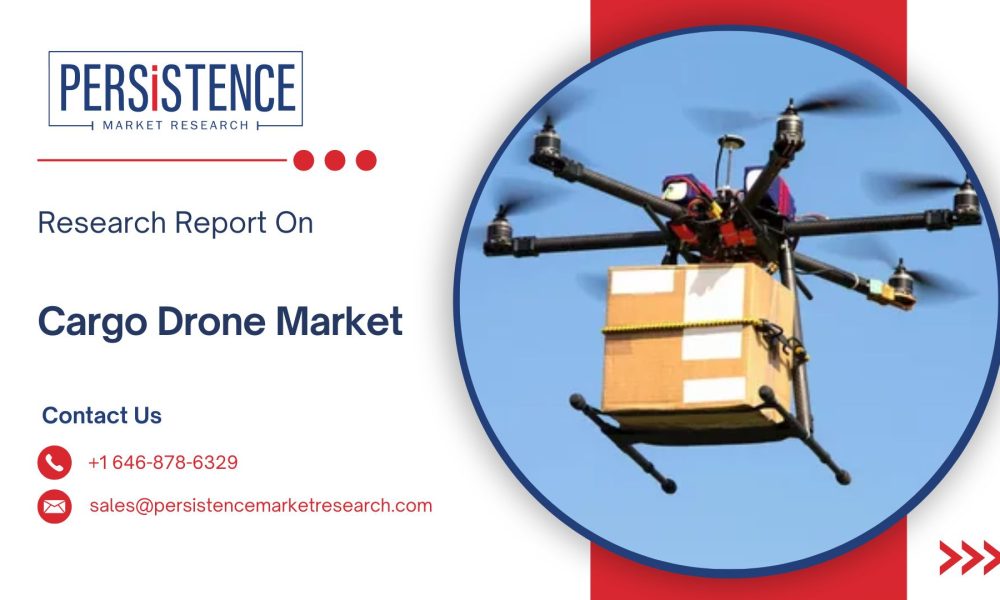
The global cargo drone market is experiencing a rapid expansion, with projections indicating a rise from US$ 2,134.5 million in 2025 to US$ 16,561.2 million by 2032, representing a remarkable CAGR of 34.1% over the forecast period. This surge in the cargo drone market can be attributed to the increasing demand for faster, more efficient, and cost-effective delivery solutions across various industries. Cargo drones are quickly becoming a game-changer in logistics and transportation, offering solutions to challenges that traditional delivery methods cannot address, particularly in remote areas and locations with limited infrastructure.
As industries like e-commerce, healthcare, and disaster relief require quicker and more reliable transportation systems, cargo drones are emerging as a practical choice. These drones offer a low-cost, environmentally friendly, and time-efficient means of transporting goods, particularly in areas that conventional delivery methods struggle to reach. Whether for last-mile delivery, medical supply transport, or disaster relief efforts, cargo drones are transforming the landscape of logistics and supply chains.
✅ Overview of the Market and Key Growth Drivers
The global cargo drone market is on a trajectory of rapid growth, expected to expand from US$ 2,134.5 million in 2025 to US$ 16,561.2 million by 2032, growing at an impressive CAGR of 34.1%. This growth is being driven by several key factors that are reshaping how goods are transported:
- Demand for Faster Deliveries: The rise of e-commerce and online shopping has created a need for quicker deliveries, particularly in urban and hard-to-reach areas. Cargo drones are ideal for last-mile delivery, providing faster, more efficient service compared to traditional delivery methods.
- Cost-Effective Logistics: Cargo drones offer a low-cost solution for transporting goods over short and long distances. Compared to traditional delivery methods, drones incur lower costs for fuel, labor, and infrastructure, making them an attractive option for businesses looking to streamline operations and reduce logistics costs.
- Logistical Challenges in Remote Areas: Cargo drones are especially useful in delivering goods to remote, rural, or disaster-stricken areas, where infrastructure may be insufficient for traditional vehicles. Drones can bypass challenging landscapes and provide a direct, fast, and reliable solution for delivery.
- Technological Advancements: Significant advancements in autonomous drone technology, battery life, AI navigation, and payload capacity are driving the adoption of cargo drones. These improvements allow drones to transport larger quantities of goods over longer distances, enhancing their commercial viability.
- Regulatory Support: Governments across the world are actively exploring regulatory frameworks for drones, with several nations already setting guidelines that facilitate safe and efficient drone operations. These supportive policies encourage further investment in cargo drone technologies.
Get a Sample Copy of Research Report (Use Corporate Mail id for Quick Response): https://www.persistencemarketresearch.com/samples/35210
✅ Key Highlights from the Report
➤ The global cargo drone market is projected to reach US$ 16,561.2 million by 2032 from US$ 2,134.5 million in 2025.
➤ The market is expected to grow at a CAGR of 34.1% during the forecast period.
➤ Cost-efficiency and speed are the primary drivers for the widespread adoption of cargo drones.
➤ Logistics companies are adopting cargo drones to enhance supply chain efficiency, particularly in remote and hard-to-reach locations.
➤ Technological advancements such as autonomous flight capabilities and battery improvements are enabling drones to carry heavier payloads and travel longer distances.
➤ Regulatory changes and the development of drone-friendly airspace are boosting market growth by ensuring safety and streamlining operations.
📊 Market Segmentation
The global cargo drone market can be segmented based on drone type, cargo size, end-use application, and region. These segments provide a comprehensive view of the diverse applications and regional dynamics in the market.
Drone Type:
Cargo drones come in various designs, each suited for specific tasks:
- Fixed-wing drones: These drones are designed for long-range flights and can carry larger payloads. They are used for bulk cargo transportation over long distances and are more efficient than other types for large-scale deliveries.
- Multirotor drones: Known for their vertical takeoff and landing (VTOL) capabilities, multirotor drones are best suited for short-range deliveries and precise deliveries. They are widely used in urban environments and for last-mile deliveries.
- Hybrid drones: Combining the features of both fixed-wing and multirotor drones, hybrid drones offer flexibility, enabling both long-distance travel and vertical takeoff and landing. They are ideal for various logistics needs.
Cargo Size:
Cargo drones are designed to handle varying sizes of goods, and the segmentation can be divided into:
- Light payload drones: These drones are designed for transporting small packages, generally under 5 kg, and are ideal for last-mile deliveries in dense urban areas.
- Medium to heavy payload drones: These drones are capable of carrying between 5 to 50 kg, making them suitable for B2B deliveries or transporting larger items such as electronics, medical supplies, and other heavier cargo.
End-Use Application:
Cargo drones are deployed across a wide range of industries:
- E-commerce and retail: Drones are increasingly used to deliver products directly to customers, particularly for time-sensitive deliveries.
- Healthcare: Drones are used to transport medical supplies such as vaccines, blood products, and medications to hospitals or clinics, especially in emergency situations.
- Disaster relief: Drones can be deployed to transport essential goods like food, water, and medical supplies to areas affected by natural disasters or in conflict zones.
- Agriculture: In rural areas, cargo drones are used to deliver agricultural products such as seeds, fertilizers, and pesticides, especially in areas where road infrastructure is inadequate.
Region:
The global cargo drone market is segmented by region, with key markets including:
- North America: The U.S. is a major market, with companies like Amazon, UPS, and DHL exploring drone delivery services. The country’s established infrastructure, along with supportive regulatory frameworks, makes it a prime region for growth.
- Europe: Countries such as the UK, Germany, and France are exploring drone logistics, especially in urban areas for last-mile deliveries. Europe is also ahead in developing comprehensive drone regulations.
- Asia-Pacific: With strong growth in China and India, Asia-Pacific is rapidly embracing cargo drones, particularly for e-commerce and rural deliveries. China’s investment in drone technology and its vast rural areas present an attractive market for cargo drones.
- Rest of the World: Latin America, the Middle East, and Africa are gradually adopting drone technology, especially for specific use cases like humanitarian aid and healthcare delivery.
📊 Regional Insights
North America:
North America, led by the United States, is expected to be a dominant region in the cargo drone market. The U.S. has already seen significant investment in drone technologies, particularly in the e-commerce and logistics sectors. Major companies such as Amazon Prime Air and UPS Flight Forward are actively exploring cargo drone solutions to enhance their delivery capabilities. Additionally, the Federal Aviation Administration (FAA) has created regulations to support the safe operation of drones, encouraging further development and adoption.
Asia-Pacific:
In the Asia-Pacific region, China is a significant player, leading the way in drone innovation. Companies like JD.com and Alibaba are already conducting successful drone delivery trials, and the government is supporting the development of drone-friendly airspace. India is also expected to witness rapid growth in the cargo drone market, driven by its large rural areas, which can benefit significantly from efficient drone delivery services.
✅ Market Drivers
Several factors are contributing to the rapid growth of the cargo drone market:
- E-commerce Growth: With the increasing demand for online shopping and fast delivery, cargo drones provide a solution that reduces delivery times, particularly for last-mile deliveries.
- Cost Reduction: Cargo drones are a more affordable alternative to traditional delivery methods, offering savings in fuel, infrastructure, and labor costs. This is especially important for companies looking to optimize their supply chain operations.
- Improved Technology: Advances in battery technology, autonomous navigation, and payload management are making drones more efficient, reliable, and practical for cargo transportation.
- Demand for Access to Remote Areas: The ability of cargo drones to navigate areas with limited infrastructure—such as mountainous regions, islands, or disaster zones—has made them an essential tool in logistics.
✅ Market Restraints
Despite its impressive growth, the cargo drone market faces several challenges:
- Regulatory Issues: Many countries are still in the process of developing comprehensive regulations for drone operations. The complexity of airspace management, drone safety, and privacy concerns can delay the widespread adoption of cargo drones.
- Safety Concerns: The safety of drone operations is crucial, especially in populated areas. The potential for accidents or malfunctioning drones can limit their usage until more reliable safety mechanisms are developed.
- Limited Payload and Range: While drones are excellent for short-to-medium range deliveries, they still face limitations when it comes to carrying heavy loads over long distances. Battery life remains a challenge for large-scale deliveries.
✅ Market Opportunities
The cargo drone market holds numerous opportunities for growth:
- Integration with Autonomous Vehicles: As autonomous ground vehicles become more common, integrating cargo drones with these vehicles could revolutionize the logistics industry, making supply chains more efficient and scalable.
- Expansion of Use Cases: Cargo drones could be used in new applications, such as food delivery, postal services, or air cargo, offering innovative solutions for businesses looking to enhance their logistics.
- Global Regulatory Development: As more countries introduce drone-friendly regulations, the opportunities for cargo drone adoption will continue to expand globally, opening up new markets and use cases.
✅ Reasons to Buy the Report
✔️ Comprehensive Market Analysis: Understand the global cargo drone market, its segments, and key growth drivers.
✔️ Competitive Insights: Gain valuable insights into leading players and their strategies.
✔️ Future Trends: Stay ahead with detailed forecasts and insights into upcoming trends in drone logistics.
✔️ Market Dynamics: Learn about the factors driving market growth and the challenges that need to be addressed.
✔️ Regulatory Developments: Get an understanding of the evolving regulatory landscape for cargo drones.
📌 Key Players
✦ Amazon Prime Air
✦ UPS Flight Forward
✦ DHL
✦ Zipline
✦ JD.com
✦ Alibaba
■ Recent Development: Amazon Prime Air has been expanding its drone delivery capabilities, conducting tests for faster delivery of small parcels in urban and rural areas.
■ Recent Development: UPS has launched Flight Forward, a fully licensed drone airline, to provide package deliveries in various locations, including healthcare supplies.
In conclusion, the cargo drone market is poised for substantial growth, driven by technological advancements, increasing demand for efficient delivery solutions, and the growing need for transportation in hard-to-reach areas. As regulations evolve and drone technology continues to improve, cargo drones are expected to play a crucial role in the future of logistics and supply chain management.
Explore more related market insights and reports by visiting our website.




