
Blister Packaging Market: An Outlook to 2032
The blister packaging market is on a strong growth trajectory. According to a recent study by Persistence Market Research, the global blister packaging market is expected to be valued at US$ 24.7 billion in 2025, rising to US$ 39.7 billion by 2032 — a compound annual growth rate (CAGR) of 7.0 % during 2025–2032.
This robust expansion reflects blister packaging’s unique combination of protection, tamper-evidence, and product visibility, which meets the rising demands of pharmaceuticals, consumer goods, food, and medical device industries. In this blog, we explore the market dynamics, segment trends, drivers and restraints, regional outlook, and future opportunities.
Understanding Blister Packaging & Its Appeal
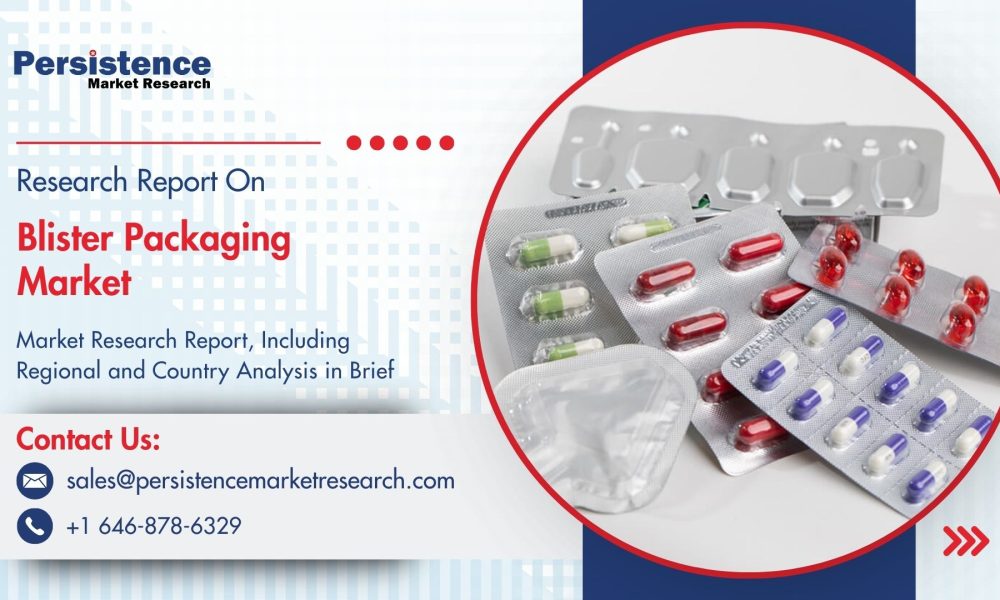
A blister pack typically consists of a pre-formed plastic (or plastic–foil lamination) cavity (or “blister”) that houses the product, sealed against a backing material such as paperboard, aluminum foil, or plastic film. This configuration allows the product to be individually enclosed, protected from moisture, contamination or mechanical damage, while often still allowing visibility to the end consumer.
Key advantages that make blister packaging attractive include:
- Product protection and barrier properties: In pharmaceuticals especially, blister packs help shield contents from moisture, oxygen, light, and external contaminants.
- Tamper evidence & safety: Seals are difficult to compromise without visual evidence, increasing trust and security.
- Unit-dose convenience & compliance: For tablets, capsules, and small items, blisters facilitate individual dosing, aiding patient adherence.
- Aesthetics & merchandising: Clear blisters or custom shapes deliver high visual appeal, helpful in retail settings.
- Cost and automation benefits: Automated thermoforming, cold-forming and sealing machinery allow efficient high-volume output.
Because of these strengths, blister packaging has become a preferred format in healthcare and consumer markets alike.
Get a Sample PDF Brochure of the Report (Use Corporate Email ID for a Quick Response): https://www.persistencemarketresearch.com/samples/34666
Market Dynamics: Drivers, Restraints & Opportunities
Drivers
- Pharmaceutical and healthcare demand
The pharmaceutical and medical device sectors remain pivotal growth engines. The need for safer, tamper-evident, dosage-accurate packaging in drugs, over-the-counter tablets, nutraceuticals, diagnostic kits, and small medical components substantially drives blister packaging adoption. - Stringent regulations & packaging compliance
Governments and regulatory bodies globally are increasing requirements around product safety, traceability, and tamper-proof packaging. Blister packaging meets many of those demands, making it a favored solution in highly regulated industries. - Rising consumer demand for convenience & visibility
In consumer goods and food sectors, end users favor transparent packaging that showcases the product, along with single-serve or unit-dose formats that are easy to use and store. - Technological advances & automation
Advances in packaging machinery, digital printing, barrier films, and material innovations (including sustainable substrates) help reduce costs, improve throughput, and broaden design flexibility.
Restraints
- High cost of advanced materials and machinery
While blister packaging offers advantages, specialized barrier films or high-precision sealing machines carry significant capital and operational costs, which can discourage adoption in price-sensitive markets. - Environmental and recycling challenges
Many blister packs combine plastics and aluminum (or foils), making them difficult to recycle. Growing consumer and regulatory pressure for sustainable packaging is a restraint for conventional blister formats. - Infrastructure limitations in emerging markets
In regions lacking automated equipment or reliable supply chains for advanced films and machinery, uptake of blister packaging lags, constraining growth potential.
Opportunities
- Sustainable & mono-material blister packs
Innovations in mono-material films or recyclable foils can alleviate recycling concerns. Blister packs designed for better end-of-life options will appeal to environmentally conscious manufacturers and consumers. - Smart & traceable packaging
Integration of QR codes, RFID, NFC tags or tamper-evidence sensors into blister packs can add value for pharmaceutical and premium consumer brands by enhancing traceability, anti-counterfeiting, and consumer engagement. - Growth in emerging markets
Rising pharmaceutical production, growing middle classes, and expanding retail infrastructure in Asia Pacific, Latin America and parts of Africa present significant untapped potential. - Niche segments & personalized packaging
Custom blister packaging for niche medical devices, diagnostics, or direct-to-consumer specialty products (e.g. personalized supplements, wearables packaging) can drive higher-margin applications.
Market Segmentation & Trends
By Packaging Type: Carded vs. Clamshell
- Carded blister packaging dominates many markets owing to its lower cost, ease of backing printing, and wide usage in pharmaceuticals, small consumer goods, and sealed goods.
- Clamshell formats — usually two hinged plastic halves — are growing in applications needing robust protection and display (electronics, hardware, toys, etc.). Their sturdy nature and tamper resistance appeal in high-value segments.
By Technology: Thermoforming vs. Cold-Forming
- Thermoforming (heating a plastic web and forming cavities) remains the more widely used technique due to lower tooling costs, faster throughput, and greater flexibility in shapes and design.
- Cold-forming offers superior barrier properties (foil-based) essential for highly sensitive pharmaceuticals (e.g. moisture, oxygen-sensitive drugs). Though more expensive, it is preferred when maximum protection is required.
By Material Type
- Plastic films (PVC, PET, PE, etc.) are widely used due to cost-effectiveness, flexibility, and ease of forming.
- Use of aluminum foils or multi-layer barrier laminates helps with product protection, especially for pharmaceuticals with strict stability requirements.
- Hybrid materials (plastic + foil) increase barrier performance but challenge recyclability.
By End-Use / Application
- Healthcare / Pharmaceuticals: This remains the largest segment, driven by demand for tablets, capsules, over-the-counter drugs, medical components, and dose compliance.
- Food & Consumer Goods: Blister packaging is used for snacks, confectionery, single-dose food items, small consumer parts, and accessories. It offers hygiene, visual appeal, and convenience.
- Electronics, Hardware & Others: For small electronic components, accessories, hardware parts, blister packaging offers protection, compactness, and display-friendly packaging.
Regional Outlook
North America & Europe
These regions lead the blister packaging market, largely due to mature pharmaceutical industries, strong regulatory regimes, and consumer demand for quality and safety. North America is estimated to hold a ~35 % share of the global market in 2025. Europe also has a substantial share, driven by sustainability mandates and advanced packaging capabilities.
Asia-Pacific
Asia-Pacific is expected to be the fastest-growing region, fueled by pharmaceutical manufacturing expansion in China, India, Japan and Southeast Asia. Rising disposable incomes, urbanization, and increasing retail penetration further fuel demand. In India, for instance, adoption of Alu-Alu blister formats and innovative packaging is growing rapidly.
Latin America, Middle East & Africa
While current adoption is relatively modest, growth in healthcare infrastructure and regulatory modernization (e.g. in Brazil, South Africa, and parts of Middle East) opens opportunities for blister packaging players to expand. Over time, these emerging markets could become significant contributors to global growth.
For Customized Insights on Segments, Regions, or Competitors, Request Personalized Purchase Options @ https://www.persistencemarketresearch.com/request-customization/34666
Competitive Landscape & Recent Developments
The blister packaging sector is competitive and innovation-driven. Leading players invest heavily in R&D, material innovation, strategic alliances, M&A, and geographic expansion.
Some prominent names include Amcor plc, Constantia Flexibles, UFlex Ltd., Sonoco Products Company, WestRock, ACG, and others.
Recent strategic moves and product innovations include:
- Eco-friendly blister systems: Some companies are developing recyclable or mono-material blister packs that remove aluminum or simplify recycling.
- Barrier film advancements: New barrier films offering enhanced moisture or oxygen protection at lower thicknesses help reduce material use.
- Child-resistant and senior-friendly blister packs: To meet regulatory and user requirements in pharmaceuticals, specialized blister formats have been introduced.
- Collaborations and acquisitions: Packaging firms are partnering with drug makers or acquiring niche players to strengthen their product portfolios and market reach.
These initiatives underscore the market’s evolving emphasis on sustainability, protection, and functionality.
Forecast & Strategic Implications
The projected rise from US$ 24.7 billion in 2025 to US$ 39.7 billion in 2032 (CAGR 7.0 %) is based on sustained demand across healthcare, consumer packaged goods, and growing adoption in emerging economies.
To succeed in this evolving landscape, companies should consider:
- Investing in sustainable materials
Reducing reliance on multi-material laminates and prioritizing recyclable or mono-material designs will position firms well under tightening environmental regulations. - Strengthening automation & smart packaging
Adopting high-speed, digitally controlled blister machinery and embedding traceability features will raise productivity and differentiation. - Focusing on niche and high-growth segments
Custom blister formats for diagnostics, wearables, personalized nutrition, or specialty pharmaceuticals may yield higher margins and less competition. - Regional expansion & localization
Establishing manufacturing or partnership presence in fast-growing regions (Asia, Latin America) helps control costs, adapt to local requirements, and serve customers with agility. - Regulatory & compliance readiness
Staying ahead of evolving safety, serialization, and sustainability standards is essential, especially for pharmaceutical and food packaging clients.
Conclusion
The blister packaging market is poised for a period of sustained expansion, driven by its unique ability to deliver product protection, consumer-friendly design, and regulatory compliance. The projected growth to US$ 39.7 billion by 2032 (from US$ 24.7 billion in 2025) at a 7.0 % CAGR underscores its relevance across pharmaceuticals, consumer goods, food, and industrial sectors.
Yet, challenges in cost and recyclability cannot be overlooked. The companies that succeed in the next wave will be those that combine material innovation, automation, sustainability, and strategic reach. In a world increasingly attentive to health, safety, and environmental impact, blister packaging is not just surviving — it is evolving to become smarter, greener, and more integral than ever.
Explore the Latest Trending Research Report:
About Persistence Market Research:
At Persistence Market Research, we specialize in creating research studies that serve as strategic tools for driving business growth. Established as a proprietary firm in 2012, we have evolved into a registered company in England and Wales in 2023 under the name Persistence Research & Consultancy Services Ltd. With a solid foundation, we have completed over 3600 custom and syndicate market research projects, and delivered more than 2700 projects for other leading market research companies’ clients.
Our approach combines traditional market research methods with modern tools to offer comprehensive research solutions. With a decade of experience, we pride ourselves on deriving actionable insights from data to help businesses stay ahead of the competition. Our client base spans multinational corporations, leading consulting firms, investment funds, and government departments. A significant portion of our sales comes from repeat clients, a testament to the value and trust we’ve built over the years.
Contact Us:
Persistence Market Research
G04 Golden Mile House, Clayponds Lane
Brentford, London, TW8 0GU UK
USA Phone: +1 646-878-6329
UK Phone: +44 203-837-5656
APAC Phone: +91 906 779 3500
Email: [email protected]
Web: https://www.persistencemarketresearch.com




