
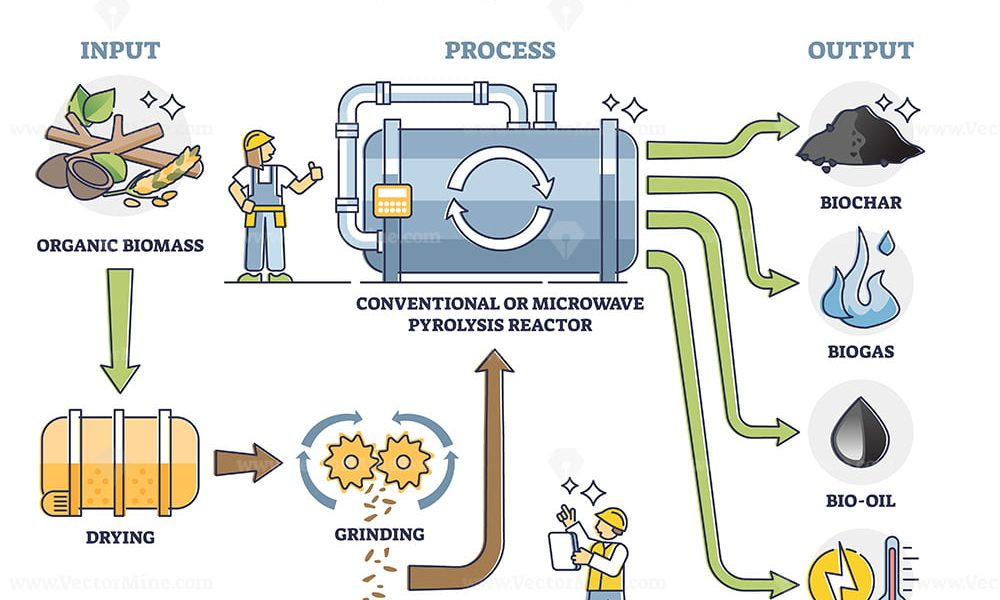
The Biochar Market is experiencing rapid growth due to increasing global demand for sustainable agriculture, carbon sequestration technologies, and waste management solutions. Biochar is a carbon-rich material produced by heating organic biomass such as agricultural waste, wood residues, or manure in a low-oxygen environment through a process called pyrolysis. This material is widely used as a soil amendment to improve soil fertility, enhance water retention, and reduce greenhouse gas emissions.
According to industry estimates, the global biochar market is expected to reach US$ 910.4 million by 2026 and grow significantly to US$ 2,748.6 million by 2033, registering a CAGR of around 17.1% during 2026–2033. The market expansion is largely driven by climate change mitigation initiatives, soil restoration needs, and increasing adoption of carbon-removal technologies worldwide.
Get Your FREE Sample Report Instantly – Click Now: https://www.persistencemarketresearch.com/samples/34592
Market Overview
Biochar has emerged as a sustainable solution for several environmental and agricultural challenges. It improves soil structure, enhances nutrient retention, and supports beneficial microbial activity in soils. Farmers and agricultural organizations increasingly adopt biochar as a natural soil amendment to improve crop productivity and reduce dependency on chemical fertilizers.
Another important factor fueling market growth is the rising focus on carbon sequestration. Biochar has the unique ability to store carbon in soil for centuries, making it an effective technology for reducing atmospheric carbon dioxide levels. Governments and corporations seeking to meet net-zero emission targets are investing in biochar projects and carbon removal credits.
The biochar market is also benefiting from growing awareness about sustainable waste management. Agricultural residues, forestry waste, and biomass that would otherwise be burned or discarded can be converted into biochar, creating value from waste while reducing environmental pollution.
Key Market Drivers
Growing Demand for Sustainable Agriculture
One of the primary drivers of the biochar market is the increasing global focus on sustainable agriculture. Soil degradation and declining fertility have become major challenges in many agricultural regions. Intensive farming practices, excessive use of chemical fertilizers, and soil erosion have led to a reduction in soil organic matter.
Biochar helps address these issues by improving soil structure and enhancing nutrient retention. It increases the soil’s ability to retain water and nutrients, which improves plant growth and crop yields. Studies show that biochar application can reduce nutrient leaching and improve microbial activity in soil, making it an effective soil conditioner.
With the global population expected to continue rising, there is increasing pressure to improve agricultural productivity while maintaining environmental sustainability. Biochar provides a promising solution for achieving this balance, which is contributing to its growing adoption in modern farming systems.
Rising Importance of Carbon Sequestration
Climate change mitigation is another significant factor driving the biochar market. Biochar production locks carbon from biomass into a stable form that can remain in soil for hundreds or even thousands of years.
As governments and corporations adopt carbon neutrality targets, carbon removal technologies such as biochar are gaining importance. Biochar projects generate carbon credits, which can be sold to organizations seeking to offset their emissions. Large companies and financial institutions are increasingly purchasing biochar-based carbon credits as part of their sustainability strategies.
This growing demand for carbon credits is creating new revenue streams for biochar producers and encouraging investments in commercial biochar production facilities.
Utilization of Agricultural and Biomass Waste
Another key driver of the biochar market is the increasing focus on waste valorization. Large quantities of agricultural residues, forestry waste, and biomass are generated every year worldwide. In many regions, these materials are often burned in open fields, contributing to air pollution and greenhouse gas emissions.
Biochar production converts these waste materials into valuable products. For example, crop residues, wood chips, and animal manure can be processed through pyrolysis to produce biochar, bio-oil, and syngas.
Countries with large agricultural sectors, such as India and China, generate hundreds of millions of tons of crop residues annually. Converting these residues into biochar not only reduces pollution but also creates economic opportunities for farmers and rural communities.
Market Challenges
High Production Costs
Despite strong growth prospects, the biochar market faces certain challenges. One of the main obstacles is the high cost associated with biochar production technologies. Advanced pyrolysis systems require significant capital investment, which can limit adoption among small producers.
In addition, transportation and feedstock collection costs can also increase overall production expenses. These factors may restrict large-scale commercialization of biochar in some regions.
However, technological advancements and the development of modular production systems are expected to gradually reduce costs and improve economic feasibility.
Technology Insights
Biochar can be produced using several technologies, including:
- Pyrolysis
- Gasification
- Hydrothermal carbonization
Among these, pyrolysis technology dominates the market, accounting for about 65% of global production due to its high carbon retention and ability to process different types of feedstock.
Pyrolysis systems heat biomass at high temperatures in a low-oxygen environment, producing biochar along with energy-rich by-products such as bio-oil and syngas. These by-products can be used as renewable energy sources, making the process economically attractive.
Feedstock Insights
Biochar can be produced from a wide range of feedstock materials, including:
- Woody biomass
- Agricultural waste
- Animal manure
- Forestry residues
- Municipal green waste
Among these, woody biomass and agricultural residues are the most commonly used feedstocks due to their widespread availability and low cost. Using these materials also helps reduce waste disposal problems and environmental pollution.
Application Insights
Biochar has diverse applications across multiple industries. However, agriculture remains the largest end-use sector.
Major Applications of Biochar
- Agriculture
- Livestock farming
- Power generation
- Water and air filtration
- Construction materials
Agriculture accounts for approximately 55% of global biochar demand, as farmers use it to improve soil fertility, water retention, and nutrient availability.
In livestock farming, biochar is increasingly used as a feed additive to improve digestion and reduce methane emissions from animals. It is also used in manure management systems to reduce odor and nutrient loss.
Regional Analysis
North America
North America currently leads the global biochar market, accounting for over 41% of global market share. The United States is the largest market in the region due to strong demand for carbon removal credits and sustainable agricultural solutions.
Corporate demand for verified carbon removal projects is also driving investments in biochar production facilities in the region.
Asia Pacific
Asia Pacific is expected to be the fastest-growing regional market for biochar. Countries such as India and China are adopting biochar technologies to address soil degradation, agricultural waste management, and climate change mitigation.
Government programs promoting biomass utilization and sustainable farming practices are further supporting market growth in the region.
Europe
Europe is another significant market due to strict environmental regulations and increasing adoption of sustainable agricultural practices. Several European countries have established certification standards for biochar used in soil applications, which has boosted market adoption.
Get a Customized Market View in One Click: https://www.persistencemarketresearch.com/request-customization/34592
Competitive Landscape
The biochar market includes a mix of technology providers, equipment manufacturers, and biochar producers. Companies are focusing on expanding production capacity, improving pyrolysis technology, and developing integrated biochar-energy systems.
Key Companies in the Biochar Market
- Airex Energy
- Pyreg GmbH
- Phoenix Energy
- Carbon Gold Ltd
- Biochar Now LLC
- Oregon Biochar Solutions
- Charline GmbH
- Farm2Energy
- Exomad Green
These companies are investing heavily in research and development to enhance production efficiency and expand the commercial applications of biochar.
Future Outlook
The future of the biochar market looks highly promising as global industries and governments increasingly prioritize sustainability and carbon reduction. The integration of biochar production with renewable energy systems, agricultural waste management, and carbon credit markets will create new opportunities for market participants.
Advancements in biochar technology, supportive environmental policies, and growing awareness of soil health are expected to drive widespread adoption of biochar across multiple industries.
About Persistence Market Research:
Persistence Market Research delivers strategic research solutions that drive business growth. Founded in 2012 and registered in England and Wales in 2023 as Persistence Research & Consultancy Services Ltd., we have completed 3,600+ custom and syndicated studies and supported 2,700+ projects for leading research firms. Combining traditional methodologies with modern tools, we provide actionable insights to multinational corporations, consultants, investors, and government bodies, earning strong trust through long-term client relationships.
Contact Us:
Persistence Market Research
Second Floor, 150 Fleet Street,
London, EC4A 2DQ, United Kingdom
USA Phone: +1 646-878-6329
UK Phone: +44 203-837-5656
Email: [email protected]
Web: https://www.persistencemarketresearch.com




