
The global baby apparel market is expanding steadily as parents increasingly prioritize comfort, safety, and high-quality materials for infant clothing. Baby apparel includes a wide range of products such as bodysuits, sleepwear, outerwear, dresses, and accessories designed specifically for newborns and toddlers. The growing focus on infant well-being and skin safety has encouraged parents to opt for premium fabrics such as organic cotton and hypoallergenic materials. In addition, the rising influence of fashion trends in children’s wear has prompted brands to introduce stylish yet functional baby clothing collections.
Another factor shaping the baby apparel industry is the increasing awareness among parents regarding product quality and safety standards. Many consumers now carefully examine product labels to ensure the clothing is free from harmful chemicals and made with soft, breathable fabrics. According to Persistence Market Research, brands are embracing diversified product portfolios ranging from premium organic basics to fashionable outerwear in order to capture a wide range of consumer preferences. Online retail channels and social media promotions are also making it easier for parents to explore new brands and innovative baby clothing designs.
Download Your Free Sample & Explore Key Insights : https://www.persistencemarketresearch.com/samples/35627
Market Statistics and Growth Outlook
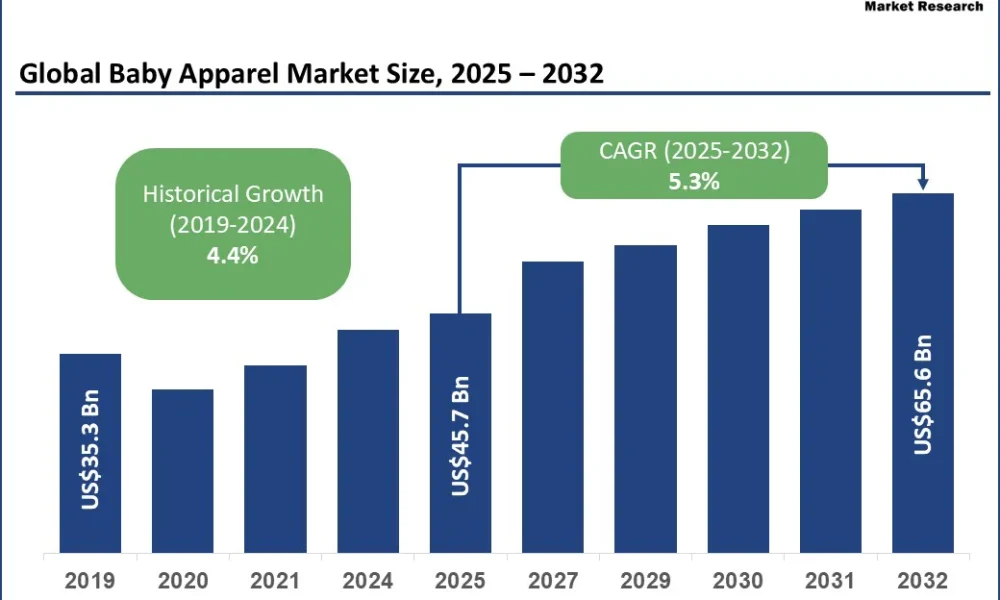
According to Persistence Market Research, the global baby apparel market size is likely to be valued at US$45.7 Bn in 2025 and is estimated to reach US$65.6 Bn by 2032, growing at a CAGR of 5.3% during the forecast period 2025–2032. This growth is largely driven by rising parental awareness regarding product quality, comfort, and safety for infants. Increasing disposable incomes and the willingness of parents to invest in premium baby products are also contributing to the market’s expansion.
The leading segment within the baby apparel market includes everyday clothing such as bodysuits and sleepwear, as these items are essential for daily infant care and require frequent replacement. In terms of geography, North America remains a leading regional market due to high consumer spending on baby care products and strong demand for branded and organic baby clothing. Meanwhile, growing urban populations and rising middle-class incomes in emerging economies are also supporting global market growth.
Key Highlights from the Report
➤ The global baby apparel market is projected to grow from US$45.7 Bn in 2025 to US$65.6 Bn by 2032.
➤ Increasing parental focus on quality, comfort, and safety of infant clothing is driving demand worldwide.
➤ Rising popularity of organic cotton and sustainable fabrics is influencing product development.
➤ Brands are expanding diversified product portfolios from basic essentials to fashionable baby outerwear.
➤ Growth of online retail and digital marketing channels is improving accessibility for baby apparel brands.
➤ Premium and eco-friendly clothing collections are gaining strong traction among modern parents.
Market Segmentation
The baby apparel market can be segmented based on product type, material, and distribution channel. Product categories typically include bodysuits, sleepwear, tops, bottoms, outerwear, and accessories. Among these, bodysuits and sleepwear account for a significant share because infants require comfortable clothing throughout the day and night. These items are frequently purchased by parents due to the need for regular replacement as babies grow quickly. Manufacturers are continuously introducing innovative designs with stretchable fabrics and easy-to-wear features to improve functionality.
Another key segmentation factor is the type of fabric used in baby clothing. Organic cotton, bamboo fiber, and soft blended fabrics are gaining popularity as parents seek safer and more breathable materials for infants’ delicate skin. Distribution channels include supermarkets, specialty baby stores, brand outlets, and e-commerce platforms. Among these, online retail is gaining momentum as it offers convenience, wider product selection, and competitive pricing for parents shopping for baby clothing.
Customize This Report for Your Exact Requirements : https://www.persistencemarketresearch.com/request-customization/35627
Regional Insights
North America represents a prominent market for baby apparel due to high consumer awareness regarding baby health and safety standards. Parents in the region often prefer branded baby clothing that guarantees product safety and superior fabric quality. The demand for organic baby apparel is particularly strong in the United States and Canada, where environmentally conscious consumers are willing to pay premium prices for sustainable clothing options.
Asia-Pacific is emerging as a rapidly growing market due to rising birth rates in some countries, expanding urban populations, and increasing disposable incomes. Parents in countries such as China and India are gradually shifting toward branded baby apparel products. Growing penetration of e-commerce platforms and rising exposure to global fashion trends are further encouraging consumers in the region to purchase high-quality baby clothing products.
Market Drivers
One of the key drivers of the baby apparel market is the increasing awareness among parents regarding infant comfort and safety. Babies have delicate skin, which makes fabric selection extremely important for parents when choosing clothing products. As a result, consumers are increasingly seeking garments made from soft, breathable, and chemical-free materials. This shift toward safer and higher-quality clothing is encouraging manufacturers to develop organic and hypoallergenic baby apparel.
Another major driver is the growing influence of fashion trends in children’s clothing. Parents today are not only concerned about comfort but also about style and aesthetics. Social media platforms and parenting blogs have played an important role in promoting fashionable baby clothing collections. As a result, many brands are launching stylish seasonal collections and designer baby clothing to meet the demand for both comfort and fashion.
Market Restraints
Despite steady growth, the baby apparel market faces several challenges. One of the primary restraints is the high cost associated with premium and organic baby clothing products. While these garments offer superior comfort and safety, their higher price points may limit adoption among price-sensitive consumers. This is particularly relevant in developing regions where consumers often prioritize affordability over premium product features.
Another constraint affecting the market is the short usage cycle of baby clothing. Babies grow rapidly, which means apparel items often become unusable within a short period of time. As a result, some parents prefer to reuse clothing or purchase second-hand items, which can limit new product sales in certain segments of the market.
Market Opportunities
The baby apparel market offers significant opportunities through the development of sustainable and eco-friendly clothing products. Environmentally conscious consumers are increasingly seeking garments made from organic cotton, recycled fibers, and eco-friendly dyes. Brands that invest in sustainable manufacturing practices and transparent supply chains are likely to gain strong consumer trust and long-term market growth.
Another promising opportunity lies in product diversification and premium baby fashion collections. Brands are increasingly introducing stylish and seasonal baby clothing lines to attract modern parents who seek fashionable options for their children. By expanding their portfolios to include luxury baby apparel, personalized clothing, and designer collaborations, companies can further strengthen their market position and capture new customer segments.
Unlock Complete Insights – Buy the Full Report : https://www.persistencemarketresearch.com/checkout/35627
Company Insights
Key players operating in the baby apparel market include:
- H&M Group
- Cotton On Group
- Carter’s, Inc.
- Industria de Diseño Textil, S.A.
- The Children’s Place, Inc. (Gymboree Group, Inc.)
- Reliance Retail Ventures Limited
- Organic & More (Net Paradigm India Private Limited)
- Providence Clothing Co.
- Naartjie
- Ed-a-Mamma
- Billoomi Fashion
- Affix Apparel
Recent Developments
January 2024 – Carter’s Inc. expanded its organic baby clothing collection to address growing demand for sustainable infant apparel.
September 2023 – H&M Group introduced a new eco-friendly baby apparel line made using sustainably sourced cotton materials.
Future Opportunities and Growth Prospects
The future of the baby apparel market looks promising as parents continue to prioritize high-quality clothing for infants. Rising awareness regarding skin safety, sustainability, and organic fabrics will likely influence product development strategies in the coming years. Manufacturers are expected to introduce innovative fabrics and designs that combine safety, durability, and aesthetic appeal.
Additionally, the growing influence of online retail platforms will further transform how parents purchase baby clothing. E-commerce channels provide convenient access to a wide variety of baby apparel products and enable brands to reach global consumers more effectively. As companies continue to expand their sustainable product lines and diversify their fashion offerings, the baby apparel market is expected to witness steady growth in the coming years.




